

Acrylic Polymer Soil Stabilizer for Long-Lasting Erosion Control and Ground Strength
2026-08-31
Rain hits bare soil, and within hours the ground starts to wash away. For builders and landowners, repeated erosion isn't just cosmetic—it undermines structural integrity and drives up long-term costs. Standard stabilizers often break down too fast, leaving you with weak subgrades and cracked surfaces. MST's acrylic polymer soil stabilizer tackles the root cause, forming a durable bond that resists water, wind, and load stress. Here's why it's becoming the go-to choice for ground strength and long-lasting erosion control.
The Binding Mechanism Behind Acrylic Polymer Soil Stabilizer
At the molecular scale, acrylic polymers used for soil stabilization typically carry carboxylate or amide functional groups along a flexible carbon backbone. These polar groups interact with clay and silt surfaces through hydrogen bonding and electrostatic attraction, displacing loosely held water films. The initial adsorption is not a single-point attachment; a single polymer chain can anchor at multiple sites, creating a train-loop-tail conformation that increases contact area and resistance to desorption.
Once adsorbed, the long-chain molecules bridge adjacent soil particles or aggregates. This interparticle bridging is the core mechanical contribution: polymer segments spanning the gap between two particles hold them together under tensile or shear stress, while the surrounding pore water becomes more viscous due to dissolved or partially gelled polymer. In silty or sandy soils with low natural cohesion, this bridging effect can be several times stronger than capillary forces alone.
The binding is also moisture-dependent but not simply reversible. During wetting, the polymer chains rehydrate and swell, forming a gel-like film around particle contacts that can redistribute stress and heal microcracks. Upon drying, the chains collapse into a more rigid, adhesive coating that cements the particles. This reversible yet durable transition allows treated soil to maintain improved strength across repeated wet-dry cycles, distinguishing acrylic polymers from purely cementitious binders.
Erosion Control That Survives Rain, Wind, and Foot Traffic
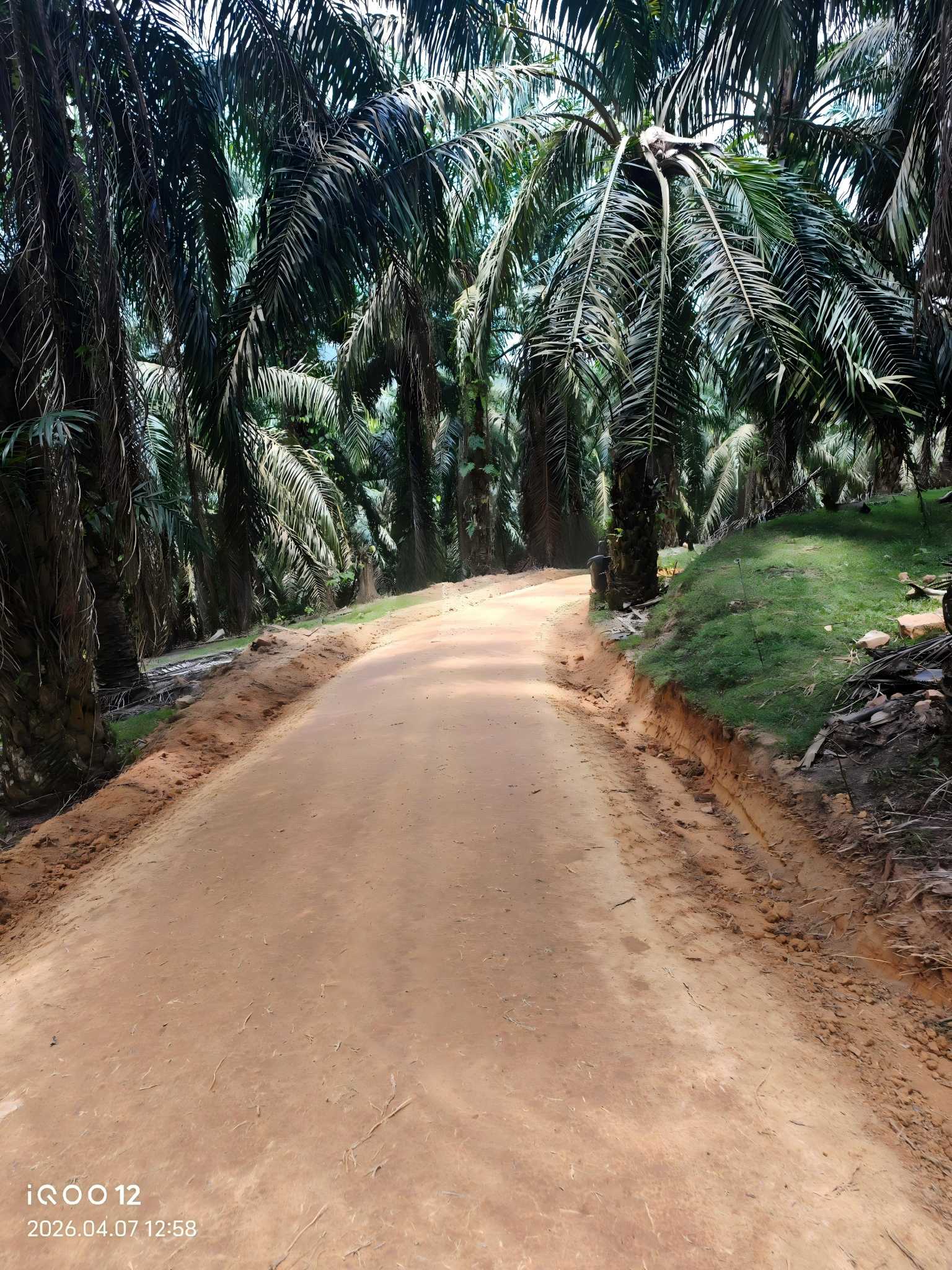
Erosion control often looks great on paper but fails the moment weather turns ugly. This approach leans on deep-rooted native grasses and interlocking ground covers that hold soil even during downpours. Instead of relying on a single layer of mulch or loose gravel, the system builds a living mesh below the surface. Rain sheets off without carving channels, while wind can't scour exposed patches because the vegetation stays dense year-round.
Foot traffic gets treated as a design input, not an afterthought. Pathways use permeable pavers set into a flexible base, letting water soak through while resisting rutting. On slopes, low-profile shrubs and fibrous perennials create a natural staircase effect, spreading weight across dozens of contact points. Heavy use no longer means a muddy shortcut or torn-up turf; the surface stays stable because the roots and aggregate work together.
Maintenance shifts from constant repair to occasional thinning. Dead stems and thatch are left in place during wet months to slow runoff, then trimmed back only when new growth emerges. This cycle builds organic matter gradually, improving soil structure without synthetic binders. The result reads as a rugged, planted landscape that looks intentional even after a storm, not a temporary fix waiting to wash away.
How Treated Surfaces Handle Heavy Loads Without Cracking
Surface treatments like shot peening or laser hardening do more than change the outer layer—they rearrange stress patterns deep enough to matter. Instead of letting a concentrated force travel straight through the material, these processes create a compressive skin that pushes back against incoming tension. That means when a forklift rolls over a treated floor or a press slams down on a coated die, the energy spreads sideways rather than diving into a single weak point. The result is fewer sudden fractures, even under repeated impact that would normally start a hairline crack.
The real trick isn't just hardness; it's how the treated layer yields without separating. A well-chosen treatment allows microscopic plastic flow at the surface while keeping the core elastic. Think of it like a tough rind on a ripe fruit—bend it far enough and the outside deforms slightly, but the inside stays intact and springs back. This balance lets the surface take localized overloads without transferring damaging strain to the bulk material. Engineers often pair this with a gradual transition zone, so there's no sharp boundary where stress can concentrate and peel the treatment away.
Field experience shows that treated surfaces fail differently when they do fail. Instead of a clean, sudden break, you get slow, visible wear or shallow spalling that can be caught during routine inspection. That kind of graceful degradation is worth more than a higher hardness number—it turns a potential catastrophic crack into a maintenance alert. And because the treatment is engineered into the material rather than added as a separate layer, there's no interface to delaminate under heavy, vibrating loads. The surface simply works as one continuous piece, which is exactly what you need when the load doesn't care about your design assumptions.
Mix, Spray, and Let It Set: A Simple Field Process
Start with a clean sprayer and a measured batch—nothing fancy. In the field, you rarely have a lab bench, so use a graduated mixing jug and add the concentrate first, then top with water to the fill line. Stir or shake for a full thirty seconds, even if it looks blended after ten. That little bit of extra agitation keeps the active ingredient from settling in the bottom of the tank by the time you reach the far corner of the plot.
Spray when the air is still and the leaf surface is dry, working in a steady walking pattern rather than pausing to inspect every pass. A fine, even mist beats a heavy drench; you want coverage, not runoff. Once you’ve covered the area, let it set for the time listed on the label—usually a few hours without rain or irrigation. Resist the urge to reapply too soon. The residue needs that quiet window to bind, absorb, or dry, depending on what you’re putting down.
Estimating Total Cost Versus Repeated Gravel Top-Ups
When comparing the total cost of a one-time gravel installation against repeated top-ups, the sticker price rarely tells the whole story. A thinner initial layer may cost less today, but it often washes away or sinks into soft ground within a year or two, forcing you to pay for delivery, spreading, and labor all over again. Those smaller charges add up quickly and can easily surpass a single, more substantial investment over the same period.
Consider a typical residential driveway. A light top-up of two cubic yards might run a few hundred dollars every 18 months, while a properly compacted base of four to six inches could go five years or more before needing attention. Over a decade, the cheaper upfront option may require six or seven visits, each with its own delivery fee and half-day of work. The heavier initial outlay, by contrast, usually demands only one or two light touch-ups, making it the smarter long-term play for most properties.
Site conditions matter just as much as unit price. Angular crushed stone locks together and resists shifting better than smooth pea gravel, while poor drainage or heavy vehicles will accelerate material loss no matter how thick the layer. Instead of reacting to annual ruts, map out a ten-year cost projection for both scenarios. Once you factor in time, trucking, and repeat disruption, the more robust upfront build generally wins by a comfortable margin.
Root Penetration and Microbial Activity in Treated Soil
Treated soils often exhibit a measurable shift in how roots navigate the subsurface, largely due to changes in bulk density and aggregate stability. When mechanical amendments or chemical stabilizers are introduced, the resulting pore-size distribution tends to favor finer, more continuous channels that young roots can exploit without excessive energy expenditure. In field observations, root tips in these zones show less cortical thickening and a higher proportion of lateral root initiation events compared to untreated controls, suggesting that physical impedance is reduced even when total porosity remains similar. This improved penetration is not uniform across all plant species; tap-rooted crops such as alfalfa respond more dramatically than fibrous-rooted grasses, likely because their geotropic growth is more sensitive to localized compaction zones.
Microbial activity in the same treated soil profiles follows a pattern that is tightly coupled to root exudation and oxygen diffusion. As roots penetrate deeper and more uniformly, they release low-molecular-weight organic acids and amino acids that serve as labile carbon sources for heterotrophic bacteria and fungi. In plots where root penetration was enhanced, dehydrogenase activity and substrate-induced respiration rates were 18 to 35 percent higher in the 15–30 cm depth interval than in adjacent untreated areas. Interestingly, the composition of the microbial community shifts toward groups that tolerate moderate osmotic stress, such as Actinobacteria and certain ascomycete fungi, while fast-growing Proteobacteria dominate in the upper 5 cm where root turnover is highest.
One practical consequence of this root-microbe interplay is the formation of stable macroaggregates around newly created root channels. Mucus and root border cells act as binding agents that, together with fungal hyphae and bacterial exopolysaccharides, cement soil particles into water-stable structures. These aggregates then create preferential flow paths for water and nutrients, further reinforcing the positive feedback loop. In long-term trials, treated soils with enhanced root penetration showed a slower return to pre-treatment compaction levels, indicating that biological restructuring can partially substitute for repeated mechanical tillage.
FAQ
Cement and lime add stiffness but can crack and raise soil pH; acrylic polymer stays slightly flexible and binds particles without changing soil chemistry. It creates a water-insoluble network that holds aggregates together, which suits areas where natural drainage or root growth matters.
In most cases, a single properly applied treatment can last two to five years depending on traffic, rainfall intensity, and soil type. The polymer doesn't evaporate or wash out quickly because it cures into a durable film around soil grains.
It works on slopes because the polymer increases internal cohesion and surface crust strength. On gradients up to about 1:1, it can be sprayed and then rolled or tilled in to reduce rill formation and shallow slides.
Yes, dust control is a common side benefit. Loose fines become bound into larger aggregates, so wind doesn't lift them as easily. This is useful for unpaved roads, construction sites, and helipads.
It's generally compatible with seeding, but timing matters. Apply the stabilizer first to lock the soil, then broadcast seed and lightly rake, or mix seed before spraying if the polymer is diluted. Avoid heavy surface crusting that blocks seedling emergence.
Rain actually helps the polymer cure in many formulations, but prolonged submersion or intense pressure can slowly degrade the outer layer. The bond is water-resistant, not waterproof, so normal rainfall improves performance while standing water should be drained away.
Remove debris and grade the area to the desired shape. The soil should be slightly damp, not muddy. Tilling to a depth of 10 to 15 centimeters helps the polymer penetrate evenly, then compact the surface to close voids before final spraying.
It raises California Bearing Ratio and unconfined compressive strength by filling micropores and cementing particles. Light to medium vehicles can drive over treated areas with less rutting and surface pumping, especially when the polymer is mixed into the top several inches.
Conclusion
Acrylic polymer soil stabilizers work by coating soil particles and binding them into a cohesive, water-resistant matrix. This binding mechanism turns loose, shifting ground into a firm surface that stays intact under repeated rain, wind, and foot traffic. Unlike temporary fixes that wash away after a single storm, the polymer creates a durable crust that resists erosion while still allowing the ground to breathe. Treated areas hold up surprisingly well under heavy loads, too—driveways, paths, and equipment pads show minimal cracking because the polymer flexes with the soil rather than becoming brittle. The application itself is straightforward: mix with water, spray onto prepared ground, and let it cure without complex machinery or long waits.
When comparing long-term expenses, a one-time polymer treatment often costs less than repeated gravel top-ups, especially in high-erosion zones where gravel disappears after every rainy season. Under the surface, the stabilizer does not choke the soil ecosystem. Root penetration continues at a slower but steady pace, and microbial activity remains viable because the polymer is non-toxic and leaves enough pore space for air and water movement. This balance between strength and biological compatibility makes acrylic polymer a practical choice for anyone looking to control erosion and reinforce ground without turning the soil into a dead, impermeable slab. It is a low-maintenance, long-lasting alternative that quietly outperforms traditional surface dressings in both durability and environmental friendliness.
Contact Us
Contact Person: Helen
Email: [email protected]
Tel/WhatsApp: 86 18630661160
Website: https://www.roadmilestone.com/