

Aramid Fabric OEM: Choosing the Right Manufacturing Partner for High-Performance Applications
2026-08-22
When your application demands aramid fabric that won’t fail under extreme heat, abrasion, or ballistic stress, the OEM you choose is just as critical as the fiber itself. Too many brands learn this the hard way—after production delays, inconsistent weave density, or certifications that don’t hold up. That’s why sourcing teams are moving beyond generic suppliers and seeking partners who treat every roll as a performance component, not a commodity. As a specialized aramid textile manufacturer, DROTEX has built its reputation on exactly that mindset: tight tolerance control, traceable raw materials, and engineering support from prototype to full-scale run. This guide breaks down what to look for in a manufacturing partner so your next high-performance application doesn’t just meet spec—it exceeds it.
Reading Between the Yarn: Aramid Fiber Quality Beyond the Data Sheet
Aramid fiber data sheets list modulus, tenacity, and elongation at break, but those numbers rarely survive contact with a real manufacturing floor. A spool that meets every published spec can still snag on a tensioner, fuzz up during weaving, or behave differently from the last batch. The gap between lab-condition measurements and what happens on your line is where actual fiber quality lives, and it rarely shows up in a supplier's brochure.
Consider batch-to-batch drift. Two lots might pass the same tensile test yet differ in crystallinity distribution, surface finish chemistry, or even subtle variations in filament diameter. Those invisible factors change how the yarn drapes, how well it bonds to resin, or how cleanly it cuts under high-speed processing. Relying only on the data sheet means you're blind to the very properties that determine scrap rate and part consistency.
A more useful evaluation involves running the fiber through your own pre-processing steps—twisting, plying, or coating—and watching failure modes. Does it generate excessive lint? Does it lose tenacity after heat aging? These practical checks reveal the difference between fiber that merely certifies well and fiber that actually performs over thousands of cycles. Quality beyond the data sheet isn't a hidden spec; it's the accumulated behavior you only notice when you stop reading and start pulling.
Weave Architecture and Loom Capabilities: Where Ballistic Performance Starts
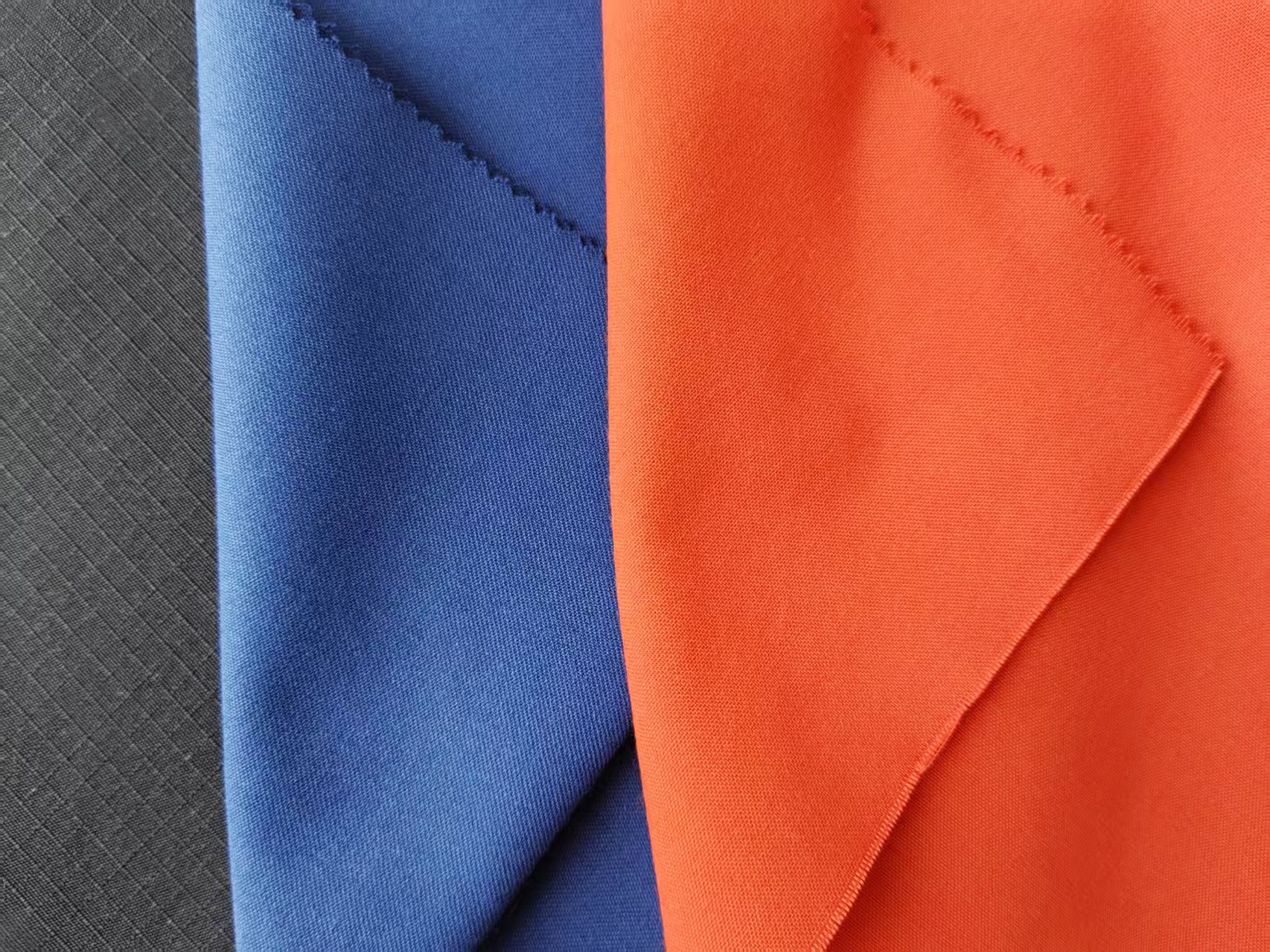
The first thing that separates a truly reliable ballistic panel from an average one is not the fiber alone; it is how those fibers are arranged. Weave architecture sets the baseline for energy distribution, dictating whether a projectile's force spreads across a wide area or concentrates at a few weak points. Plain, twill, and satin constructions each bring distinct trade-offs in drape, stability, and crimp, and those choices ripple through every later stage of production.
Loom capabilities then decide whether that architecture can be executed without compromise. Modern high-speed looms with precision tension control reduce yarn damage and keep the interlacing consistent from edge to edge. When the loom can handle high-modulus fibers like aramid or UHMWPE without excessive abrasion, the finished fabric retains more of its original tenacity, which directly affects how much energy it can absorb before failure.
In practice, ballistic performance starts long before the first shot is fired. Tight tolerances in reed spacing, beat-up force, and let-off motion allow the weave to be reproduced exactly across batches, so every panel behaves the same way under impact. If the loom drifts or the architecture is poorly matched to the threat, even the strongest fiber cannot compensate; the failure often begins at a skipped thread or an unevenly tensioned yarn.
Traceability in Aramid Fabric: From Raw Fiber to Certified Roll
Traceability for aramid fabric starts well before weaving, at the spinneret. Each production run of para-aramid yarn receives a unique lot code that records the polymer shipment, extrusion temperature profile, and spinning line number. This code is physically attached to every bobbin and also stored in the mill's ERP system, so the fiber's identity survives winding, twisting, and beaming without relying on paper tags alone.
When the yarn enters the loom, the fabric roll number becomes the new tracking key. Operators scan the beam lot codes and link them to loom settings such as tension, reed count, and pick density. Any stops or repairs during weaving are logged against the roll, along with the time and station. After scouring and heat setting, the roll moves to inspection, where a barcode label is printed with the full process history pulled from the loom's PLC and the quality database.
The final certified roll carries a tamper-evident label that ties back to the raw fiber certificate. Customers can request the complete chain: original yarn test reports for tenacity and modulus, fabric test data for basis weight and flame resistance, and the signed certificate of conformance. Because every step adds a link to the same record, a single roll number can reconstruct the entire manufacturing path from raw fiber to finished roll in under an hour, which matters for aerospace and ballistic applications where provenance is non-negotiable.
Tailored Weaves, Coatings, and Finishes: Custom Aramid Without Compromise
The weave isn’t selected from a drop-down menu. It starts with your actual use: the direction of tension, the type of abrasion, how often the part flexes. From there we adjust filament count, crimp, and pattern—plain, twill, satin, or a hybrid nobody has tried before. The result is a fabric that behaves the way your process demands, whether that means holding a crisp edge or draping around a compound curve.
Coatings and finishes get the same treatment. Instead of forcing a standard silicone or polyurethane onto every order, we build the surface around what the material will face: repeated flex, chemical splash, UV exposure, or stitch friction. Finishes can include heat setting for dimensional stability, sealed edges to stop fraying, or a lightly textured face for better grip. None of this means sacrificing tensile strength or thermal performance—the aramid core remains untouched. You get the exact surface behaviour you need without opening the door to premature failure.
From Lab-Scale Prototype to Continuous Production: The Scaling Reality
Scaling a process that works beautifully on a bench is rarely a matter of just making the vessel bigger. Heat transfer, mixing dynamics, and reaction kinetics shift as geometry changes; what was homogeneous in a 500 mL flask can stratify in a 200 L reactor. Engineers often discover that the real bottleneck isn't chemistry but physics—how fast you can remove heat, how evenly you can suspend solids, or how long a pump can run before cavitation.
Moving from prototype to continuous production forces decisions that lab work happily ignores. Batch steps that were manually timed need sensors, control loops, and fail-safes. The purity that came from a careful column separation might need to be replaced by continuous chromatography or membrane filtration, because the original method doesn't scale economically. And the raw materials? Suppliers who provided reagent-grade chemicals for trials may not guarantee lot-to-lot consistency at ton scale.
Perhaps the hardest part is cultural: the team that succeeded with the prototype has to unlearn some of its instincts. Tweaking a knob by hand is not a production strategy. The honest scaling reality is that you don't just scale the process; you redesign it around constraints—thermal, mechanical, economic, and human—that were invisible at lab scale.
Stress-Testing Your Aramid OEM: Supply Chain and Raw Material Resilience
Aramid fiber production hinges on a narrow base of precursor chemicals and specialized spinning lines. When you press a supplier on resilience, ask for their past two years of force majeure declarations and how much buffer stock they actually hold—not what their marketing deck claims. Many claim six weeks of safety stock, yet a single delayed shipment of para-phenylenediamine can idle an entire extrusion line within ten days.
Map the upstream dependencies before you sign another annual contract. Does the OEM source polymer from one solvent supplier or three? Are their key spare parts—spinnerets, godets, winders—single-sourced from a machine builder with an 18-month lead time? Stress-testing isn't a paper exercise; it's walking the floor on a Friday afternoon and seeing which racks are empty. One mid-sized converter lost nine weeks of output because a single ceramic guide supplier in the Ruhr Valley flooded, and no alternate tooling had been qualified.
Push beyond the standard audit checklist. Ask for the last raw material substitution trial, the last dual-qualification of a second fiber grade, and the last time they ran a weekend shift on short notice. Resilience shows up in dull details: a second warehouse for monomer drums, cross-trained extrusion operators, or a written protocol for re-qualifying recycled solvent. If the answers sound rehearsed or the documents don't exist, treat that as a supply chain risk with your own name on it.
FAQ
A walk-through reveals more than a spec sheet. Check whether weaving looms are dedicated to aramid or shared with commodity fibers—cross-contamination can ruin lot traceability. Look at tension control on the line, how selvage waste is handled, and whether incoming yarn is tested for denier and moisture before production. If the OEM hesitates to show the quality lab or only presents final inspection data, treat that as a warning sign.
Not all para-aramid yarn is interchangeable. An OEM that buys opportunistic spot lots may deliver lower cost, but you risk batch-to-batch shifts in tenacity and elongation. Established partners typically secure contracted supply from a limited set of fiber producers, store yarn under climate control, and can trace every roll back to a specific lot. That traceability matters when you need to certify a fabric for body armor or structural reinforcement.
It depends on the end use, but you should ask about weave density, hybrid constructions with carbon or UHMWPE, scouring processes that strip spinning finishes, and coating or lamination compatibility. A rigid armorer needs tight picks per inch and clean edges; a motorsport team may want a silicone-coated twill that survives repeated flexing. The OEM should be able to adjust these parameters without treating each change as a new product development project.
Give the OEM a specific problem: a delamination issue after autoclave cure, or a need for a 38 mm wide tape with less than 2% shrinkage. A genuine technical partner will ask about your processing temperatures, pressure curves, and resin system before quoting. Those who immediately say yes we can do that without understanding the application often lack the depth to troubleshoot when the first sample fails.
In ballistic or thermal protection, a 3% variation in fiber alignment or moisture content can shift performance enough to fail a certification test. Consistency comes from disciplined processing: same loom settings, same yarn tension, same finishing temperatures. A good OEM documents those parameters for every run and sends a retained sample with each shipment, so you have a physical reference if something drifts.
When your product carries regulatory or safety liability, the premium buys documented process control, not just fabric. An OEM can offer technical audits, support during first article qualification, and continuity if your design evolves. If you are building a prototype or a low-risk consumer item, a trading company may work. But for aerospace, defense, or motorsport parts, the manufacturing partner becomes part of your quality system.
Conclusion
Choosing an aramid fabric OEM means looking far past the numbers on a datasheet. Fiber quality can vary between lots, and the only way to catch subtle differences in tenacity, elongation, or finish uptake is to work with a partner that tests yarn in-house and understands how those shifts affect downstream weaving. Weave architecture matters just as much. A mill with modern looms and tight control over tension, beat-up force, and selvedge stability will consistently produce fabric that meets ballistic or structural expectations. Traceability runs through all of this. A certified roll should link back to a specific fiber lot, weaving date, and inspection record, so any deviation can be isolated quickly instead of becoming a mystery.
The right OEM also handles customization without treating it as an afterthought. Whether the job calls for an unusual weave pattern, a heat-resistant coating, or a water-repellent finish, the partner should adjust process parameters and validate results on small runs before committing to volume. Scaling from lab prototypes to continuous production is rarely linear, as tension settings, drying times, and quality gates often need recalibration. Raw material resilience matters as well. A dependable OEM maintains alternate fiber sources and buffer stock, so a supply disruption does not stall your line. Stress-test that capability before placing a long-term order.
Contact Us
Contact Person: Sandy
Email: [email protected]
Tel/WhatsApp: 86150 8310 5120
Website: https://www.frdrotex.com