
BBQ Sauce Service for Unforgettable Homemade Flavors
2026-11-23
Most bottled barbecue sauces play it safe, but a great cookout deserves better. The BBQ Sauce Service from HONGBURG FLAVORMAKER is designed for people who want unforgettable homemade flavors without spending all day fine-tuning a recipe. We'll show you how this service turns simple ingredients into rich, smoky, tangy layers that taste like they came straight from your own smoker.
Small Kettles, Not Assembly-Line Vats
There is a stubborn kind of honesty in working with a kettle that barely reaches your waist. It holds only enough for one careful batch, so nothing can be hidden by scale. A slight change in temperature, a few extra minutes, a different handful of hops: each decision announces itself in the finished glass.
Large vats are built for consistency and speed, but they also demand compromise. Recipes get smoothed down, edges rounded off, and the strange, interesting corners disappear. Small kettles leave room for those corners. They allow a brewer to follow a hunch halfway through and still taste the result the same week.
That small scale does not feel like a limitation once you get used to it. It feels closer to cooking than manufacturing. Every batch is a little different, and that is the point: the beer in your hand came from a specific day, a specific fire, and a specific person who was paying attention.
Your Grill's Signature, Bottled on Demand
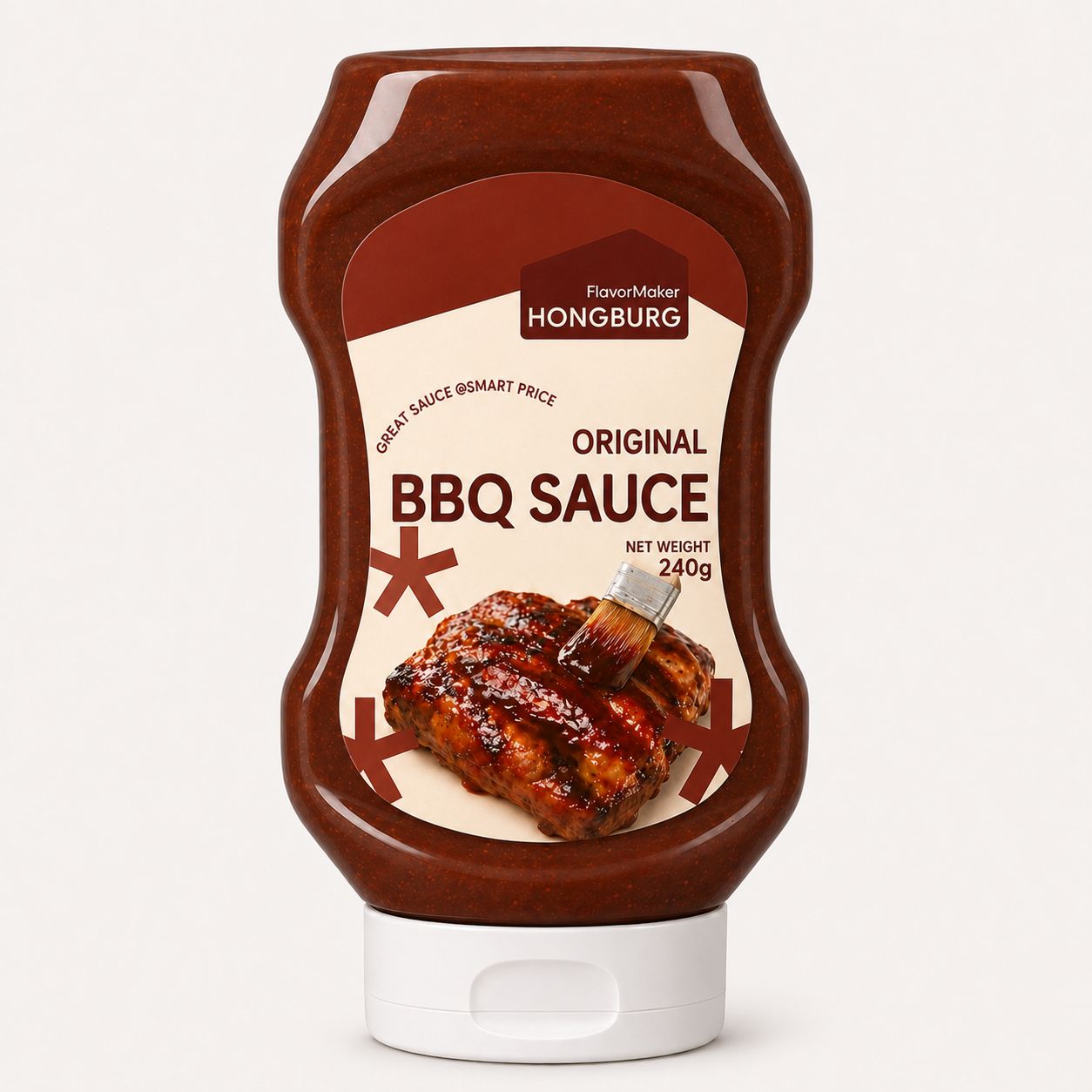
Most sauces sit on a shelf long enough to forget why they were made. This one doesn't. Your blend is mixed, sealed, and labeled only after you tell us what your grill already does best.
Smoke, sweetness, heat, or something closer to a backyard secret—the ratios shift with your menu. Nothing is pre-batched, so the bottle that arrives reflects this season's fire, not last year's leftover stock.
It's a quieter kind of signature. No loud branding, no generic "bold flavor" promise. Just a bottle filled when you ask for it, ready to hit the table while the grates are still warm.
Smoke, Spice, and Sweetness Without the Artificial Sting
There is a particular kind of disappointment that comes from biting into something labeled “smoky” and getting a faint chemical haze instead of real depth. Real smoke should settle low and slow, like the edge of a campfire the morning after, not announce itself with a sharp, synthetic sting at the back of the throat. When the balance is right, smoke does not compete with spice or sweetness; it gives them a floor to stand on. A well-built blend lets the charred note arrive first, then fade just enough for warmth and sugar to step forward without turning cloying. That sequence matters more than any single flavor on the label.
Spice, when it is done well, should feel like a slow build rather than a sudden burn. The heat needs somewhere to go, and sweetness gives it a landing place. But sweetness itself has to stay honest, not syrupy or candy-like, or it flattens everything around it. The trick is a kind of restraint: enough sweet to round the edges, enough heat to keep the palate awake, enough smoke to make both feel earned. Without that restraint, you get a loud but hollow profile, one-note and forgettable the moment the initial shock wears off.
The artificial sting is usually the first sign of a shortcut: an over-extracted smoke concentrate, a heat agent that hits like static, a sugar substitute that leaves a flat, tinny aftertaste. These shortcuts try to mimic the shape of a bold flavor without doing the patient work of layering. What lingers instead is a clean finish, where the smoke recedes into warmth, the spice settles into a low hum, and the sweetness leaves just a whisper of itself behind. That is the difference between something engineered to seem intense and something built to actually satisfy.
A Family-Recipe Vibe With a Professional Finish
The kitchen still smells like Sunday afternoons at my grandmother's house, but the plating wouldn't look out of place in a downtown bistro. That's the balance this recipe walks: familiar, unfussy ingredients treated with a quiet kind of care. You won't find any restaurant tricks hidden in the steps, just a few small decisions that keep the texture bright and the finish clean enough to serve to guests who notice details.
What makes it feel like a family recipe is the flexibility. A little more garlic if that's how your people like it, a splash of stock instead of wine if the pantry is low. What gives it the professional finish is restraint: letting the pan get properly hot, salting in layers, and not crowding the ingredients. Those habits cost nothing, but they show up on the plate.
The result sits somewhere between a weeknight standby and a dish you'd happily set down at a dinner party. It doesn't announce itself with foam or tweezers. It just looks composed, tastes deeply familiar, and leaves everyone assuming you've been making it for years.
Built Around Your Menu, Not a Focus Group
Every dish here starts with what actually ends up on the plate—seasonality, availability, and the instinct of someone who cooks daily. There's no committee deciding which trends to chase or which buzzwords to print on the menu. Instead, the kitchen responds to what looks best at the market that morning, then builds the day around those ingredients.
That means the menu shifts without apology. A cut of meat that comes in too small gets turned into a braise rather than stretched into something underwhelming. Vegetables that show up unexpectedly become the center of a plate, not a side thought. This isn't chaos; it's the opposite—a quiet confidence in letting the food lead.
Guests notice the difference. You won't find a dish engineered to photograph well or to satisfy a hypothetical average palate. You'll find what the kitchen wanted to cook that day, written down only after the fact. It feels less like ordering and more like being invited into someone's decision-making process.
The Bottle Guests Ask About by Name
There are bottles that sit quietly on the back bar, and then there is the one guests mention before they have even glanced at the menu. Ours arrived almost by accident—a limited bottling with a plain label and a story we stopped trying to tell years ago. Regulars began asking for it by a shortened name, something close to a private joke, and now a first-time visitor will lean across the counter and say the name as if testing a password.
The drink itself does much of the work. Pour an ounce and the room changes: dried apricot, soft leather, a little honeycomb, and a finish that lingers long enough to interrupt conversation. It is not the loudest bottle on the shelf, but it has a way of making people remember where they were when they first tried it. We keep a small chalk tally behind the bar for the nights it gets requested by name—less for accounting than for the pleasure of watching the number grow.
What makes it stick is hard to pin down. The name feels good to say, the pour feels generous, and the taste does not need a lecture. People return with friends, point at the shelf, and ask for it exactly as they heard it. That kind of reputation is not built by listing it first or writing an elaborate description. It is built one quiet request at a time, usually from someone who had no intention of becoming a regular.
FAQ
Each batch is cooked in small kettles with whole spices, roasted garlic, and dark brown sugar, then rested for a day so the flavors settle. Nothing is rushed or loaded with corn syrup.
Yes. The base sauce starts balanced, but you can ask for extra smoked paprika, a touch more molasses, or a sharper vinegar bite. We note your preference on every order so repeat jars taste the way you remember.
Unopened jars stay good for up to 12 months in a cool pantry. Once opened, keep it refrigerated and use it within 10 weeks. Most people finish it far sooner.
We offer a date-sweetened blend that still gets its body from fire-roasted tomatoes and apple butter. It is not sugar-free, but it skips refined cane sugar entirely.
Brisket and pulled pork are obvious choices, but the original also works brushed onto grilled portobello caps or stirred into baked beans for a deeper, tangy finish.
The mild batch has gentle warmth from sweet onion and a hint of black pepper, so it is kid-friendly. If you want more heat, choose the chipotle or habanero version.
Absolutely. We offer half-gallon pouches and gallon jugs for events, and we can add custom labels with the couple's name or a family slogan at no extra charge.
We source tomatoes from a farm in southern New Jersey, honey from local apiaries, and spices from a family-run importer. When a harvest runs short, we swap in the best available rather than water down the recipe.
Conclusion
There is a real difference when barbecue sauce comes from small kettles instead of assembly-line vats, and that difference is exactly what our BBQ sauce service is built around. We make each batch in limited quantities and bottle it on demand, so nothing sits around losing its edge. The flavor leans on smoke, spice, and natural sweetness rather than the harsh artificial sting that too often masks good meat instead of lifting it. It carries the warmth of a family recipe passed down and refined, but it finishes with the consistency and polish of a professional kitchen.
Because every batch is built around your menu, not a focus group, the sauce can shift to match what you actually serve: deeper smoke for brisket, brighter tang for pulled pork, or a slower sweetness for ribs. That flexibility matters when the food has to speak for itself. Guests notice when a sauce belongs with a dish, and it quickly becomes the bottle they ask about by name long after the plates are cleared. It is not a generic condiment; it becomes part of the meal people remember.
Contact Us
Contact Person: Peter Song
Email: [email protected]
Tel/WhatsApp: +86 18920189778
Website: https://www.hongburg.com