

Best Cycling Socks for Comfort, Breathability, and All-Day Performance
2026-11-02
Long climbs, hot tarmac, and endless miles put your feet through a lot—so why settle for socks that quit halfway? The best cycling socks blend lightweight breathability, targeted cushioning, and a secure fit that won't slip or bunch. In this guide, we look at what separates truly comfortable socks from the rest, including pairs from Mingjun that hold up from the first pedal stroke to the last.
Why Most Cycling Socks Turn Soggy After the First Hour
Most socks fail in the first hour not because they lack padding, but because they trap sweat against the skin. Cotton and low-grade polyester blends soak up moisture fast, then hold it like a sponge. Inside a snug cycling shoe there is nowhere for that dampness to go. The foot keeps sweating, the fabric stays wet, and before long every pedal stroke feels like stepping on a cold, squishy towel.
Another overlooked factor is the shoe's ventilation. Many road and gravel shoes have smooth, closed toe boxes that block airflow. When the sock's yarn cannot push vapor outward quickly enough, the foot overheats and produces even more sweat. High-quality cycling socks solve this with targeted mesh zones and hydrophobic fibers that move moisture from the skin to the shoe's upper, where it can evaporate. Without that active transport, even a light ride can leave your socks waterlogged by the 60-minute mark.
The Toe Seam Detail That Determines All-Day Comfort
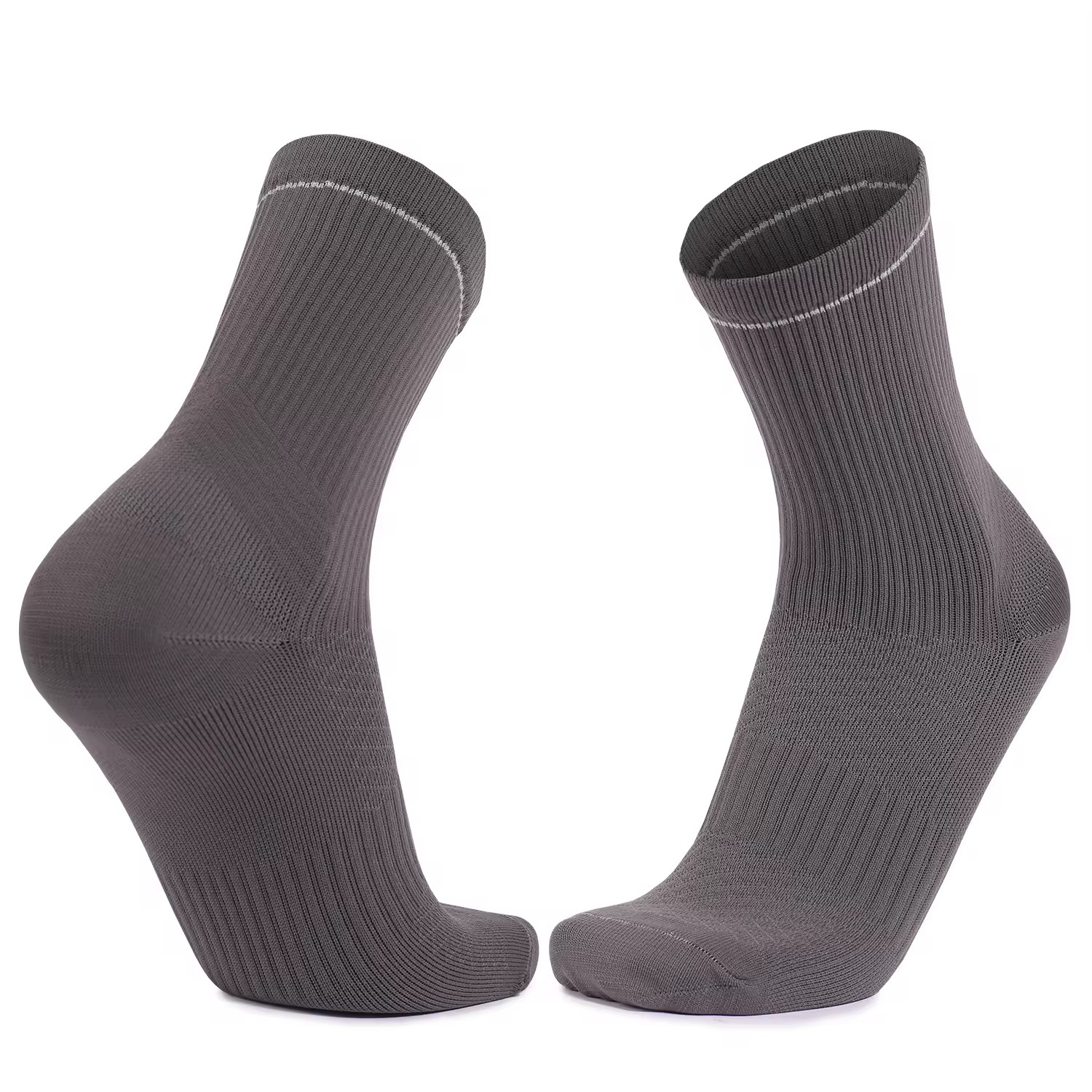
Most people never think about the seam across the toe of their socks until it starts rubbing against their skin by mid-afternoon. That small ridge of stitching can turn an otherwise comfortable pair into something you can't wait to peel off. The solution isn't simply making the seam flatter - it's rethinking how the fabric comes together at the front of the foot. A well-designed toe seam should feel like it isn't there at all, which requires careful alignment of the knit and a joining method that doesn't create a hard edge.
Instead of a traditional overlocked seam that leaves a raised bump, some designs use a hand-linked toe closure. Each stitch is joined loop by loop, which keeps the seam soft and nearly invisible against the skin. This method takes longer and costs more, but the payoff is immediate when you slide your foot into a shoe. There's no pinch at the top of the toes, no friction point that grows worse with every step.
For anyone who spends long hours on their feet, the difference becomes obvious by the end of the day. A rough toe seam can cause redness or even blisters, while a smooth one lets you forget you're wearing socks at all. That's the real test of all-day comfort: when a small detail like a toe seam stops being something you notice and starts being something you never have to consider.
Fabric Blends That Actually Move Sweat Instead of Trapping It
Most "sweat-wicking" labels are just marketing. Cotton and even many cotton-polyester blends grab moisture, hold it against your skin, and leave you clammy. What actually works are blends built around hydrophobic fibers with engineered channel shapes—think polyester and nylon—paired with just enough stretch fiber (usually 5–12% elastane) to keep the weave open. The key isn't the fiber name alone; it's how the yarns are spun and knitted. Look for gridded or dimpled inner faces that create tiny air gaps. That structure pulls liquid off your skin and spreads it across the outer surface, where it can evaporate instead of soaking through.
Polyester-polypropylene and nylon-polyester mixes tend to outperform single-fiber fabrics because each fiber handles a different part of the process. Polypropylene is naturally oleophilic and doesn't absorb water at all, so it shoves sweat outward fast. Nylon adds durability and a softer hand. Some blends also add a small amount of merino for odor control without letting the wool's absorbency dominate. If the blend lists more than 20% cotton or viscose, put it back—those fibers swell when wet and block the very channels the synthetic yarns create. A quick test: press the fabric against a damp palm for five seconds. If it feels cooler and drier on the outside than the inside, the blend is actually moving moisture.
Padding Placement: Where Extra Cushion Helps (and Where It Hurts)
Thick padding under the ball of the foot or the heel can feel plush at first, but after a few hours it often throws off your natural gait. A better approach is to map the high-pressure zones—think metatarsal heads, iliac crests, or the sit bones—and add just enough cushion there to spread the load without creating a squishy, unstable base. Extra material in the arch or along the sides rarely does much good; it just adds bulk and traps heat.
On a chair or saddle, the same logic applies. A thick layer of foam across the entire surface usually compresses unevenly, leaving you with dead spots and pressure points that weren't there before. Targeted padding under the ischial tuberosities and a slight cutout or softer insert at the perineal area can make a long sit far more tolerable. Meanwhile, padding a backpack's shoulder straps too aggressively can push the load away from your body and force your upper back to work harder; a modest layer over the clavicle and a well-shaped hip belt often outperform a plush strap.
That said, some spots should stay relatively lean. Too much cushion behind the knee or in the crotch of a pair of shorts can cause chafing and reduce range of motion. The trick is to think of padding as a pressure distributor, not a comfort blanket. Extra foam only helps when it's placed exactly where a bony prominence needs relief and kept thin where movement, breathability, or structural support matters more.
Sock Height and Cuff Pressure: Small Adjustments, Big Difference
Most people don't think twice about where a sock ends on the leg, but that stopping point shifts how the cuff presses into your skin. A crew sock that sits just below the calf muscle can feel fine in the morning yet leave deep indentations by afternoon, while the same sock in a knee-high version may distribute tension more evenly. The difference isn't always about tightness—it's about anatomy and how the elastic band aligns with the curve of your lower leg.
Cuff pressure works a bit like a tourniquet if it's concentrated in one narrow band. Going an inch higher or lower changes the circumference the cuff has to grip, which can reduce that pinching sensation without you ever adjusting the size. Runners and people who stand for hours often notice this quickly: a slightly taller sock with a graduated, softer knit cuff can hold position without biting into the skin.
Small adjustments pay off especially when feet swell during the day. Look for socks with a wider, non-binding top or try a different height before blaming the brand. Even moving from a standard ankle sock to a quarter-crew can take pressure off the Achilles area and stop the constant tugging that causes blisters. It's rarely about buying bigger shoes—sometimes an inch of fabric at the cuff does what nothing else can.
Longevity Habits That Keep Your Favorite Pair Working for Seasons
The secret to keeping your go-to pair in rotation isn't expensive products—it's small, consistent acts of attention. After a long day, take thirty seconds to wipe away dust and dampness with a soft cloth. Let them air dry away from direct heat before they go back on the shelf. That simple pause prevents the kind of slow breakdown that no conditioner can reverse.
Give them a real break between wears. Rotating with another pair allows the materials to release moisture and regain their shape, especially through the toe box and heel. For leather, a light conditioning every few weeks—not every few days—keeps the surface supple without oversaturating it. Check the laces and eyelets too; replacing a frayed lace early saves strain on the upper later.
When you notice the sole starting to thin or a stitch loosening, don't wait. A cobbler can often add a protective half-sole or reinforce a seam for less than the cost of a replacement pair. These small interventions add seasons to the life of your favorites, and they keep the fit exactly how you like it—broken in, but never broken down.
FAQ
Look for a merino blend or polyester mesh panels rather than thick cotton. Light colors reflect heat better, and a thin profile allows your shoes to vent properly.
Not necessarily. Cushioning under the heel and toes can reduce road buzz, but too much bulk can make your shoes feel tight and restrict blood flow. A midweight option with targeted padding usually strikes the right balance.
The pricier options tend to use finer yarns like merino or high-tenacity nylon, include flat toe seams, and add compression zones that hold their shape over time. Durability and next-to-skin feel improve noticeably, so you're not just paying for the logo.
Mild graduated compression can reduce foot swelling and dull the ache that sets in after hour four. Just avoid anything overly tight around the calf, which can cause hotspots under your shoe's closure.
Slippery synthetic fibers without enough elastic grip at the arch are the usual culprit, along with a size that's slightly too big. Look for a sock with a defined arch band and a cuff that sits 2 to 3 inches above the ankle bone.
Indoor riding traps heat and sweat with less airflow, so choose the lightest, most breathable pair you own. Many people keep a spare set nearby to swap halfway through a long session, which helps prevent blisters.
Turn them inside out, wash cold with a mild detergent, and skip the fabric softener, which coats the fibers and traps bacteria. Air dry or use the lowest dryer setting to avoid breaking down the elastic.
Conclusion
Best cycling socks balance moisture transfer, seam feel, and targeted cushioning. Most socks turn soggy after the first hour because they rely on cotton or flat knits that hold sweat against the skin. A better approach pairs a hydrophobic inner layer with a quick-drying outer knit, so perspiration moves outward instead of pooling under the arch. The toe seam matters just as much: a flat, hand-linked closure prevents the rubbing that turns a long ride into a blister count. Padding placement should follow pedal stroke, not blanket the entire foot—extra cushion under the ball and heel absorbs vibration, while thick fabric over the toes or midfoot only adds heat and slip. Sock height and cuff pressure are small dials with large effects; a cuff that stays up without pinching keeps debris out and blood flow steady, while a height just above the ankle protects from chain slap without overheating the calf.
Longevity habits keep a favorite pair working for seasons. Rolling socks off instead of yanking them prevents heel threads from tearing. Washing inside out in a mesh bag removes sweat salts and sunscreen without abrading the knit, and air-drying rather than machine-drying preserves elastic recovery. Rotate three or four pairs instead of wearing the same one daily, which lets fibers rebound and reduces permanent compression. If the cuff starts to bag or the heel thins, retire the pair to indoor trainer duty before blisters or hotspots appear. With the right fiber blend, a flat toe seam, thoughtful cushion zones, and a mid-calf height with graduated compression, a sock becomes nearly invisible—until you realize you have finished six hours without a single thought about your feet.
Contact Us
Contact Person: Tiga
Email: [email protected]
Tel/WhatsApp: 8613058331729
Website: https://www.china-socksfactory.com/