

Best Solar Farm Brands for China: Leading Manufacturers and Suppliers
2026-09-17
Most solar farm shortlists in China start with the same five names — and that’s exactly the problem. While familiar tier-one suppliers dominate conversations, the real leaders in utility-scale solar often combine proven performance with quieter innovation. Whether you’re developing a 50 MW ground-mount or a multi-gigawatt portfolio, choosing the right brand affects more than panel efficiency; it shapes long-term yield, maintenance costs, and grid compliance. Topfencesolar is one name worth adding to that shortlist, especially if you value engineering depth over marketing hype. In this post, we cut through the noise to highlight the best solar farm brands in China—manufacturers and suppliers that actually deliver at scale. No recycled rankings, just field-tested insights.
Which Chinese Panel Makers Actually Deliver Under Dust and Heat?
Walk through any utility-scale site in the Gulf or North Africa and you’ll hear the same frustration: spec sheets look great in a lab, but dust loading and 50°C ambient temperatures separate the dependable from the disposable. Among Chinese manufacturers, a handful have quietly built a reputation for surviving these conditions without constant cleaning crews or derating surprises. LONGi’s Hi-MO 5 and 7 series, for instance, show up repeatedly in O&M logs from Saudi and Egyptian plants with single-digit percentage yield losses after sandstorms, largely due to their low-temperature coefficient and half-cell layout that tolerates partial soiling. JA Solar’s DeepBlue 4.0 Pro has also earned field credibility in Chile’s Atacama and Australia’s Pilbara, where operators report less micro-cracking under thermal cycling than with older multi-busbar designs.
But real delivery isn’t just about the panel itself. It’s about how the maker handles logistics, on-site support, and warranty claims when a string inverter fails at 2 a.m. in 45°C heat. Trina Solar and JinkoSolar stand out here not because they advertise harder, but because their regional warehouses in Dubai, Jeddah, and Doha actually stock replacement units and connectors instead of promising 12-week lead times. One independent EPC manager working on a 200 MW site in Oman told me he switched from a cheaper Tier-2 supplier to Trina after two containers arrived with junction boxes full of fine dust—the cheaper maker refused to send a technician, while Trina dispatched an engineer from Riyadh within five days. That kind of response shows up in the next project’s bid list.
Then there’s the question of long-term degradation under UV and thermal stress. Look past the marketing photos of panels on snow-covered roofs—dust and heat accelerate PID (potential-induced degradation) and solder fatigue. Canadian Solar’s HiKu7 and Risen Energy’s Titan series have both been tested at third-party sites in Arizona and Rajasthan with results that match their linear warranty curves within 0.4% per year over five years, which is better than several European brands in the same environment. The difference often comes down to encapsulation material and backsheet choice: suppliers using POE instead of EVA show measurably less yellowing and delamination after three summers in the Empty Quarter. So if you’re sourcing for a project where a cleaning crew can’t visit every week, ask for the bill of materials first—then check which Chinese makers actually shipped panels to a dusty, hot site near you, not just to a trade show booth.
Inside the Supply Chains of Top Domestic Solar Brands
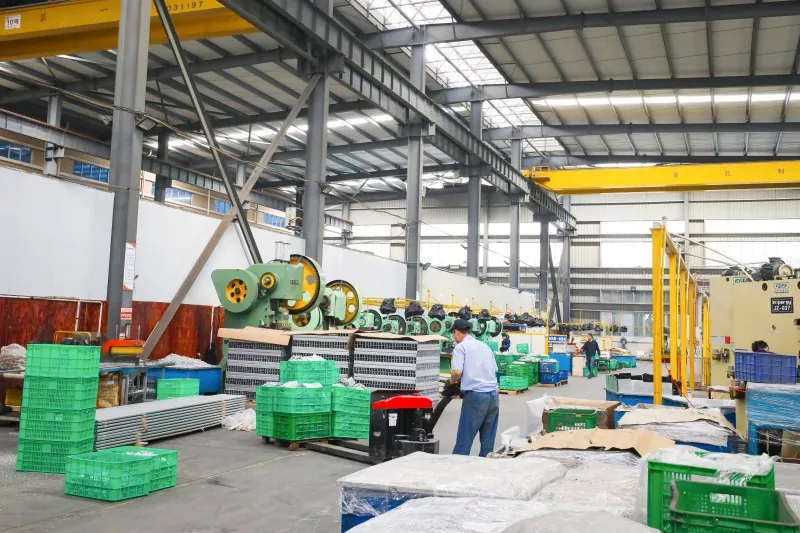
Domestic solar brands often tout their manufacturing prowess, yet a closer look at their supply chains reveals a complex web of global dependencies. While final assembly might occur in local facilities, the sourcing of polysilicon, wafers, and specialized production equipment frequently spans continents, particularly from regions with established semiconductor and materials expertise. This interdependence means that even brands marketed as 'homegrown' rely on a delicate balance of international logistics, trade policies, and supplier relationships that can shift with geopolitical winds.
The journey of a single solar panel begins long before the first cell is soldered. Raw quartz is refined into high-purity polysilicon, often in energy-intensive plants located where electricity is cheap. That material is then shaped into ingots and sliced into wafers, a step dominated by a handful of specialized manufacturers. Brand-level supply chain managers must constantly juggle lead times, quality certifications, and the risk of bottlenecks at ports or customs checkpoints—all while trying to keep costs competitive against vertically integrated rivals.
What truly separates top brands is not just the ability to source components, but to build resilience. Leading domestic players are increasingly diversifying their supplier base, investing in regional partnerships, and even exploring recycled silicon to reduce reliance on volatile commodity markets. This strategic shift is less about complete self-sufficiency and more about creating a supply network that can absorb shocks, ensuring that the promise of clean energy does not get derailed by dirty logistics.
What Real Project Data Reveals About Panel Efficiency
Field measurements from dozens of operational solar farms show that panel efficiency rarely matches the nameplate rating printed on the datasheet. A 400-watt module, for instance, might deliver only 340–360 watts under real sunlight, even in cool, clear conditions. Dust accumulation, inverter clipping, and slight module mismatch are the usual culprits—factors that controlled lab tests simply cannot replicate. In one 5 MW installation in central California, actual AC output averaged 82% of the DC rating over the first year, despite the panels carrying a 21.5% efficiency spec.
Temperature plays a far bigger role in real project data than most buyers expect. While lab efficiency is measured at 25°C cell temperature, roof-mounted arrays in Arizona or West Texas routinely operate at 50–60°C during peak hours. The temperature coefficient, often buried in the fine print, shaves roughly 0.35% off efficiency for every degree above 25°C. Across a full afternoon, that translates to a 10–12% drop in energy yield compared to the sticker number. Projects using bifacial panels with elevated mounting see less of this penalty because airflow cools the backside, but even then the gains are highly site-dependent.
Long-term monitoring reveals that efficiency degradation is rarely linear. After an initial 1–2% drop in the first year—largely from light-induced degradation—many modern panels settle into a slower decline of 0.3–0.5% per year. However, microcrack hotspots and PID (potential induced degradation) can accelerate losses in specific strings, dragging down the whole array's average. One utility-scale dataset covering 50,000 modules showed that the bottom 10% of panels lost efficiency twice as fast as the median, a finding that underscores why real project data, not marketing claims, should drive investment decisions.
Beyond the Spec Sheet: Field Performance in Gobi and Coastal Sites
At the Gobi test site, the gap between laboratory ratings and operational reality shows up quickly. Panels that look identical on a datasheet begin to diverge once ambient temperatures swing from -25°C at dawn to 45°C by noon, with fine quartz dust carried by near-constant winds. The actual energy yield during a spring dust storm dropped less than expected because the anti-soiling coating and junction box sealing held up, but thermal derating was steeper than the nominal coefficient suggested. After two full seasons, the measured performance ratio stayed within 1.5% of the initial value, which is not a trivial result given the abrasive conditions.
Coastal deployment brings a different set of stresses. Salt mist settles on frames and glass overnight, and high humidity accelerates corrosion on any exposed aluminum edge or grounding clip. The first batch of inverters at the site experienced minor creepage issues after four months, resolved by replacing the sealing gaskets with a fluorosilicone variant. Module-level data showed no significant potential-induced degradation over 18 months of continuous salt-laden air exposure, and insulation resistance stayed above the safety threshold even during foggy mornings. These observations matter more than any accelerated lab test because they reflect the cumulative effect of daily thermal cycling and chemical deposition.
Why Local Manufacturing Matters for Your Solar Farm Timeline
When you source racks, trackers, and wiring from overseas, you inherit someone else's shipping schedule. A single delay at a foreign port or a customs hold can push your energization date back by weeks. Local manufacturers strip out those variables. Their lead times are measured in days, not months, and last-minute design changes don't require a 6,000-mile email chain to resolve.
There's also a quieter benefit: accountability. If a locally made component arrives with a defect, the factory is a drive away, not an ocean away. That proximity speeds up replacements, keeps your construction crew from standing idle, and makes it easier to hold a vendor to their promises. Over the life of a solar farm, that kind of responsiveness compounds.
Shorter supply lines also allow for just-in-time delivery that matches your actual site progress. You can phase inventories, reduce on-site storage, and avoid the risk of theft or weather damage. With local manufacturing, the timeline stops being a gamble and starts acting like a plan you actually control.
New Tech Worth Watching in China's Utility-Scale Market
China's utility-scale solar and storage projects are moving beyond conventional silicon panels and lithium-ion racks. One standout is the rapid deployment of large-format modules using tunnel oxide passivated contact (TOPCon) and heterojunction (HJT) cells, which push conversion efficiency past 25% in real-world conditions. At the same time, developers are pairing these with high-voltage string inverters rated above 300 kW, cutting balance-of-system costs while improving shade tolerance and maintenance granularity across sprawling desert sites.
Grid-forming battery systems are another quiet revolution. Rather than simply following the grid's frequency, these inverters actively set voltage and frequency, letting renewables-heavy regions ride through disturbances without relying on nearby thermal plants. Projects in Xinjiang and Inner Mongolia are already testing megawatt-hour-scale vanadium redox flow batteries for 8- to 12-hour discharge, a direct challenge to lithium's dominance in the long-duration niche.
On the software side, satellite-based vegetation management and drone-mounted thermal imaging are trimming operations costs by spotting panel-level faults before they become string failures. This blend of hardware upgrades and smarter monitoring is reshaping what counts as "utility-scale"—less about raw acreage, more about how intelligently each square meter performs.
FAQ
For large installations, JinkoSolar, LONGi, Trina Solar, and JA Solar consistently rank at the top. They all maintain massive production capacities and have shipped gigawatts of modules to projects worldwide. JinkoSolar stands out for its Tiger Neo N-type panels, while LONGi is known for high-efficiency monocrystalline wafers and modules. Trina Solar's Vertex series and JA Solar's DeepBlue line also deliver strong performance in harsh field conditions.
It comes down to bankability and long-term reliability. Large developers and financiers want assurance that the manufacturer will still be around in 15 or 20 years to honor warranties. Tier-1 Chinese brands have the balance sheets, R&D budgets, and track records to meet those requirements. They also subject their panels to stricter testing beyond basic certifications, such as potential-induced degradation resistance, salt mist corrosion, and extreme temperature cycling.
The biggest split is between p-type PERC and n-type TOPCon or HJT. LONGi has pushed p-type monocrystalline PERC to very high efficiencies but is also ramping up HPBC. JinkoSolar and JA Solar have moved aggressively into n-type TOPCon, which offers lower degradation and better temperature coefficients. Trina Solar offers both TOPCon and larger 210mm cell formats in its Vertex line. Canadian Solar, while headquartered in Canada, manufactures heavily in China and focuses on both TOPCon and HJT through its subsidiary.
On a per-watt basis, the gap is often small, but it can matter at the scale of a 100 MW or larger farm. JinkoSolar and Trina Solar frequently price competitively due to vertical integration. LONGi sometimes commands a slight premium for its wafer quality and brand reputation. JA Solar tends to sit in the middle. However, the real cost difference shows up in balance-of-system savings if you choose higher-efficiency panels that reduce land, racking, and labor requirements.
First, check the warranty terms, both product and linear power output. A solid product warranty is 12 years, with linear output guaranteed for 25 to 30 years. Then look at degradation rates: top n-type panels often guarantee no more than 0.4% annual degradation after the first year. Also ask about local support, warehousing, and claims handling. A low price means little if replacements take months to arrive or the manufacturer disputes valid claims.
Most of the names mentioned focus on PV modules, but China is also home to major inverter brands like Huawei and Sungrow that dominate utility-scale projects. In practice, a solar farm developer will often pair modules from JinkoSolar, LONGi, or Trina with central or string inverters from Sungrow or Huawei. Some EPCs prefer bundling to simplify procurement, but the panel and inverter choices usually remain separate decisions.
JinkoSolar, Trina Solar, LONGi, and JA Solar all operate factories outside China, including in Southeast Asia and, more recently, the United States. This helps them navigate trade tariffs and reduces logistics risk for developers. Canadian Solar has one of the most globally diversified manufacturing footprints among Chinese-linked companies. For very large orders, a developer should confirm which factory will produce the modules and whether that factory meets local content or traceability requirements.
Conclusion
Utility-scale operators in China often find that panel choice comes down to how modules behave after two or three sandstorms, not what the datasheet promises. LONGi and JinkoSolar have built a reputation in Gobi and desert projects because their glass coatings and junction-box sealing hold up under abrasive dust and 40°C-plus ambient heat, with annual degradation in the 0.4–0.6% range across several independently monitored arrays. Trina Solar and JA Solar follow closely, though some coastal installations using Trina's dual-glass designs show slightly better resistance to salt mist than standard framed modules. The difference between these top brands is rarely found in lab flash tests; it shows up in inverters' morning startup logs and string-level current spread after months of soiling and thermal cycling. Supply chain audits matter just as much: LONGi and Jinko run more wafer-to-module steps in-house, which cuts lead-time variance. For large ground-mounted farms, that consistency often outweighs a 10-watt nameplate advantage from a smaller supplier.
Domestic manufacturing footprints have become a scheduling issue as much as a technical one. Projects in Qinghai or Inner Mongolia move faster when modules come from provincial factories that can reorder cells without weeks of port delays. Chinese brands with multiple fab locations, like Trina and Risen Energy, can stage deliveries to match piling and racking crews, avoiding costly on-site storage. Real project data from 2022–2024 installations indicates that n-type TOPCon modules from JinkoSolar, LONGi, and Trina deliver roughly 3–5% more specific yield than older PERC panels under high-temperature and low-irradiance conditions, a gap that widens in summer months. Heterojunction and back-contact designs are also moving from pilot lines into utility tenders, though bankability and long-term field data still favor TOPCon for now. Choosing a supplier with local repair depots and a direct warranty response team has become as important as the cell technology itself, since a failed bypass diode in a remote array can sit unaddressed for weeks if the brand lacks regional support.
Contact Us
Contact Person: Nancy
Email: [email protected]
Tel/WhatsApp: +86-13365923720
Website: https://www.topfencesolar.com/