

Best Vacuum Load Break Switch Solutions for Reliable Power Interruption
2026-09-07
A routine switching operation on a 12kV feeder shouldn’t feel like a roll of the dice—yet unreliable load break switches make it one. Reliable power interruption isn't just a technical requirement; it's the difference between safe operations and avoidable failures. That’s exactly why Deepwill vacuum load break switches are engineered for predictable, clean disconnection every single time. In this article, we’ll unpack what makes them the go-to choice for utilities that refuse to compromise on safety.
The Case for Vacuum Interruption as a Cleaner Load-Breaking Method
Switching load current has long relied on methods that leave behind arcs, gases, or residue requiring careful handling. Vacuum interruption changes that picture by containing the breaking event inside a sealed chamber from which air and other gases have been evacuated. Without a medium to ionize, the arc that forms between separating contacts is sustained only by metal vapor from the contact surfaces themselves, and it collapses as soon as current crosses zero. The result is an interruption process that produces no exhaust, no chemical byproducts, and no need for auxiliary quenching fluids.
From an operational standpoint, the sealed-for-life design typical of vacuum interrupters means there is no arc chute to inspect, no oil to filter, and no SF6 to monitor for leaks or reclaim. This directly lowers the burden on maintenance crews and reduces the chance of accidental release of environmentally sensitive compounds. And because the interrupting medium is simply an empty space with high dielectric strength, performance does not degrade with the number of operations in the same way that oil or gas-based breakers might suffer from carbon build-up or contact erosion.
Field experience shows that vacuum interrupters routinely handle tens of thousands of load-break operations without requiring internal inspection. For utilities and industrial plants moving toward cleaner, quieter switchgear, that means fewer truck rolls, fewer consumable materials, and a smaller environmental footprint over the equipment’s life. The case for vacuum interruption, then, rests not on a single dramatic advantage but on a combination of cleanliness, reliability, and simplicity that other load-breaking methods struggle to match.
Selecting Load Break Switches That Survive Harsh Environments
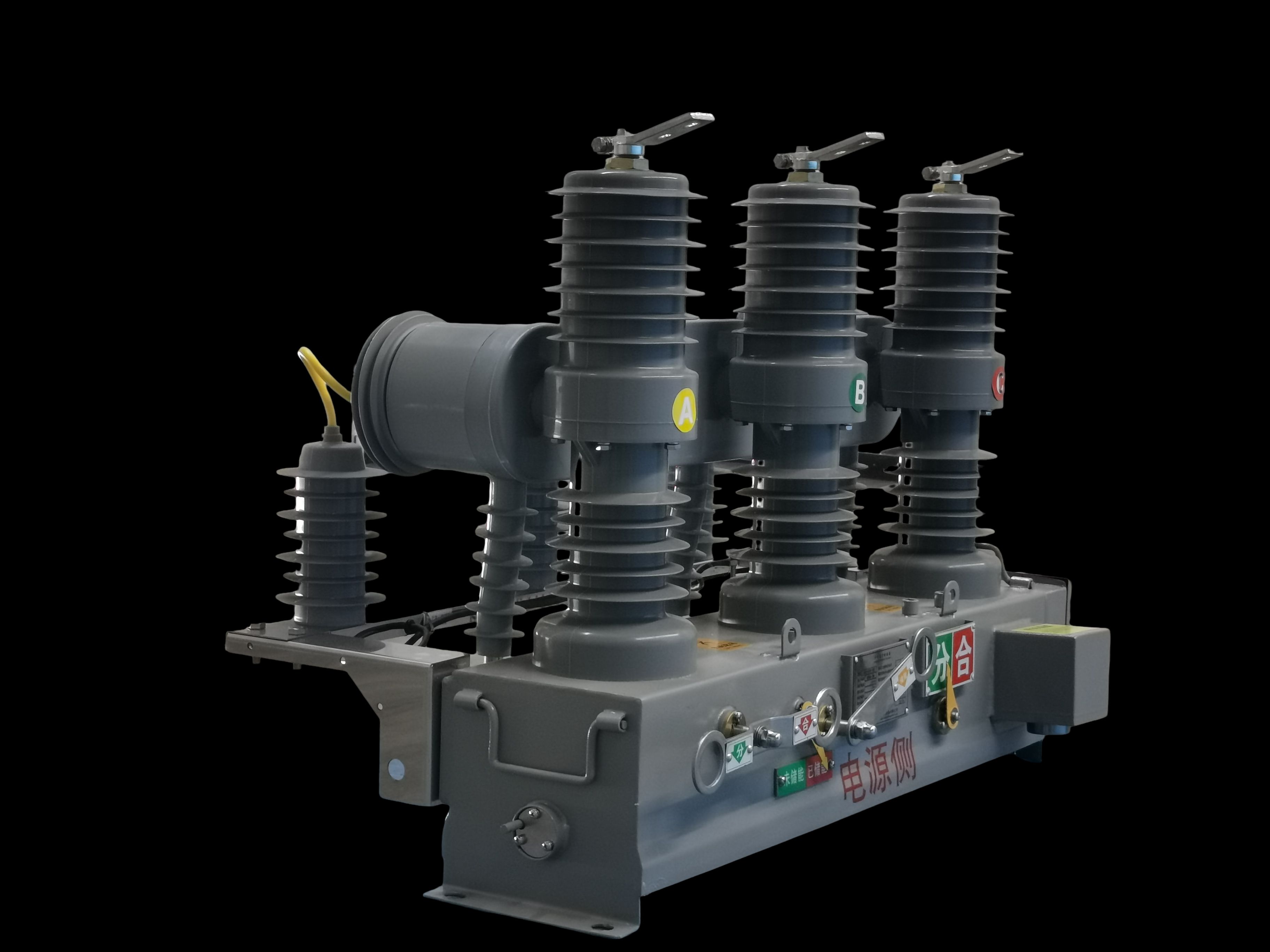
Load break switches installed in corrosive or dust-laden settings fail early when enclosure ratings and contact materials are chosen from indoor assumptions. For coastal or chemical-plant exposure, look for Type 4X or IP66 enclosures in non-metallic or 316 stainless steel, not painted carbon steel. Polycarbonate bodies with UV stabilizers resist sun degradation, but watch for stress cracking around cable entries if solvents are present.
Switch internals matter just as much as the housing. Silver-plated copper contacts handle repeated load breaking, but sulfur-rich atmospheres can tarnish exposed silver and raise contact resistance. In those cases, select switches with sealed arc chambers or tin-over-nickel terminal pads that resist sulfide creep. Mechanical linkages should use stainless steel springs and self-lubricating bearings rated for the lowest expected cold-start temperature, since grease that stiffens at -20°C turns a disconnect into a two-hand operation.
Condensation is the hidden killer. A sealed switch without a drain or breather can collect internal moisture during temperature swings, leading to tracking across insulating barriers. Specify a design with a factory-installed breather drain or internal space heater terminals, and verify the manufacturer has thermal cycling test data, not just a static IP claim. For high-vibration sites like crushers or shipboard decks, ask for locked operating handles and padlockable off positions with reinforced shaft seals, because a switch that drifts open under vibration or snaps its handle off is worse than no switch at all.
How Vacuum Switching Cuts Arc Flash Exposure on the Floor
When a fault occurs, how quickly the circuit is cleared directly determines the arc flash energy released. Vacuum switching interrupts current inside a sealed bottle, typically extinguishing the arc in less than half a cycle. That near-instant clearing cuts the incident energy on the floor to a fraction of what older breaker designs expose workers to.
The real difference shows up in where the arc lives. Air-magnetic breakers vent hot ionized gases around the gear, creating a secondary hazard zone. A vacuum interrupter contains the entire event inside the bottle—no external arc chute, no gas plume, no flash escaping the enclosure. That containment keeps the area around the switchgear safer during a trip or a fault.
Because vacuum bottles seal the contacts away from moisture and contamination, they hold their interruption speed consistently over thousands of operations. Maintenance crews can tighten protective relay settings without chasing nuisance trips, which lowers clearing times even further. Shorter clearing plus sealed interruption means less heat, less pressure, and far less arc flash exposure for anyone working near the lineup.
What Field Technicians Actually Notice About Sealed Interrupters
The first thing that catches a field technician's eye is the physical condition of the interrupter housing. While the seals are designed to be maintenance-free, anyone who has spent years in the field knows that real-world conditions rarely match the lab. Technicians look for signs of micro-cracking around the seal edges, especially after extreme temperature swings or vibration-heavy installations. A faint dust ring or slight discoloration near the seal interface often tells more than any test report can. It's not about distrusting the engineering—it's about recognizing that thermal cycling and mechanical stress leave a signature that only regular, close-up inspection can catch.
Another subtle but crucial detail is the presence of condensation or moisture buildup inside the viewing window, if one exists. Even a few droplets can indicate that the seal is no longer performing at its rated dielectric strength. Technicians also notice unusual odor or a faint ozone smell around the interrupter, which can signal micro-arcing across a degraded seal face. These are not things you'll find in a manual; they come from years of kneeling next to switchgear and learning what "normal" really looks like. The best field crews develop an almost intuitive sense for when a sealed interrupter is about to become a problem child.
Finally, technicians pay close attention to how the interrupter behaves during operation—specifically, the sound and feel of the mechanism. A properly sealed interrupter has a crisp, consistent break. When seals begin to fail, you might hear a slightly softer or muffled arc interruption, or notice a delay in the mechanism's return. These auditory and tactile cues are often overlooked in formal maintenance checklists, but they are exactly what experienced field technicians rely on to catch seal degradation before it leads to a full dielectric failure.
Aligning Switch Ratings with Actual Interruption Duty—Not Just Spec Sheets
A nameplate interrupting rating is a single number, but the actual interruption duty on a breaker or switch is a complex event shaped by the system behind it. The rated short-circuit current from a spec sheet almost always assumes a specific test circuit with defined X/R ratio, transient recovery voltage (TRV) envelope, and standardized closing/opening sequence. In the field, feeder lengths, transformer impedances, and the mix of rotating loads will alter the current zero behavior and the rate at which voltage recovers across the opening contacts.
Take a medium-voltage breaker applied at a generator bus: the fault current may have a high DC component that decays slowly, delaying the first current zero far beyond what the standard test circuit imposed. Even if the symmetrical rms value is below the nameplate, the arcing time and contact erosion under those prolonged asymmetric loops can exceed the design margins. Similarly, shunt capacitor banks or cable-fed faults produce TRV waveforms with much faster rise times, and a switch that passed its type test under a four-parameter TRV envelope can be pushed into dielectric re-ignition if the local TRV slope is steeper.
The practical fix is to treat the spec sheet as a starting point, not the end of the story. Pull actual fault studies, include X/R contributions from different sources, and overlay the expected TRV curves against the manufacturer's application data. Pay attention to operating sequences, too: rapid auto-reclosing on overhead lines adds cumulative thermal stress that a single-shot interrupting test never reproduced. When these real-world duties are aligned with the switch's proven capabilities, you avoid the twin traps of overbuilt equipment and hidden failure modes.
Practical Ways to Bring Load Break Switching into Distribution Automation
Load break switching often sits at the edge of automation plans—close enough to matter, but easy to defer when budgets tighten. A practical starting point is to retrofit existing manual switches with motor operators and simple remote terminal units. This avoids the cost and disruption of full replacements while still giving operators a way to isolate faults without sending a crew. Many utilities already have the communication backbone in place for SCADA, so adding a few control points becomes a matter of wiring and configuration rather than a network overhaul.
Another route is to integrate load break switches into the same logic used for reclosers and sectionalizers. Instead of treating them as standalone devices, tie their status and control into the feeder automation scheme. For example, a switch can be programmed to open automatically when a downstream fault is detected, then wait for a manual or automatic close command. This reduces outage duration and keeps the switching sequence consistent with protection settings. The key is to avoid overcomplicating the logic—use simple, well-tested rules that operators can predict.
Field experience shows that the most successful deployments start with a pilot on a troublesome feeder. Pick a location with frequent outages or difficult access, install just two or three automated load break switches, and monitor the results for a season. The data often justifies wider rollout. Also, pay attention to power sources: a switch with no local supply is useless during an outage. Battery-backed motor operators or energy harvesting from the line itself can make the difference between a switch that responds and one that just sits there.
FAQ
Vacuum interrupters quench arcs inside a sealed bottle with minimal contact erosion, so they handle frequent switching without the gas handling or environmental concerns tied to SF6 units. That sealed construction also keeps out moisture and contaminants, which helps maintain consistent interruption performance in demanding distribution feeders.
The vacuum chamber provides a near-perfect dielectric recovery after current zero. When contacts separate, the metal vapor arc diffuses rapidly and condenses back onto the contact surfaces, so the arc is extinguished at the first or second current zero. There is no need for oil, gas refilling, or external quenching chambers.
Stored-energy mechanisms with a motor-wound spring are typically more consistent than manual dependent mechanisms. They deliver the same contact speed regardless of operator strength, reducing the chance of slow-make or slow-break arcing. Look for designs with a simple mechanical interlock and visible contact position indicators, which simplify both operations and troubleshooting.
Yes, many models are rated for load breaking up to their full rated current and can also be closed onto a fault, provided the short-circuit making current rating matches the upstream protection. The vacuum interrupter's fast dielectric recovery supports this dual duty without additional arc chutes, which keeps the footprint small.
The core vacuum interrupter is sealed for life, so the main focus is on mechanical parts: wipe and inspect the operating mechanism, check contact wear indicators if fitted, test interlock functionality, and verify that the insulation surfaces stay clean and dry. Periodic high-voltage or vacuum integrity testing can provide early warning but is often only needed after a high fault count or mechanical operation threshold.
They shine in underground distribution, industrial plants, wind and solar collection circuits, and compact transformer substations. Frequent load switching, space constraints, and environments with high humidity or pollution favor vacuum technology because the interrupter is sealed, and there are no open arc paths or insulating gases to monitor.
Most units can be fitted with motor operators, auxiliary contacts, and communication-ready controllers. This allows remote open/close commands, status feedback, and even fault passage indicators to be wired into a SCADA system or local RTU. A well-integrated switch reduces outage duration by letting operators isolate a section without sending a crew to the site immediately.
Compare rated voltage, load break current, short-time withstand current, mechanical endurance class, and the short-circuit making capacity. Then verify the environmental ratings such as operating temperature range and humidity tolerance. Finally, look at the physical envelope and whether the operating mechanism side can be accessed easily for maintenance in the planned switchgear layout.
Conclusion
Utility crews and plant engineers keep circling back to the same point: a load break switch shouldn't be the weak link when you need to interrupt current without drama. Vacuum interruption has quietly become the preferred route because it contains the arc inside a sealed bottle, keeping contact erosion minimal and eliminating the messy byproducts you get with air or oil designs. On the floor, that translates into less arc flash exposure and a switch that doesn't demand constant cleaning or adjustment. Field technicians often mention that sealed interrupters just keep working—no oxidation, no humidity ingress, no unexpected pitting after a few hundred operations. That kind of predictability matters when the alternative is a surprise outage during a routine switching sequence.
The real differentiator, though, comes when you match the switch to the actual interruption duty instead of chasing the biggest spec sheet number. A vacuum load break switch rated for the specific fault make/break duty and mechanical endurance of your feeder will outlast a generic unit that looks impressive on paper but wears out after repeated switching. Harsh environments—coastal salt, dust, altitude—tend to expose weak points in non-sealed designs, which is another reason sealed vacuum interrupters keep showing up in substations and pad-mounted gear. And if distribution automation is on your roadmap, look for switches that can accept motor operators and position sensors without field retrofitting; that's where vacuum technology really shines, because the low operating energy and predictable travel curve make remote operation far more reliable than older manual designs. The best solutions aren't just interrupting devices—they're the quiet backbone of a safer, smarter switching scheme.
Contact Us
Contact Person: Julion
Email: [email protected]
Tel/WhatsApp: 8617351370631
Website: https://www.deyunelectric.com