

China BOV Aerosol Cosmetics Factory Powers Next-Gen Beauty Sprays
2026-11-03
Behind every fine mist that feels weightless on your skin is a technology most beauty brands never talk about. China’s BOV aerosol cosmetics factories are quietly redefining how next-generation beauty sprays are made—and one name keeps surfacing in the supply chain: Wilson. From precision spray patterns to propellant-free formulas, the shift is as much about engineering as it is about elegance. Here’s why the future of facial mists, setting sprays, and sunscreens may already be rolling off a BOV line near Shanghai.
Inside the BOV Revolution for Beauty Mists
The shift to bag-on-valve packaging quietly rewired what a facial mist can do. Instead of forcing formula and propellant to share space, the product stays sealed inside a multi-layer pouch while compressed air or nitrogen does the work from outside. That separation means fewer preservatives, no risk of butane tainting a delicate rosewater, and a fine, consistent cloud that doesn’t sputter halfway through the bottle.
What used to be a compromise between spray quality and ingredient integrity has turned into a design advantage. Brands are using BOV to run oxygen-sensitive actives like vitamin C or niacinamide without the usual degradation, and the continuous pressure keeps particle size even from first spritz to last. The result feels less like a quick refresh and more like a targeted treatment that happens to float onto skin.
Why China’s Aerosol Experts Are Redefining Spray Skincare
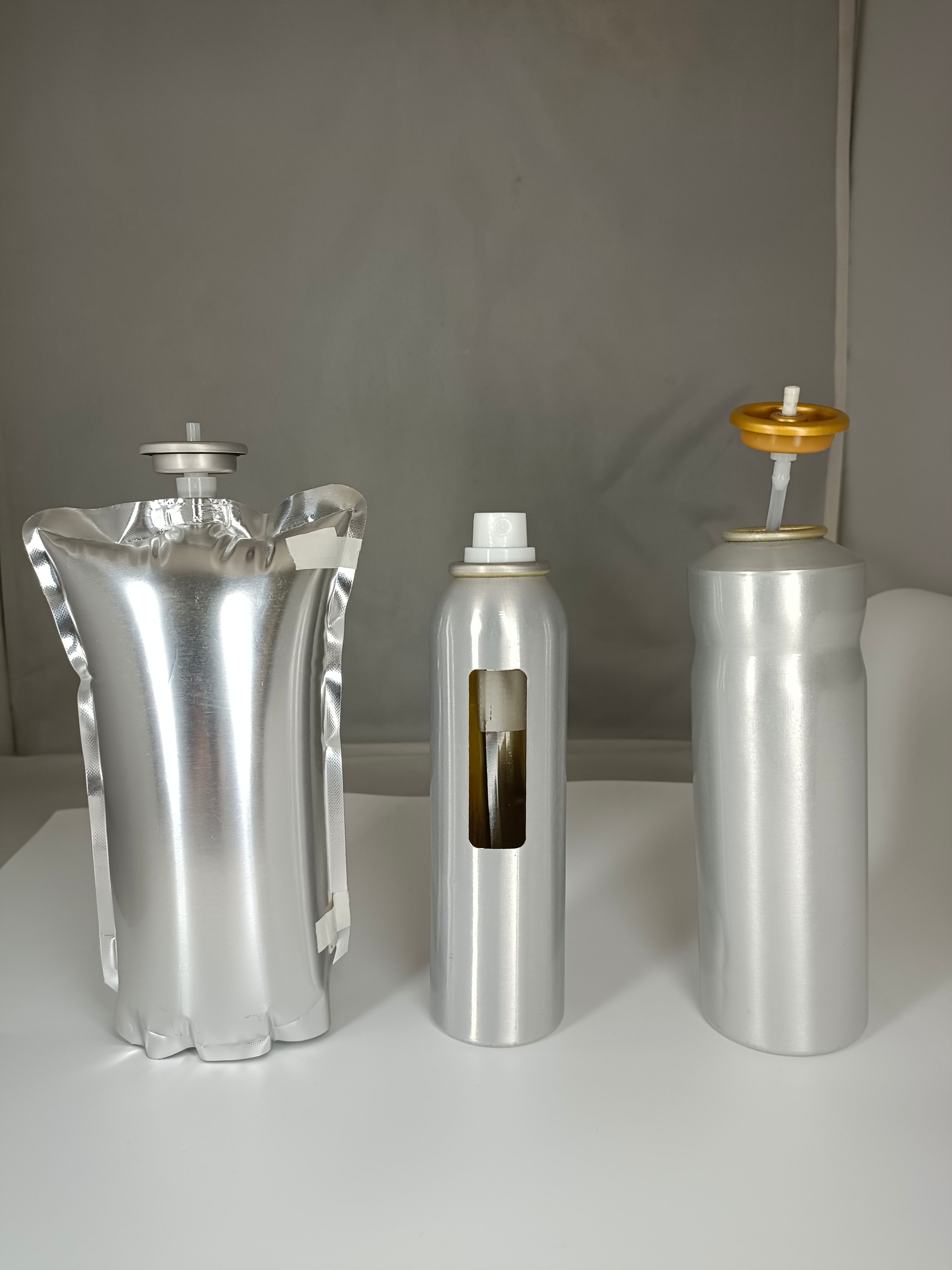
China's aerosol technology sector has quietly moved beyond simple packaging, turning its attention to how fine mists actually interact with living skin. The shift comes from a deep understanding of particle physics and fluid dynamics, fields where Chinese engineers have built a strong reputation in both consumer goods and pharmaceutical delivery. Instead of treating a spray as just a convenient way to apply liquid, these experts are optimizing droplet size, spray angle, and evaporation rate to match different skin types and active ingredients.
One notable approach involves customizing nozzle designs based on the molecular weight and viscosity of each formula. Heavier oils, for instance, require a different atomization pattern than water-based serums if they are to penetrate the stratum corneum without clogging pores. By collaborating closely with cosmetic chemists, aerosol specialists are developing dual-phase sprays that deliver hydrating humectants and occlusive emollients in a single, even layer. This level of precision reduces product waste and prevents the patchy coverage that often plagues traditional pump bottles.
Beyond performance, there is a growing emphasis on sensory experience and environmental responsibility. Chinese manufacturers are experimenting with compressed air systems that eliminate traditional hydrocarbon propellants, producing a cooler, softer mist that feels less startling on sensitive skin. At the same time, they are refining valve crimping and canister lining methods to extend shelf life without adding synthetic stabilizers. The result is a new generation of spray skincare that feels less like a mist and more like a targeted treatment—one where every droplet has a purpose.
From Formula to Fine Mist: Precision Engineering at Scale
Turning a liquid formula into a consistent, microscopic mist isn’t just a matter of pressure. Every batch moves through a series of micro-adjustments—nozzle geometry, viscosity shifts, chamber temperature—that determine whether the spray lands as a soft plume or an uneven sputter. The work happens in tolerances measured in microns, where a fraction of a degree changes droplet size and distribution.
Scaling that precision means the equipment has to think on its feet. Rather than relying on fixed settings, the line recalibrates itself at multiple checkpoints, sampling spray patterns and adjusting flow rates before a container ever reaches the filling head. That closed-loop approach keeps the output stable across thousands of units, not just the first dozen off the bench.
What separates this from conventional production is the refusal to treat atomization as a solved problem. Materials shift between suppliers, nozzles wear subtly, and ambient humidity creeps in. By engineering feedback into every stage—from bulk mixing through final actuation—the process holds the mist to the same character at hour one and hour four hundred.
Eco-Conscious Propulsion for Modern Cosmetics
The shift toward eco-conscious propulsion in cosmetics isn't about swapping one ingredient for another—it's rethinking how products move from concept to consumer without dragging a heavy carbon footprint behind them. Brands are now engineering delivery systems that use compressed air instead of traditional aerosol propellants, eliminating volatile organic compounds while keeping the mist fine and consistent. This approach quietly solves the old trade-off between performance and planetary impact, giving formulators room to play with textures that feel luxe but behave responsibly.
Packaging plays a quieter but equally vital role. Refillable airless pumps and mono-material cartridges are becoming the default for serums and foundations, cutting down on the mixed plastics that make recycling a headache. The propulsion mechanism itself gets a rethink too—spring-loaded dispensers and manual vacuum systems reduce reliance on single-use metal canisters. It's a subtle engineering feat: the same satisfying click or mist, but with a lifecycle that doesn't end in a landfill after three weeks.
What makes this movement stick isn't guilt or regulation alone. It's the realization that eco-conscious propulsion can actually improve the user experience—less propellant means more room for active ingredients, and airless systems protect unstable actives like vitamin C from oxidation far better than a jar. So the modern cosmetic isn't just cleaner in principle; it's sharper in practice, proving that sustainability and performance don't have to sit at opposite ends of the shelf.
Custom Canisters, Unlimited Possibilities
A canister rarely gets a second thought, yet the right shape, finish, and closure can change how a product feels in someone's hand. Custom dimensions let you move away from stock sizes that force awkward fill lines or wasted shelf space. Matte coatings, soft-touch lacquers, embossed logos, and gradient prints turn a simple tube into a tactile part of the brand story.
Functionality can be tailored just as precisely. Need an aluminum container that blocks UV and handles aggressive solvents? Or a tinplate can with a child-resistant cap and a food-grade internal lining? Inserts, dividers, and custom neck finishes allow one package to hold a candle, a serum, or a set of precision screws without rattling or leaking.
Short runs and quick sampling have made this level of customization accessible beyond large corporations. A small skincare label can test a lavender-scented balm in a brushed gold canister with a bamboo cap, while a workshop packs limited-edition spare parts in deep-drawn steel with a laser-etched torque spec. The constraints are mostly your own, not the catalog.
The Quiet Power Behind Global Beauty Brands
Walk into any high-street beauty retailer and the shelves tell a story of French luxury, Korean innovation, or New York cool. But behind many of those polished jars and sleek compacts sits a much less glamorous network of contract manufacturers, formulators, and packaging engineers who rarely appear on a label. These companies operate in industrial parks outside Milan, Seoul, and New Jersey, quietly turning a brand's mood board into a stable emulsion or a precise shade of matte lipstick. Without them, even the most confident marketing campaign would have nothing to pour into a bottle.
The real leverage of this hidden layer is speed and specialization. A startup can launch a complete skincare line in six months not because it built a lab, but because a single manufacturer already holds thousands of pre-tested base formulas. Need a gel-to-oil cleanser with a specific pH and a cherry blossom scent? There's likely a bench chemist in Daegu or Lombardy who has solved that exact problem twice this year. This means the visible brand is often just the final expression of choices made by suppliers who serve ten or twenty competitors at once.
That quiet influence reshapes trends as much as it responds to them. When a packaging supplier develops a new airless pump that preserves vitamin C for longer, half a dozen brands can adopt it within the same season, making the innovation feel like a shared aesthetic shift rather than a single company's breakthrough. The next time a beauty product feels impossibly on-trend, remember it may have arrived because a factory in Guangzhou or a formulation house in Geneva found a way to make it cheaply, reliably, and ready for someone else's logo.
FAQ
BOV means Bag on Valve. Instead of mixing the product directly with propellant, the formula sits inside a sealed bag while the propellant stays outside. This keeps the spray pure and lets it work at any angle.
Many Chinese manufacturers have invested heavily in precision filling lines and cleanroom production. They often offer shorter lead times, flexible batch sizes, and competitive pricing without cutting corners on valve or canister quality.
The product never touches the propellant, so sensitive ingredients like vitamins or botanical extracts stay stable. The spray comes out as a fine, even mist, and you get close to 100% product evacuation from the can.
Anything that needs a gentle, continuous spray: thermal water mists, toners, sunscreens, hair refreshers, and even liquid highlighters. BOV is especially good for formulas with active ingredients that degrade when exposed to air or propellant.
Yes. Reputable BOV facilities keep a range of actuators and valve specifications on hand. They can adjust droplet size, spray angle, and flow rate so the output matches the brand's intended feel, from a cloud-like mist to a more targeted stream.
Generally, yes. The bag-in-can design often uses compressed air or nitrogen instead of hydrocarbon propellants, and the can itself is recyclable. It also reduces product waste because nearly every drop is dispensed.
A serious factory will run leak tests, valve function tests, pressure stability checks, and compatibility trials with your specific formula. Many also follow ISO 22716 for cosmetics GMP and can provide batch documentation.
Because they solve common aerosol problems: no cold blast, no propellant mixing, no contamination, and consistent spray from first to last use. That makes them a modern upgrade for beauty products that need a premium, reliable delivery system.
Conclusion
The shift toward bag-on-valve technology is quietly reshaping how beauty mists are made, and one Chinese factory is at the center of it. Inside its production halls, the BOV revolution isn't just about packaging—it's about delivering skincare with finer, more consistent droplets than traditional aerosol systems ever could. The engineering teams treat every spray as a precision instrument, tuning actuator geometry, valve pressure, and formula viscosity until the mist feels almost weightless on skin. This obsession with fine-mist performance is why global beauty brands, even those that never mention their manufacturing partners, keep returning to the same lines. From lightweight toners to setting sprays that hold makeup for twelve hours, the factory's ability to move from formula to finished canister at scale means a new product concept can become a shelf-ready item in weeks, not months.
What sets this operation apart is how it pairs technical rigor with eco-conscious propulsion. Instead of relying on volatile hydrocarbons, the BOV system uses compressed air or nitrogen as the propellant, keeping the formula pure and extending shelf life without heavy preservatives. The canisters themselves are endlessly customizable—slim aluminum sleeves, matte finishes, soft-touch coatings—so a niche indie brand can order five thousand units with a bespoke color and still get the same attention as a multinational order. Quietly, this factory powers next-gen beauty sprays for labels across Europe, North America, and Asia. It doesn't chase headlines. It simply builds the invisible infrastructure that lets a mist feel like luxury, spray after spray.
Contact Us
Contact Person: Simon
Email: [email protected]
Tel/WhatsApp: +86 13267966849
Website: https://www.wilsoncosmetic.com