
China Concrete Admixture: Types, Applications, and Selection Guide
2026-08-18
In China’s breakneck construction boom, the difference between concrete that lasts decades and concrete that cracks in months often comes down to a few liters of a highly engineered chemical cocktail. Concrete admixtures—water reducers, retarders, air entrainers, and more—are quietly shaping skylines and highways, yet many engineers still pick them from outdated catalogs. This guide cuts through the noise. You’ll discover which types actually matter on Chinese job sites, how they interplay with local cement chemistries, and the selection criteria that separate a smooth pour from a costly repair. If you’ve ever wondered why a rival’s mix flows better with less water, the answer lies ahead. At HAISEN, we’ve spent years decoding these formulations for real-world use—and what we’ve learned might just change your next project’s specs.
The Chemical Toolbox Behind Modern Chinese Concrete
Walk onto a high-rise job site in Chengdu or a high-speed rail casting yard outside Zhengzhou, and the concrete being poured is nothing like the simple mix of cement, sand, and stone from a generation ago. The real workhorses are a suite of chemical admixtures—polycarboxylate ether superplasticizers that slash water demand while keeping slump flow high, air-entraining agents that stabilize billions of microscopic bubbles against freeze-thaw stress, and set-retarding or accelerating formulas tuned to the punishing pace of Chinese construction schedules. These aren't optional tweaks; they're the difference between a pumpable 80-story column pour and a hardened block that cracks before it cures.
What sets the Chinese context apart is the need to make chemistry compensate for wildly inconsistent raw materials. Much of the country's fly ash and slag—once viewed as cheap fillers—now gets engineered into binders with the help of dispersants and grinding aids, but their reactivity can swing from batch to batch. That's forced additive suppliers to design smart blends: lithium-based compounds to suppress alkali-silica reactions in reactive aggregates, shrinkage-reducing admixtures to fight the rapid moisture loss in arid northern provinces, and viscosity-modifying agents that keep mixes cohesive when local sands are too fine or too dirty. The result is a kind of chemical negotiation, where every dosage is adjusted on the fly based on real-time rheology tests rather than a fixed recipe.
Looking ahead, the toolbox is expanding into territory that was purely academic a decade ago. Crystalline waterproofing admixtures now seal microcracks autonomously in metro tunnels and reservoir linings. Nano-silica and graphene oxide dispersions are being trialed in ultra-high-performance mixes for prefabricated bridge segments, pushing compressive strength past 150 MPa while cutting cement content. Even the humble air-entraining agent is being reimagined with synthetic surfactants that survive the aggressive mixing cycles of central batching plants. These aren't futuristic promises—they're already embedded in the specifications of projects from Shanghai's river crossings to the rail hubs of the northwest, quietly making Chinese concrete faster to build, longer lasting, and far more chemically sophisticated than its global reputation suggests.
Why Polycarboxylate Superplasticizers Now Dominate the Market
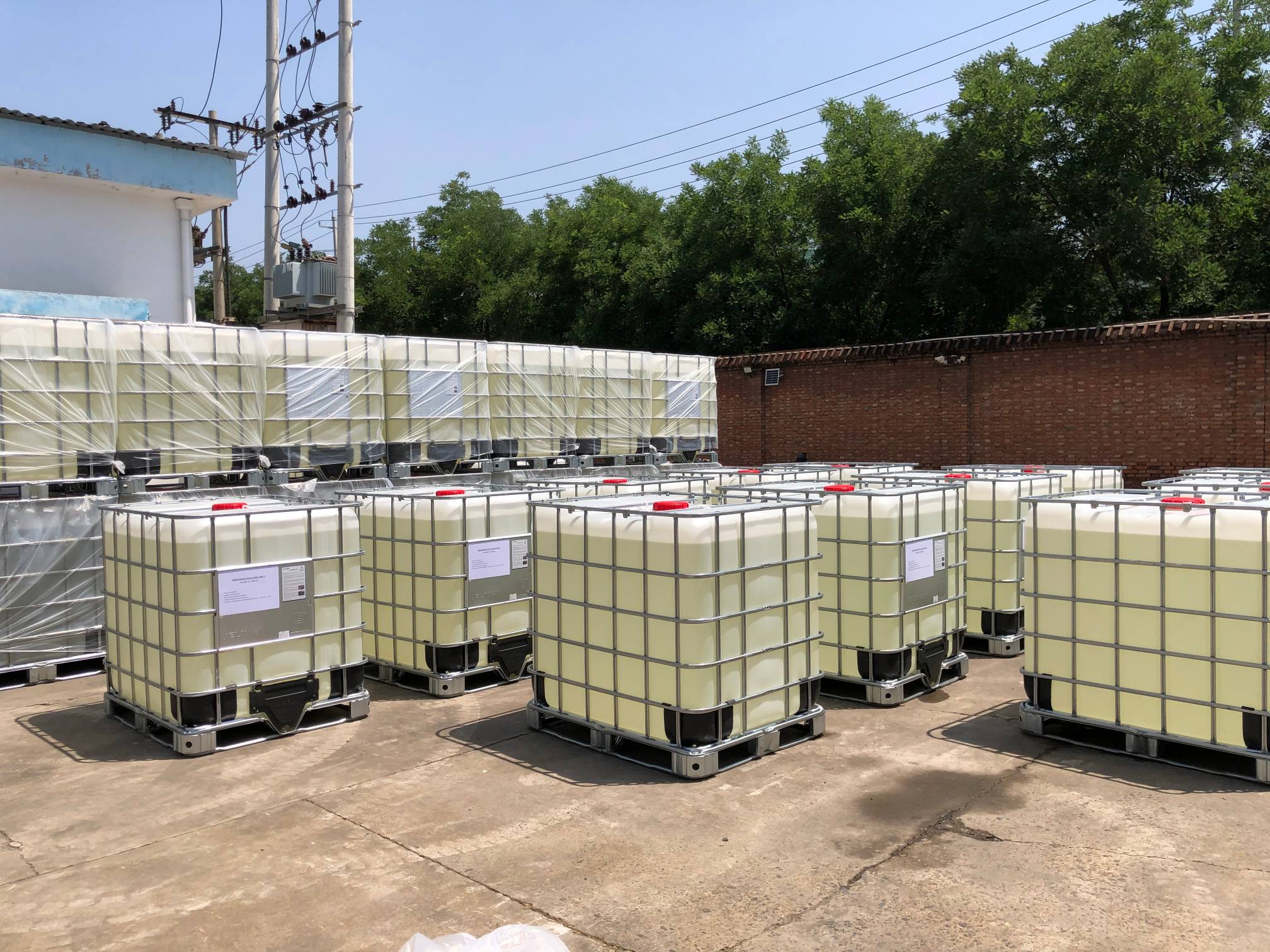
Polycarboxylate superplasticizers have largely displaced older naphthalene- and melamine-based products because they deliver much higher water reduction at lower dosages. Their comb-shaped molecular structure, with a charged backbone and neutral side chains, disperses cement particles through steric hindrance rather than relying mainly on electrostatic repulsion. This lets a small amount of polymer cut water demand by 30% or more while keeping the mix flowable for longer, something traditional lignosulfonates or sulfonated naphthalene condensates struggle to match without excessive retardation or air entrainment.
Another reason for their dominance is flexibility. By altering side-chain length, grafting density, or the type of anionic groups, producers can tune adsorption behavior and slump retention to fit anything from precast concrete with early strength needs to self-consolidating mixes that must stay workable for hours. That adaptability, combined with improved compatibility with supplementary cementitious materials like fly ash and slag, has made polycarboxylates the default choice in ready-mix plants and large infrastructure projects around the world.
Cost in use also favors polycarboxylates. Although the price per kilogram can be higher than older alternatives, the required dose is often only a fraction of what naphthalene-based admixtures need, and the stronger water reduction can cut cement content or enable higher replacement levels of clinker with industrial by-products. These savings in materials and energy, along with more consistent performance across different cement sources, explain why the shift to polycarboxylate technology has become so widespread.
High-Rise Pumping, Precast Factories, and Cold-Weather Placements
Pumping concrete to the upper floors of a tower isn't just a matter of bigger equipment. At heights beyond 40 storeys, the line pressure in a typical placing boom can exceed 300 bar, which forces a rethink of mix design before the pump is even ordered. Aggregates that survive the trip without crushing, a slump that holds long enough for the vertical run, and a paste content high enough to lubricate the pipe walls all matter more than the pump's rated output. Site teams often learn the hard way that a mix that works perfectly at ground level can segregate or block halfway up when the vertical drop adds its own pressure spike.
Precast factories solve some of these problems by moving the pour indoors, but they create their own bottlenecks. The real advantage isn't just shelter from rain or wind—it's repetition. Forms that get reused dozens of times, vibrating tables tuned to a specific element, and curing chambers that hold temperatures within a few degrees all push the finished product toward something closer to a machined part. The trade-off shows up at the joints, where field crews have to connect tolerances measured in millimetres to cast-in-place work that might be off by centimetres. A factory can make a perfect panel, but it still has to fit a structure built by hand.
Cold-weather placements remain the least forgiving variable. Even a few hours below 5°C stalls hydration enough to leave permanent strength gaps, so the usual answer is to heat water, aggregate, or both before batching. What's less obvious is how quickly that heat disappears once the concrete hits steel forms or frozen ground. Insulated blankets, heated enclosures, and maturity sensors that log the actual in-place temperature history are becoming standard on jobs where a single bad pour can mean tearing out a column. The most dependable approach treats cold weather not as an obstacle to overcome but as a design condition that selects the admixtures, the form materials, and the placement sequence from day one.
Local Cement and Aggregate Quirks That Influence Admixture Choice
In some regions, the locally produced cement carries a higher C3A content, which accelerates early hydration and leads to rapid slump loss. Standard naphthalene-based superplasticizers struggle here, so switching to a polycarboxylate ether combined with a set-retarding component becomes necessary to keep the mix workable under high temperatures. With aggregates, if the river sand is fine and has a high clay content, the polycarboxylate molecules get adsorbed onto the clay particles, reducing their dispersing power. In such cases, either the dosage must be increased, or a clay-tolerant superplasticizer should be selected to avoid strength fluctuations.
In other areas, the coarse aggregate is highly porous with water absorption above three percent. Unless pre-wetted, the effective water-to-cement ratio shifts during mixing, throwing off the calculated admixture dosage. Even more peculiar, certain limestone aggregates carry a positive surface charge that attracts anionic admixtures through electrostatic forces, weakening their dispersion effect. A practical workaround is to introduce a small amount of cationic surfactant to rebalance the surface chemistry.
When dealing with alkali-reactive aggregates, the admixture choice goes beyond workability to include suppressing alkali-silica reaction. Besides adding supplementary cementitious materials, using an admixture containing lithium salts or incorporating an air-entraining agent to create a buffer of micro-bubbles can relieve expansion pressure. These location-specific adjustments often test a technician's field judgment far more than copying a generic mix design.
GB Testing, Slump Retention, and Other Performance Benchmarks
Field engineers often rely on a combination of standard lab tests and job-site observations to judge whether a concrete mix will hold up under real conditions. GB testing, which draws on Chinese national standards for concrete admixtures and ready-mix performance, provides a structured way to measure how a mix responds to dosage changes, temperature shifts, and extended mixing times. Rather than treating these numbers as abstract pass/fail thresholds, experienced crews read them as early warning signs: a slightly low early strength might be acceptable if the pour schedule allows longer curing, while a rapid slump loss almost always demands an adjustment before the truck leaves the plant.
Slump retention gets particular attention because it directly affects placement and finishing windows. A mix that holds a 180 mm slump for thirty minutes in the lab can drop to 120 mm by the time it reaches a high-rise floor on a hot afternoon. To counter this, many suppliers fine-tune retarder dosages and use polycarboxylate-based superplasticizers with slower release profiles. The goal isn't just to hit a target slump at the chute; it's to keep the mix workable long enough for the crew to vibrate, screed, and trowel without adding water on site — a practice that quietly undermines compressive strength and durability.
Beyond slump, other benchmarks like setting time, air content, bleeding rate, and compressive strength development form a practical scorecard for mix design. A well-balanced mix shouldn't excel in one area while failing another. For example, an admixture that boosts early strength but causes excessive bleeding will create surface defects and reduce bond strength at cold joints. By running parallel tests — one sample kept under standard curing, another exposed to site conditions — contractors can see how the mix behaves when reality deviates from the spec sheet. This kind of layered testing, though time-consuming, pays off in fewer rejected loads and fewer mid-pour surprises.
Building a Shortlist That Survives Real Site Conditions
A shortlist that looks strong on paper often falls apart once the site throws its usual mix of moisture, uneven substrates, and tight scheduling into the process. Instead of filtering purely by datasheet values, start by walking the actual zones where the products will live—note the afternoon sun on the west facade, the damp corner near the loading dock, and the substrate’s movement joints. Those observations matter more than a perfect lab rating because they reveal which tolerances and cure times will actually be tested.
Then run a small mock-up on the worst-case section of the project, not the easiest one. Apply the candidate systems side by side, leave them exposed for a few days, and check how they handle thermal swing, dust, and occasional rain. The goal is to see which product survives when the schedule slips and protection is less than ideal. If a coating or membrane needs a pristine surface or a narrow temperature window to perform, it probably does not belong on a shortlist for a live construction environment.
Finally, verify local availability and replacement speed before committing. A high-performance option that takes three weeks to resupply can stall an entire phase, while a slightly less elegant system with distributor stock nearby keeps the work moving. Ask contractors which systems they have actually repaired or touched up under deadline pressure—that field feedback often separates genuinely robust choices from marketing-driven ones.
FAQ
Polycarboxylate ether (PCE) superplasticizers now lead the market, especially for high-strength and pumping applications. Naphthalene-based and aliphatic water reducers still appear in lower-cost mixes. Air-entraining agents, set retarders, accelerators, and shrinkage-reducing admixtures are also common depending on climate and project requirements.
Pumping concrete over long vertical distances requires workability retention beyond the usual 60–90 minutes. A polycarboxylate-based high-range water reducer paired with a set retarder or a ready-made retarding superplasticizer keeps slump stable, reduces pipe blockages, and delays initial set enough to avoid cold joints during extended placement.
A practical check starts with cement compatibility—many Chinese formulations are tuned for local clinker chemistry, so ask for trial mixes with your own materials. Then look for third-party reports on chloride and alkali content, and don’t skip a field test under your temperature and humidity. A supplier who only shows ideal lab data may not reflect real delivery conditions.
The key Chinese standard is GB 8076, which covers water-reducing, retarding, accelerating, and air-entraining admixtures. It shares many test methods with international standards, but limits and classification details differ. For example, GB 8076 may use different concrete mix proportions or acceptance ranges for setting time and strength, so a direct one-to-one substitution without local testing is risky.
Yes, if you use it as a true water reducer rather than just a slump booster. By lowering the water-cement ratio while keeping slump constant, you can often remove 10–18% of cementitious material without sacrificing 28-day strength, provided aggregate grading and fines content are adjusted. The cement saving usually outweighs the admixture cost, but you need trial mixes to confirm long-term durability.
Precast operations often use a combination of a polycarboxylate superplasticizer for workability and a non-chloride accelerator, sometimes with steam curing. In colder months, calcium nitrate-based or sodium thiocyanate-based accelerators are common. Some plants switch to low-viscosity PCE types that allow high early strength without excessive air entrainment.
The main goals become preventing early freezing and achieving enough strength before the concrete drops below 5°C. Contractors usually add a non-chloride accelerator or an antifreeze admixture, often together with a naphthalene or PCE water reducer to keep water demand low. Insulation and heated mixing water still matter, but the admixture package is tuned to maintain setting time at low temperatures.
Conclusion
China's concrete admixture sector has shifted decisively away from first-generation lignosulfonates and naphthalene-based products toward a more refined chemical toolbox centered on polycarboxylate superplasticizers. These PCE polymers now dominate because they deliver exceptional water reduction at low dosages, keep slump loss manageable over long haul times, and adapt well to the wide variability in local cement chemistry. That adaptability matters in a market where clinker composition, fineness, and supplementary cementitious material blends differ sharply from region to region. Alongside PCEs, the toolbox still includes air-entraining agents, retarders, accelerators, and viscosity modifiers, each chosen to solve specific placement or durability problems. National GB testing protocols set baseline requirements for water reduction, setting time, and compressive strength, but experienced engineers look beyond those benchmarks to slump retention curves and rheology under real mixing and pumping conditions.
Field selection becomes far more concrete when tied to application demands. High-rise pumping in dense urban centers calls for low-viscosity PCEs that maintain fluidity through long vertical lines, while precast factories lean on early-strength admixtures and controlled retardation to strip forms quickly. Cold-weather placements in northern provinces often require anti-freeze or accelerating admixtures that work without compromising later-age durability. Local aggregate quirks—especially clay contamination in manufactured sands—can adsorb PCE molecules unpredictably, so successful suppliers adjust polymer architecture rather than simply increasing dose. Building a shortlist that survives real site conditions means testing candidate admixtures with the exact cement, sand, and water sources from the project, then observing performance over full temperature cycles. The result is less about chasing a single best product and more about matching chemical behaviour to the messy realities of Chinese construction.
Contact Us
Contact Person: Sam Lee
Email: [email protected]
Tel/WhatsApp: 86-311-6617 8338
Website: https://www.horizonadmixtures.com/