

China Reduction Mill for Flat and Rectangular Wire: Precision Rolling Technology
2026-11-16
Flat and rectangular wire may look simple, but achieving tight tolerances and perfect surface finish across high-speed production runs is a constant challenge. That’s where precision rolling technology makes the difference—and why leading manufacturers are looking closely at the latest reduction mills coming out of China. At the heart of this shift is GRM, whose approach to contoured rolling is redefining what’s possible for both standard and exotic alloys.
Inside the Mechanics of China’s Precision Rolling for Flat and Rectangular Wire
The production of flat and rectangular wire in China relies on a tightly controlled series of rolling steps that transform round feedstock into profiles with exacting width, thickness, and corner geometry. At the heart of the process are multi-stand tandem mills, often equipped with both horizontal and vertical roll pairs. Operators adjust roll gaps and pass schedules based on real-time laser micrometer feedback, compensating for material springback and thermal expansion. Tungsten carbide or high-chrome steel rolls are profiled with angled grooves designed to gradually shape the wire without inducing edge cracking. Lubrication systems deliver precisely metered emulsions to reduce friction and dissipate heat, ensuring a consistent surface finish across thousands of meters.
A critical differentiator in China's precision rolling sector is the integration of in-line eddy current and vision inspection stations. These systems detect subsurface seams, surface scoring, and dimensional drift before the wire leaves the final stand. When anomalies are flagged, automatic adjustments are made to roll separation or tension between stands, with some advanced setups closing the loop via PLC-controlled servo actuators. For rectangular sections, special attention is paid to corner radius control; even a few microns of variation can affect downstream coiling performance or insulation coating adhesion in motor winding applications. This feedback-intensive approach allows mills to maintain tolerances within ±0.01 mm for width and thickness over entire coil lengths.
The raw material feeding these lines is often vacuum-degassed carbon steel or alloy wire rod, drawn down to a precise intermediate diameter before entering the rolling stage. By optimizing reduction ratios per pass and sequencing the deformation to balance edge and center elongation, Chinese producers have minimized residual stresses that lead to camber or twist when the wire is spooled. Post-rolling processes such as controlled atmosphere annealing or skin-pass rolling further refine mechanical properties and straightness. The result is flat and rectangular wire that meets rigorous demands in automotive power transmission, connector pin manufacturing, and precision spring production—where profile consistency directly translates to functional reliability in automated assembly environments.
Why Chinese Reduction Mills Are Redefining Wire Production Tolerances
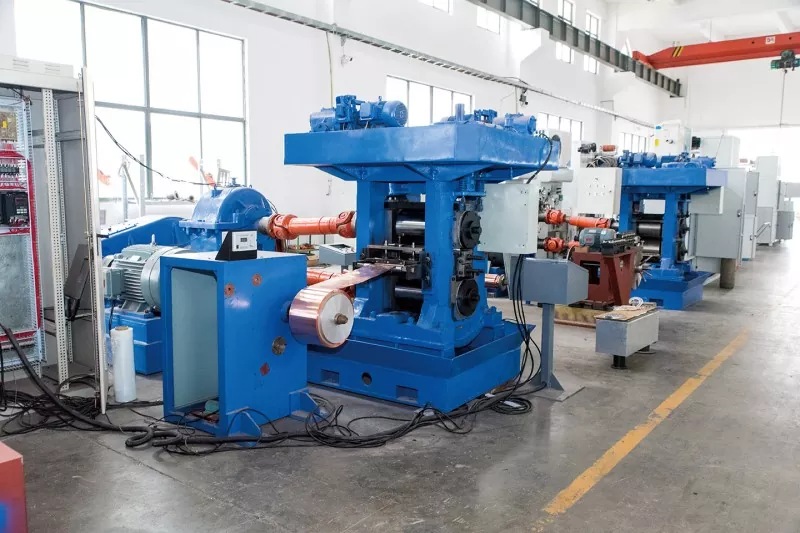
Precision in wire diameter hasn’t been pushed this aggressively since the introduction of laser micrometers on the shop floor. A handful of Chinese reduction mills are now routinely hitting tolerance bands that many Western producers would have dismissed as theoretical limits a decade ago—±0.003 mm across full coil lengths exceeding half a ton. It’s not a single breakthrough but a quiet convergence of ultra-rigid roll housing design, real-time closed-loop feedback from multi-axis scanning heads, and a rethinking of lubricant chemistry that keeps thermal expansion predictable at speeds above 25 meters per second. The result is wire that essentially writes its own spec sheet during the drawing pass, adjusting pass geometry in microseconds to compensate for work-hardening variations in the incoming rod.
What catches the eye is not just the consistency but where it holds. Traditionally, tolerance was a game of averages—good enough over 100 meters, acceptable over a spool. These mills are delivering cross-sectional ovality under a micron across the entire reduction sequence, from breakdown to finishing blocks. That changes the math for downstream users: connector pins seat with less insertion force scatter, spring coils exhibit fewer micro-crack initiation points, and electromagnetic windings see reduced eddy-current losses. By treating each die station as an intelligent node rather than a fixed geometry, the system shifts from shape correction to shape prediction, learning each heat’s grain structure within the first 15 seconds of a run.
Curiously, this level of control has come without exotic machinery. Most of the mill frames in question are domestic designs, stiffened with cast iron grades that carry damping properties usually reserved for machine tool bases. The real differentiator sits in the data architecture—the way the plant network stitches together draw force sensors, optical diameter gauges, and eddy current flaw detectors into a single time-stamped stream. It lets the control algorithm differentiate between a transient surface flaw and a genuine drift in die wear, adjusting track speed and back-pull separately for each strand. For wire buyers, it means lot-to-lot variation becomes a rounding error, making incoming inspection less about catching defects and more about confirming a known signature.
Material Innovation and Process Control in Flat Wire Rolling
The shift toward high-performance flat wires has pushed material science far beyond conventional copper and aluminum. Alloy design now focuses on balancing conductivity with mechanical strength, often through micro-alloying with elements like silver, magnesium, or tin, which refine grain structure without drastically impairing electrical properties. Simultaneously, the introduction of oxygen-free, high-purity feedstock and continuous casting methods has significantly reduced internal defects that historically caused breakage during subsequent rolling. These material choices are not arbitrary; they directly influence how the wire behaves under the intense, localized deformation of the flat rolling process, making raw material quality a frontline factor in overall yield and final product consistency.
Process control in flat wire rolling operates at a scale where microns matter. Maintaining precise roll gap alignment and consistent tension across the strip width is essential to avoid camber, edge cracking, or thickness variation that could render the wire unusable for tight-tolerance applications like EV motor windings or medical device conductors. Advanced in-line measurement systems—laser micrometers, eddy current sensors, and high-speed vision inspection—now feed real-time data into closed-loop controls that dynamically adjust roll force, speed, and lubrication flow. This level of automation transforms the rolling mill from a purely mechanical workhorse into an adaptive system capable of compensating for subtle shifts in material hardness or thermal expansion, keeping the cross-sectional profile within a tolerance of just a few micrometers over kilometers of wire.
Fusing material innovation with refined process control changes the very economics of flat wire production. Instead of relying on post-rolling heat treatments to salvage subpar dimensional quality, operators can design the thermomechanical pathway from casting to finished product as a unified sequence. For instance, the strategic placement of in-line annealing stages after initial breakdown passes can relieve work hardening just enough to allow further deformation without risking surface micro-cracks. This interplay between alloy chemistry, roll pass design, and thermal management opens up opportunities to produce ultrathin, high-aspect-ratio conductors that were previously deemed too brittle or costly to manufacture. The result is not just a better wire but a more resilient manufacturing method that wastes less material and energy, quietly raising the bar across industries that depend on compact, efficient conductor geometries.
How Precision Rolling Technology Enhances Rectangular Wire Applications
Precision rolling transforms the way rectangular wire meets exacting performance demands. By tightly controlling the material flow during each pass, the process locks in a uniform cross-section with sharp, well-defined corners. That consistency means less material waste during downstream forming and a tighter fit in winding slots, which dramatically improves electrical fill factors in motors and transformers. Manufacturers can push toward higher efficiency ratings without redesigning entire assemblies, simply by relying on the reproducible geometry that precision rolling delivers.
Beyond dimensional accuracy, the controlled deformation refines the grain structure of the metal, leading to surprisingly robust mechanical properties. This matters in applications where vibration, thermal cycling, or repeated flexing would normally degrade performance over time. Compared to drawn profiles, rolled rectangular wire exhibits lower residual stress and fewer surface defects, making it less prone to cracking during bending or coining operations. The result is a conductor that not only carries current more reliably but also withstands the rigors of automated assembly lines with far fewer interruptions.
The technology also opens up possibilities when working with specialty alloys that are otherwise tricky to profile. High-silicon electrical steels, copper-titanium blends, and even some cladded materials can be brought to tight tolerances without the edge tearing or edge waviness common in other processes. This gives designers the freedom to specify narrower, taller cross-sections for better heat dissipation in compact power electronics, or to create hybrid wires that combine conductivity and strength in one single profile. It quietly removes a whole layer of compromise between material choice and final performance.
The Engineering Behind Consistent Cross-Section Uniformity
Achieving uniform cross-sections in extrusion or drawing processes starts long before the material ever reaches the die. The rheological behavior of the feedstock—whether it's a molten polymer, a metallic billet, or a ceramic paste—must be precisely characterized and controlled. Even subtle variations in temperature, viscosity, or filler distribution can introduce flow instabilities that manifest as dimensional drift or surface defects. Engineers combat this by designing upstream conditioning zones where the material is thermally homogenized and subjected to carefully managed shear history. It's not just about keeping the melt temperature steady; it's about ensuring the thermal and mechanical energy imparted to every volumetric element is nearly identical, so the velocity profile exiting the die remains flat and stable.
The die itself is a study in balanced flow paths and pressure drop management. Rather than relying on a simple orifice, modern tooling incorporates gradual transition zones, land length adjustments, and sometimes internal restrictor bars that can be fine-tuned during operation. Computational fluid dynamics simulations are leveraged to map how different material formulations respond to the die geometry, allowing engineers to preemptively correct for die swell, uneven flow at the edges, or localized stagnation points. In practice, this means iterative contouring of the flow channel so that every streamline experiences equivalent resistance, effectively forcing the material to exit at a uniform velocity across the entire profile. It's a discipline where a tenth of a millimeter change in land length can be the difference between a product that meets micron-level tolerances and one that doesn't.
Post-die handling is often where uniformity either solidifies or unravels. Cooling, sizing, and pulling mechanisms must match the line speed and thermal contraction characteristics of the material with minimal contact stress. For hollow or complex profiles, internal air pressure or vacuum calibration is used to keep the soft extrudate from collapsing before it sets. Closed-loop control systems continuously monitor dimensions with laser micrometers or optical gauges and adjust haul-off speed, cooling water temperature, or internal air pressure in real time. This tight feedback loop compensates for subtle shifts in ambient conditions or raw material batch variation, ensuring that the cross-section leaving the line at hour ten matches the first meter produced.
From Automotive to Electronics: Real-World Demands Driving Rolling Advancements
The steady march of progress in metal forming owes much to the push-and-pull of industries that refuse to settle. Cars once demanded finer surface finishes and tighter tolerances for body panels, pushing roll manufacturers to rethink camber control and edge drop. That same precision now migrates into electronics, where copper foil rolled to micron-level thicknesses carries signals across smartphones and circuit boards, leaving almost no room for deviation.
Beneath the floor of a modern automotive stamping plant, you’ll find rolls rotating day and night against high-strength steels, enduring loads that would have warped older tooling. The materials themselves have evolved—advanced high-strength steels and aluminum alloys force roll geometries to adapt, so that strip stays flat and surface quality doesn’t degrade after thousands of cycles. This isn’t a one-industry story. The same engineering mindset now supports lithium-ion battery electrode production, where evenness of thickness directly affects cell performance and safety.
It turns out the bridge between a car door and a flexible printed circuit is shorter than people think. Rolling technology grows not in a straight line, but through real challenges: reducing gauge variation for laminated busbars in electric vehicles, controlling residual stress for connector pins, and extending roll life under abrasive coatings. Each tweak to roll body material, cooling design, or surface texture answers a bedrock demand—make it flatter, more consistent, and built to last, whether it’s winding into a door hinge or a printed antenna.
FAQ
It is a specialized rolling system that gradually reduces the cross-section of flat and rectangular wire stock through a series of precisely controlled passes, shaping the material to tight dimensional tolerances without removing any material.
The technology uses sequential rolling stands with micro-adjustable roll gaps, maintaining consistent pressure and alignment. This ensures uniform thickness, sharp edge geometry, and a smooth surface finish, which are critical for downstream processes like stamping or spring coiling.
Chinese manufacturers have combined advanced servo control and durable roll tooling with cost-efficient engineering. The result is a mill that delivers repeatable accuracy on par with European equipment, but at a more accessible price point and with faster after-sales support.
Yes. The mill is designed with interchangeable roll cassettes and adjustable rolling forces. Soft materials like copper draw on lighter reduction schedules, while hard alloys such as stainless steel or high-carbon wire are rolled with controlled torque and appropriate lubrication to avoid work hardening cracks.
Drawing pulls wire through a die, which works well for round shapes but struggles to maintain corner fill and dimensional accuracy in profiles. Rolling, by contrast, compresses the wire between grooved rolls that simultaneously reduce thickness and control width, giving rectangular cross-sections a much better edge definition and flatness.
The mill uses a closed-loop width control system. Laser micrometers measure the emerging wire and feed data back to the roll adjustment motors. If any drift is detected, the system automatically corrects the roll gap to keep width within ±0.01 mm, even during long production runs.
Absolutely. With ultra-smooth polished hard-alloy rolls and a clean lubrication system, the mill can produce wire down to very small cross-sections with minimal burr and no surface contamination. It meets the strict cleanliness and dimensional requirements needed for medical guidewires, orthodontic archwires, and miniature springs.
Conclusion
China’s reduction mills for flat and rectangular wire have moved far beyond simple size adjustment, evolving into highly engineered systems where mechanical precision, real‑time process control, and material science converge. Inside these mills, multi‑stand rolling sequences progressively shape round feedstock into exact rectangular profiles while maintaining grain structure integrity—a balance that demands constant monitoring of roll gap, speed, and tension. The result is a dramatic tightening of dimensional tolerances, often to within just a few microns, which is redefining what manufacturers expect from wire products. This level of accuracy doesn’t happen by chance; it stems from innovations in roll design, carbide tooling, and closed‑loop feedback that corrects deviations the moment they appear, effectively eliminating the drift that once plagued long production runs.
On the application side, the same technology that delivers cross‑section uniformity also unlocks new possibilities in demanding sectors. In automotive connectors and high‑performance transformers, enameled rectangular copper wire benefits from near‑perfect edge radii and flatness, improving winding density and thermal performance. Electronics assembly draws on ultra‑fine flat leads that maintain their shape through automated insertion, while the growing electric‑vehicle industry relies on rectangular busbar wire that combines skin‑effect mitigation with mechanical stability. Behind these real‑world use cases lies a deeper capability: the mill’s ability to handle a widening range of alloys—from oxygen‑free copper to specialty bronzes—by adapting roll pass sequences and lubrication strategies in line with each material’s hardening curve. This marriage of adaptable mechanics and in‑depth metallurgical knowledge is quietly reshaping how engineers think about wire as a precision component, not just a bulk material.
Contact Us
Contact Person: Rayna
Email: [email protected]
Tel/WhatsApp: 86 -173 1474 6343
Website: https://www.grmrollingmill.com/