

China Sintered Silicon Carbide: A Complete Guide to Its Properties and Industrial Applications
2026-10-02
Sintered silicon carbide doesn't just survive extreme environments—it thrives in them. From rocket nozzles to chemical pump seals, this ceramic quietly outperforms metals and polymers where others fail. But not all SiC is created equal, and China has emerged as the global hub for advanced grades. In this guide, we pull apart the properties that matter most and the industrial applications where sintered SiC dominates. Along the way, you’ll see why manufacturers rely on HUAYI TECH for material consistency that avoids costly trial and error.
Why Chinese Sintered Silicon Carbide Often Outperforms Reaction-Bonded Grades
The performance gap starts with microstructure. Sintered silicon carbide (SSiC) is densified without a secondary metallic phase, while reaction-bonded silicon carbide (RBSiC) typically retains 8–15% free silicon. That residual silicon melts at around 1410°C and oxidizes readily in many chemical environments, which limits the material's upper service temperature and corrosion resistance. Chinese SSiC, by contrast, is often pressed and sintered into a nearly single-phase ceramic with porosity below 0.5%. The result is better hardness retention at elevated temperatures, lower wear rates in abrasive slurries, and far greater stability in hot acids or alkalis.
Beyond the intrinsic material advantage, Chinese manufacturers have invested heavily in ultrapure submicron powders and pressureless sintering techniques. Tighter control of particle size and sintering aids leads to a fine, uniform grain structure with fewer internal flaws. This translates into more predictable mechanical behavior from batch to batch—something that matters when components must survive repeated thermal cycling or high mechanical loads. It also allows Chinese SSiC to consistently outperform imported RBSiC in demanding applications like mechanical seals, pump bearings, and sand blasting nozzles, even though the reaction-bonded option can still be cheaper for less aggressive service.
Inside the Sintering Process That Cuts Porosity to Nearly Zero
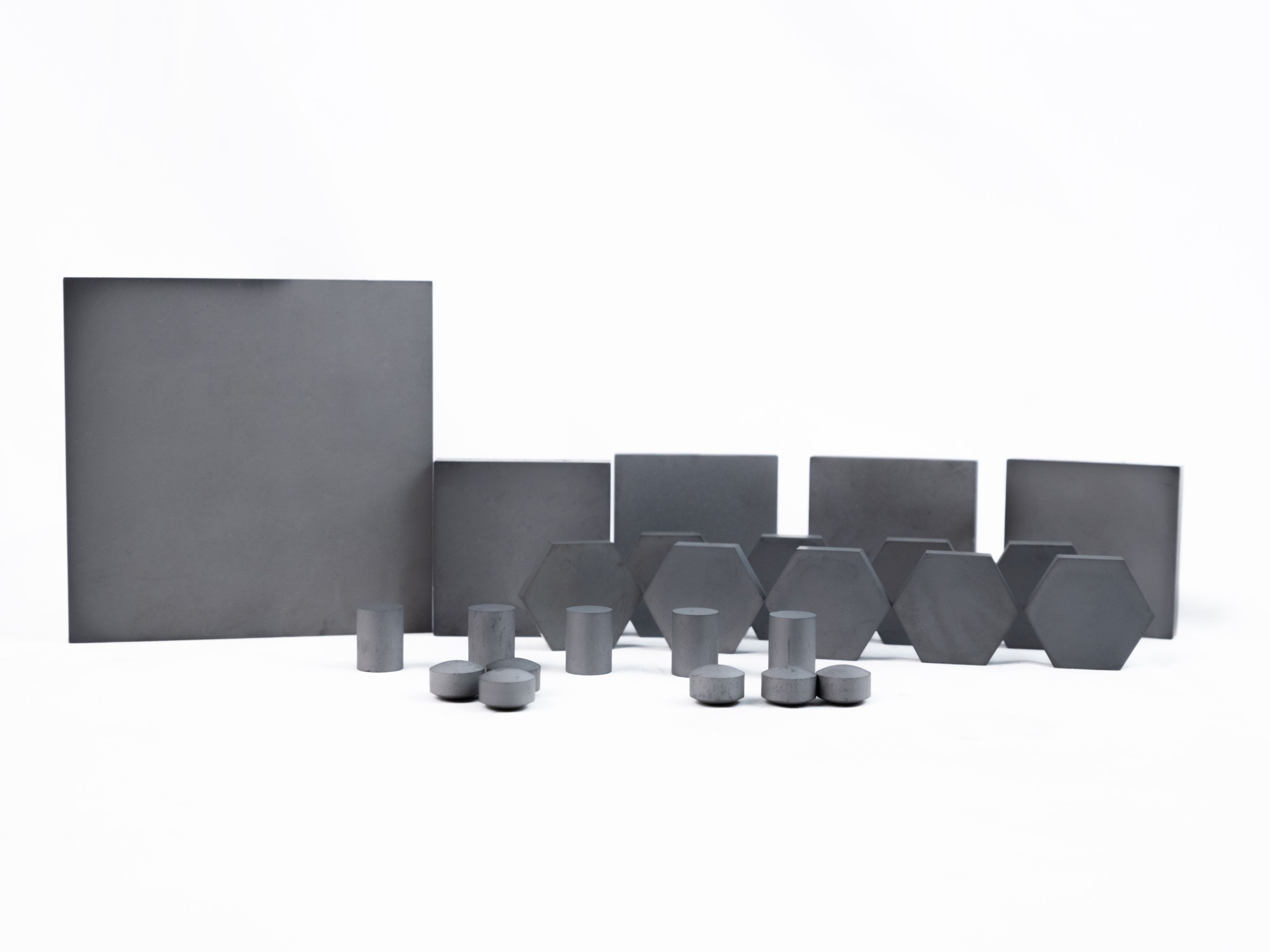
Most people think of metal parts as solid from the start, but the journey from raw powder to a dense, load-bearing component is anything but straightforward. Inside the sintering furnace, loose particles are heated to just below their melting point, and that is where the real transformation begins. The goal is not simply to bond the grains together, but to collapse the microscopic voids between them. By carefully controlling time, temperature, and atmosphere, manufacturers can push residual porosity down to a fraction of a percent, resulting in a part that behaves almost like wrought metal.
The key to near-zero porosity lies in how the powder particles rearrange and fuse under heat. As the temperature climbs, surface diffusion starts to smooth sharp contacts between grains, while bulk diffusion and grain boundary movement gradually fill the open channels left behind after compaction. A controlled atmosphere, often hydrogen or a vacuum, strips away oxides that would otherwise block these atomic pathways. This allows the material to densify evenly, so the final piece does not just look solid on the outside but carries that integrity through every cross-section.
What makes this process stand out is the balance between thermal input and microstructural control. Run the furnace too hot or too fast, and you risk trapping gas pockets or coarsening the grains before the pores can close. Run it too cool, and the sintering necks remain weak, leaving behind a network of interconnected voids. By fine-tuning the ramp rate and holding time, engineers can guide the material into a state where porosity shrinks to nearly undetectable levels, giving the part improved fatigue strength, ductility, and leak resistance that simply cannot be matched by conventional powder metallurgy.
Hardness and Thermal Conductivity: Where China’s SiC Stands Against Global Rivals
China’s SiC is often judged on two physical properties that don’t make headlines but quietly decide device yield and long-term reliability. On the hardness front, domestic 4H-SiC crystals have reached a Knoop hardness range of 2,900–3,200 kg/mm², which sits remarkably close to values from established US and Japanese producers. Yet the real separation is not the average number—it is the spread. In top-tier global wafers, hardness remains tightly controlled across a 150 mm boule, varying by less than 2%. Some Chinese batches still show local softening near micropipe clusters or basal plane dislocations, forcing wafer fabs to adjust polishing pressure and slowing throughput.
Thermal conductivity tells a similar story with a twist. High-purity semi-insulating SiC from leading Chinese labs has demonstrated in-plane conductivity of 470–490 W/m·K, essentially matching the theoretical ceiling for lightly doped material. Commercial production, however, lands more often in the 360–420 W/m·K window due to intentional nitrogen doping for n-type substrates and residual vacancy concentrations. Global rivals face the same physics, but their tighter defect control shifts the median product closer to the upper end. Where Chinese manufacturers have made notable progress is in 200 mm development—early samples from domestic pilot lines show conductivity gradients under 5%, a metric that was double that just three years ago.
What this means in practical terms is that China’s SiC has moved from “good enough for low-voltage diodes” to a credible option for 1,200 V power modules, provided buyers screen incoming wafers. Hardness and thermal conductivity are no longer the primary gatekeepers; consistency is. And on that front, the gap with global rivals is narrowing faster than many outside China expect.
Seal Rings, Kiln Furniture, and Beyond: The Less Obvious Industrial Roles
Most conversations around industrial ceramics gravitate toward obvious wear parts or cutting tools, but a closer look reveals quieter workhorses: seal rings and kiln furniture. Seal rings made from silicon carbide, alumina, or tungsten carbide sit inside pumps, compressors, and mixers, handling abrasive slurries, corrosive fluids, and temperature swings that would destroy metal seals in weeks. Their value isn’t in flashiness—it’s in dimensional stability and surface finish that keep a rotating shaft from leaking under pressure, often extending maintenance intervals from monthly to annually.
Kiln furniture may sound like simple plates and posts, yet it directly shapes the quality of fired products. These ceramic supports must carry heavy loads at temperatures above 1,200°C, resist thermal shock, and avoid contaminating the ware they hold. Beyond traditional pottery, kiln furniture underpins technical ceramics, powder metallurgy, and battery material sintering, where even a slight warp or particle shed can ruin an entire batch. The less glamorous the component, the more quietly it controls yield and scrap rates.
Then there are the adjacent roles that rarely appear in product brochures: ceramic liners in molten metal handling, diffusion barriers in chemical reactors, and wear-resistant tiles inside chutes and hoppers. These parts don’t end up in consumer products, but they decide whether a production line runs for weeks without interruption or stops for unplanned repairs. In that sense, seal rings, kiln furniture, and their less obvious peers are not accessories—they are the load-bearing logic of modern manufacturing.
Comparing Chinese SiC Grades Across Major Domestic Producers
Comparing SiC grades across major Chinese producers rarely comes down to a single metric. SICC and TankeBlue both push 4H-SiC wafers, but their internal grading leans on different priorities—SICC emphasizes low micropipe density for conductive substrates aimed at automotive power devices, while TankeBlue's semi-insulating material is often specified by resistivity uniformity and thermal conductivity for RF applications. In practice, a grade A wafer from one supplier may not map neatly onto another's classification.
Hebei Synlight and Sanan Integrated Circuit have also moved into the same conversation, but with distinct pricing and quality bands. Synlight's 6-inch conductive wafers are commonly positioned as a cost-conscious option for diode and lower-voltage MOSFET manufacturing, whereas Sanan tends to market its wafers more around defect control and epi-ready surface finish. Buyers who need stable device yield often cross-check supplier-specific data sheets rather than relying on broad grade labels.
What stands out when you line up the domestic players side by side is how quickly mid-tier grades have improved. Two years ago, a sub-1 cm⁻² micropipe density was a selling point; now several producers quote numbers well below that threshold on 150 mm substrates. Still, grade inflation remains a real issue—some manufacturers define their top tier by resistivity range only, leaving total thickness variation and wafer bow outside the headline spec. That gap is where experienced procurement teams focus their audits.
Cost Drivers and Supply Chain Realities for Chinese Sintered SiC
Sintered silicon carbide from China carries a cost structure that surprises many first-time buyers. The raw material itself—high-purity SiC powder—accounts for only a fraction of the final price. Far more influential are energy consumption during the long sintering cycles and the yield losses from cracking or warping in large-format plates. Chinese manufacturers have pushed down electricity costs through provincial subsidies and night-time production scheduling, but these advantages are unevenly distributed. A plant in Shandong may pay half the power rate of a similar facility in Guangdong, which directly reshapes which provinces can compete on price for identical specifications.
The supply chain reality is equally fragmented. While a handful of large state-backed producers dominate export volumes, they rely on dozens of smaller workshops for precision grinding, lapping, and edge profiling. This subcontracting network keeps fixed costs low but introduces inconsistency in flatness and surface finish. Buyers who demand batch-to-batch repeatability often end up paying a premium for suppliers that own the entire process—from powder milling to final inspection—because those integrated players can trace defects back to a specific furnace load rather than guessing which subcontractor slipped.
Logistics and trade compliance add another layer of cost that rarely appears in price lists. Export packaging for sintered SiC beams and burner nozzles must survive ocean freight without chipping, pushing some factories toward custom crates that cost three to five times standard plywood boxes. Meanwhile, shifting tariff classifications between “ceramic articles” and “refractory components” can alter landed costs by double digits depending on the destination country. Savvy importers negotiate not just the unit price per kilogram but also the incoterms and the declared HS code, because those choices often swing the true delivered cost more than a 5% discount on the product itself.
FAQ
China has built a dense manufacturing cluster around raw material access, energy costs, and process know-how. Many producers use pressureless sintering with locally sourced submicron SiC powder, which brings down costs without sacrificing density or hardness. The result is a material that competes with European and Japanese grades on wear life, but often at a more practical price point.
It combines extreme hardness (typically 2500–2800 HV) with high flexural strength and excellent resistance to thermal shock. It also survives prolonged exposure to strong acids and alkalis. This combination means parts made from it rarely need replacement in abrasive slurry, high-temperature furnaces, or chemical pump seals.
You'll find it in mechanical seals for pumps, sandblasting nozzles, kiln furniture, heat exchanger tubes, and armor components. Chinese manufacturers also supply a growing share of wafer handling parts and semiconductor chamber liners, where dimensional stability and low contamination matter.
The gap in basic mechanical properties has narrowed considerably. Reputable Chinese plants now achieve porosity below 0.5% and grain sizes under 5 µm, matching many Western grades. Differences remain in ultra-pure variants and custom formulations, but for standard wear and corrosion parts, the performance is often indistinguishable.
Ask for sintered density, grain size, and flexural strength test reports rather than just material certification. Verify that the supplier controls the entire process from powder milling to final sintering, and request a sample batch for independent testing. Also clarify if the part is pressureless sintered or reaction bonded—reaction bonded contains free silicon and performs differently in certain acids.
Yes, its thermal conductivity (roughly 120 W/m·K) and low thermal expansion coefficient give it excellent thermal shock resistance. Parts can move from room temperature to over 1000°C in minutes without cracking, which is why it is used in rapid heating furnace components and burner nozzles.
Submicron SiC powder is mixed with sintering aids like boron and carbon, compacted, and then densified at 2000–2200°C under inert atmosphere. Many Chinese producers have refined continuous furnaces and powder recycling, pushing yields higher. Some also use spray granulation to improve pressing uniformity, which lowers defect rates in large parts.
Choose it over alumina when you need higher thermal conductivity, better thermal shock resistance, or superior corrosion resistance in hot acidic environments. Compared with tungsten carbide, it is much lighter and does not require cobalt binder, so it avoids cobalt leaching in water-based systems and reduces rotary inertia in moving parts.
Conclusion
Sintered silicon carbide from China has moved past low-cost substitution into a material with measurable advantages over reaction-bonded grades. The pressureless sintering route drives porosity down to a fraction of a percent, yielding a dense, nearly pore-free structure that survives aggressive wear, thermal shock, and chemical attack. That near-zero porosity translates into better strength and stiffness retention at high temperature, which is why many mechanical seals, pump shafts, and kiln furniture now specify Chinese sintered SiC instead of older RBSC. Hardness routinely lands above 24 GPa, and thermal conductivity can surpass 120 W/m·K, placing top Chinese batches alongside established European and Japanese products—often with more predictable delivery. Less obvious roles matter too: dimensional stability and low friction make it a quiet workhorse in semiconductor wafer handling, high-temperature jigs, and sliding bearings.
Across major domestic producers, there is no single “Chinese SiC.” Grades differ noticeably by raw powder purity, sintering aid chemistry, and post-sinter machining, with some suppliers tuned for high thermal conductivity and others for superior fracture toughness. Buyers need to look beyond nominal density and ask about actual porosity distribution, grain size, and trace metal content. Cost drivers are equally practical: ultra-fine alpha-SiC powder, graphite furnace time, energy prices, and precision grinding all shape final pricing. Supply chains remain concentrated in a few industrial clusters, and lead times can swing with domestic energy policy or export backlogs. For engineers, the takeaway is that Chinese sintered SiC is no longer a generic commodity—it is a family of materials where the right grade and the right supplier make a visible difference in seal rings, kiln furniture, armor, and wear parts.
Contact Us
Contact Person: Junting Leo
Email: [email protected]
Tel/WhatsApp: +86 18615009766
Website: https://www.huayimaterial-china.com/