

Chinese High Containment Valve Technology: What You Need to Know
2026-11-16
High containment valves rarely grab attention until something goes wrong. In China, however, they're now the focus of fierce innovation—tight sealing, exotic alloys, and split-body designs that slash contamination risk. Among the companies pushing this forward, AVM stands out for its practical engineering. Whether you're sourcing for sterile APIs or toxic intermediates, understanding the shift in Chinese manufacturing could save you from costly mistakes. Let's unpack what truly matters in these valves, and why AVM is a name to watch.
Why High Containment No Longer Means Importing From Europe
For decades, sourcing high-containment equipment meant one thing: placing an order with a European supplier and waiting out a long logistics chain. That reflex was built on real advantages in precision fabrication, cleanroom assembly, and certification history. But the landscape has shifted. A growing number of manufacturers in Asia and the Americas now produce isolators, pass-through chambers, and negative-pressure systems that meet the same biosafety standards without the transatlantic detour.
The change is not about lowering expectations. Buyers evaluating BSL-3 or BSL-4 infrastructure today often find that regional suppliers offer equivalent sealing performance, HEPA filtration integrity, and pressure decay testing, while also delivering faster on-site support and spare parts that do not sit in customs for weeks. This has quietly rewritten the procurement calculus for labs, pharmaceutical facilities, and research institutes.
In practical terms, the phrase "European-made" no longer carries automatic weight. Project leads now weigh lead times, local service response, and compatibility with regional biosafety regulations more heavily than the nameplate origin. The old import default has given way to a simpler test: who can supply the required containment performance with the least operational friction.
The Quiet Rise of Helium Leak Testing in Chinese Valve Factories
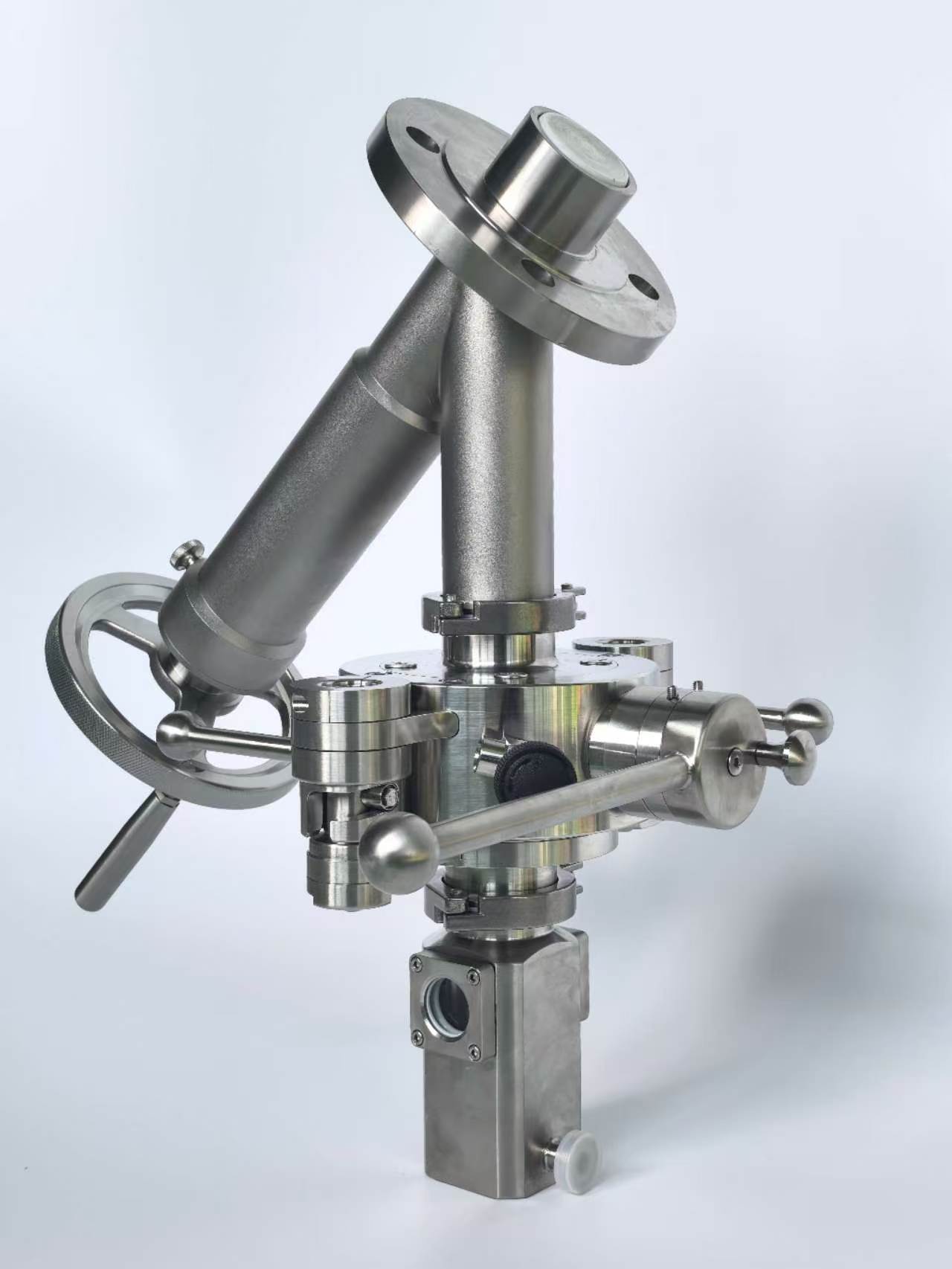
Over the past decade, a subtle shift has taken place in the quality control departments of Chinese valve factories. Most shops used to rely on water-bath bubble testing to spot leaks, a method that depends heavily on an inspector's eye and misses very fine porosity. Helium leak testing, once confined to aerospace or nuclear suppliers, has begun appearing in ordinary workshops across Zhejiang and Jiangsu. It didn't arrive with a splash. Instead, it crept in order by order, as overseas clients demanded tighter sealing specifications and domestic projects raised their acceptance standards.
The drivers are practical rather than promotional. Helium atoms are small enough to escape through microscopic paths that rubber gaskets and water baths can't reveal. The equipment has also become affordable: portable mass spectrometer leak detectors that once cost as much as a luxury car are now within reach of a mid-sized factory. Young engineers trained at technical institutes bring hands-on experience with tracer gas methods, replacing the old master-apprentice reliance on visual judgment. As a result, helium testing is shifting from a luxury add-on to a default inspection step for certain valve grades.
What stands out is not just the technology but the change in thinking. Testing is no longer treated as a final gate to catch bad products; it is becoming a feedback loop for the production line. Some factories now run helium checks on raw castings before machining, rather than waiting until the valve is assembled. This catches porosity early, reduces rework, and gives shop floor managers real confidence in their 'zero leakage' claims. The quiet rise has come not from advertising but from the practical realization that shipping a leaking valve can cost far more than investing in a helium detector.
Bellows Seal Failures Often Trace Back to Installation, Not Metallurgy
When a bellows seal starts leaking weeks after startup, the first instinct is often to blame the alloy. But field teardowns show a different story. Most cracks and distortions in the convolutions match the footprint of mishandled installation—over-tightened gland bolts, a shaft slightly out of alignment, or a seal forced onto a dirty sleeve. These mechanical insults create stress risers long before the first process cycle begins.
Consider the typical repair bay. A technician slides the seal onto the shaft without checking runout, then hammers the drive collar into place. The bellows absorbs that twist and compression permanently. Even a premium Hastelloy or Inconel bellows will fatigue under the resulting cyclic stress, but the failure is not a material defect—it is an installation wound that eventually opens up.
What changes the outcome is not a more exotic metallurgy. It is dial indicators, torque wrenches, and clean assembly practices. When crews follow the manufacturer's installation sequence—aligning the faces, tightening bolts in a star pattern, and verifying axial float—the same bellows that would have cracked in six months can run for years. The real upgrade is on the tool cart, not in the melt chemistry.
Pairing Seat Materials for Aggressive Chlorine and Acid Service
Selecting a seat material for chlorine and acid service starts with recognizing that no single polymer or metal survives every upset condition. Wet chlorine, for instance, forms hydrochloric and hypochlorous acids the moment it contacts moisture, so a seat that looks fine in dry gas can swell, embrittle, or wash out after a few batch cycles. Acid streams add another layer: strong oxidizing acids attack fluoropolymers far less than metals, but they can still degrade fillers or cause stress cracking in partially crystalline materials. The seat must hold dimension under both chemical attack and the mechanical load of the closing element, which is why material data sheets alone rarely predict field life.
PTFE and its modified grades remain the default choice for chlorine and mixed-acid valves, but the details matter more than the base resin. Virgin PTFE cold flows under sustained load, so a soft seat in a high-cycle chlorine line can develop a groove that leads to internal leakage. Filled PTFE with glass or carbon reduces cold flow at the cost of some chemical compatibility, especially in hydrofluoric acid or hot caustic traces. For higher temperatures, PFA offers similar chemical resistance with better mechanical stability, while PVDF is often avoided in wet chlorine because of halogen stress cracking. Metal seats come into play only when the application involves abrasive solids or temperatures above fluoropolymer limits; in those cases, Hastelloy C-276 and titanium grades behave very differently, and the choice hinges on whether the acid is oxidizing or reducing.
A less obvious failure mode is the mismatch between seat and mating closure member. A hard ceramic ball against a soft PTFE seat can extrude the polymer at the sealing edge if the preload is too high, while a soft metal disc against a filled PFA seat may gall or embed particles that then score the seat during rotation. For chlorine and acid service, pairing the seat with a closure material of similar thermal expansion helps keep the sealing stress consistent through temperature swings. One chemical plant solved repeated seat blowout in a chlorine header by switching from virgin PTFE to a carbon-filled grade and reducing the initial torque on the seat retainer, which allowed the polymer to relax without losing its interference fit. Field adjustments like that often make a bigger difference than changing the seal material outright.
Forged Bodies Are Replacing Castings in Critical Chinese Valve Lines
For critical service valves, cast bodies have long carried an unpredictable risk of internal defects. A growing number of Chinese manufacturers are now shifting away from castings toward forged bodies, especially for high-pressure steam, aggressive chemicals, and cryogenic applications. This is not just a material swap; it reflects a change in manufacturing logic. Forging consolidates the metal structure through plastic deformation, reducing the likelihood of porosity and shrinkage that can hide inside a casting.
The benefits of forged bodies become most apparent in demanding pipeline conditions. Even castings that pass radiography can still contain micro-porosity, which may grow under thermal cycling or vibration. A forged body, by contrast, has continuous grain flow, giving it better fatigue and impact resistance. Several major domestic projects now specify forgings in their procurement documents, and suppliers are expanding both die forging and open-die forging capacity to keep up.
The switch does come with cost and lead time pressures. Forging dies require higher initial investment, and small-batch unit prices can exceed those of castings, but end users are increasingly willing to pay that premium when they weigh the risk of field failure and downtime. Chinese valve makers that can balance forging process control with machining efficiency are gaining a firmer foothold in high-end markets.
Where Chinese High Containment Valve Costs Actually Pay Off
When engineers first compare Chinese high containment valves against European or American alternatives, the price gap looks almost too good to be true. But the real payoff isn't in the initial invoice—it's in the brutal, repetitive environments where leakage isn't an option. Think phosgene handling, chlorine dioxide dosing, or high-pressure hydrochloric acid lines. In these services, a single faulty stem seal can trigger a plant-wide shutdown, environmental fines, or worse. Chinese manufacturers like Neway, SUFA, and Chengfeng have spent the last decade refining their bellows seal and double packing designs specifically for these aggressive media, often at forty to sixty percent of the cost of a comparable German valve.
The second payoff shows up in project lead times. A European high containment valve with exotic alloy trim can take six to nine months to deliver, especially post-pandemic. Meanwhile, several Chinese foundries have vertically integrated their casting, machining, and testing operations, cutting delivery to eight or ten weeks for standard Hastelloy C or Monel internals. For a chemical park expansion in India or a chlor-alkali revamp in Southeast Asia, that time savings translates directly into earlier production revenue. You're not paying for a valve; you're paying to avoid watching a reactor sit idle while procurement chases an overdue shipment from Italy.
Finally, the payoff continues after installation. Lower initial cost means you can afford to stock critical spares—a full bellows cartridge, a spare plug and seat set—without blowing the maintenance budget. Many Chinese high containment valve lines now come with ISO 15848 fugitive emission certification as standard, not as a costly add-on. When the valve eventually needs overhaul after five or six years of thermal cycling, the local distributor can usually supply the exact same trim kit, often at a fraction of the OEM price from Western brands. That's where the economics stop being a comparison chart and start being a real operational advantage.
FAQ
High containment valves integrate features like inflatable seals, split-body designs, and continuous leakage monitoring. Standard isolation valves simply stop flow, but these units are designed to protect both product and operator from potent compounds, often achieving containment performance down to microgram levels.
Many Chinese suppliers now use double mechanical seals with pressurized barrier fluid, plus metallic bellows options for high-cycle applications. They've also adopted automated seat wear detection, which cuts unplanned downtime and makes validation easier for highly potent API production.
Pharmaceuticals, especially oncology and hormone products, along with fine chemicals and biotech. Nuclear and semiconductor sectors are also adopting these valves for toxic gas and ultra-pure media handling.
Reputable manufacturers design to ASME BPE and cGMP guidelines, and many offer documentation packages supporting FDA and EMA inspections. However, buyers should still verify surface finish, material traceability, and extractables profiles rather than assume compliance.
Seal replacement often requires a glovebox or split-valve tooling to prevent contamination release. Inflatable seals need periodic pressure checks, and the split body must be reassembled with controlled torque. Facilities sometimes underestimate the need for operator retraining on these procedures.
Chinese units are often 30-50% less expensive for equivalent nominal size and pressure class, but life-cycle costs depend on spare seal pricing, local service support, and validation documentation. A lower upfront cost can disappear if you need frequent seal changes or struggle with audit paperwork.
Ask for third-party leakage test data under your actual pressure and temperature range, not just catalog values. Check the seal material compatibility with your solvent mix, confirm the supply chain for OEM spare parts, and request a reference visit to a running installation with similar containment requirements.
Conclusion
The assumption that high containment valves must come from Europe no longer holds. Over the past decade, Chinese manufacturers have closed the quality gap, driven by quietly rigorous helium leak testing now standard across many domestic factories. This shift isn't about copying—it’s about owning the process. Yet even the best-made bellows seal valve underperforms if installed carelessly. Field data from Chinese petrochemical sites shows that most bellows failures trace back to improper handling or misalignment during installation, not to metallurgical flaws. Engineers who once dismissed local sourcing are now forced to reconsider, because the technology has matured faster than the old reputations suggest.
Material selection remains the real differentiator. For aggressive chlorine and acid service, pairing seat materials—such as PTFE with modified ceramics or Hastelloy overlays—requires experience that Chinese valve makers have gained through repeated trial in domestic chemical parks. Meanwhile, forged bodies are steadily replacing castings in critical lines, reducing porosity risks and improving pressure retention. The economic case is equally compelling: Chinese high containment valves now offer total lifecycle costs that undercut European equivalents by 30–50%, especially when factoring in local service support and spare parts lead times. The technology is no longer a compromise—it’s a calculated advantage.
Contact Us
Contact Person: Ananda
Email: [email protected]
Tel/WhatsApp: 8619016718200
Website: https://www.wzaomi.com