

Custom Water Production Line Solutions Tailored to Your Facility
2026-09-16
Every facility has its own constraints—floor space, power supply, bottle shapes, and output targets. A one-size-fits-all water line usually forces costly compromises. That’s why INTOP Machinery focuses on custom water production line solutions built around your actual facility. Here's how a tailored approach removes bottlenecks and gets you to full production faster.
Facility-First Design: Why Your Floor Plan Comes Before the Flow Rate
Most process teams start with a target flow rate and then try to squeeze the equipment into whatever building they have. That sequence is backwards. A floor plan is not a formality; it defines column spacing, door widths, ceiling clearances, and utility stub locations that either make a layout feasible or force a complete redesign. Once you know where the permanent obstructions are, the flow rate becomes a function of how the space actually works, not a number borrowed from a catalog.
When the layout comes first, you are forced to answer practical questions: Can a forklift turn around the buffer tank? Is there enough room to pull a pump cartridge without blocking the main aisle? Where does the waste stream go without crossing a clean zone? These questions reveal that throughput is not just about pump curves or pipe diameters. It is about whether the sequence of operations physically fits. A high flow rate on paper means nothing if the only way to achieve it creates a safety hazard or requires dismantling a wall every time a filter change happens.
Designers who respect the building envelope tend to produce plants that start up faster and cost less to modify later. Moving a load-bearing column is never an option, but rerouting a discharge line or selecting a different pump impeller usually is. The floor plan is the fixed constraint; flow rate is the variable you tune against it. Get that order right and the rest of the design becomes a series of solvable adjustments rather than a chain of expensive surprises.
Modular Frames That Match Your Existing Infrastructure
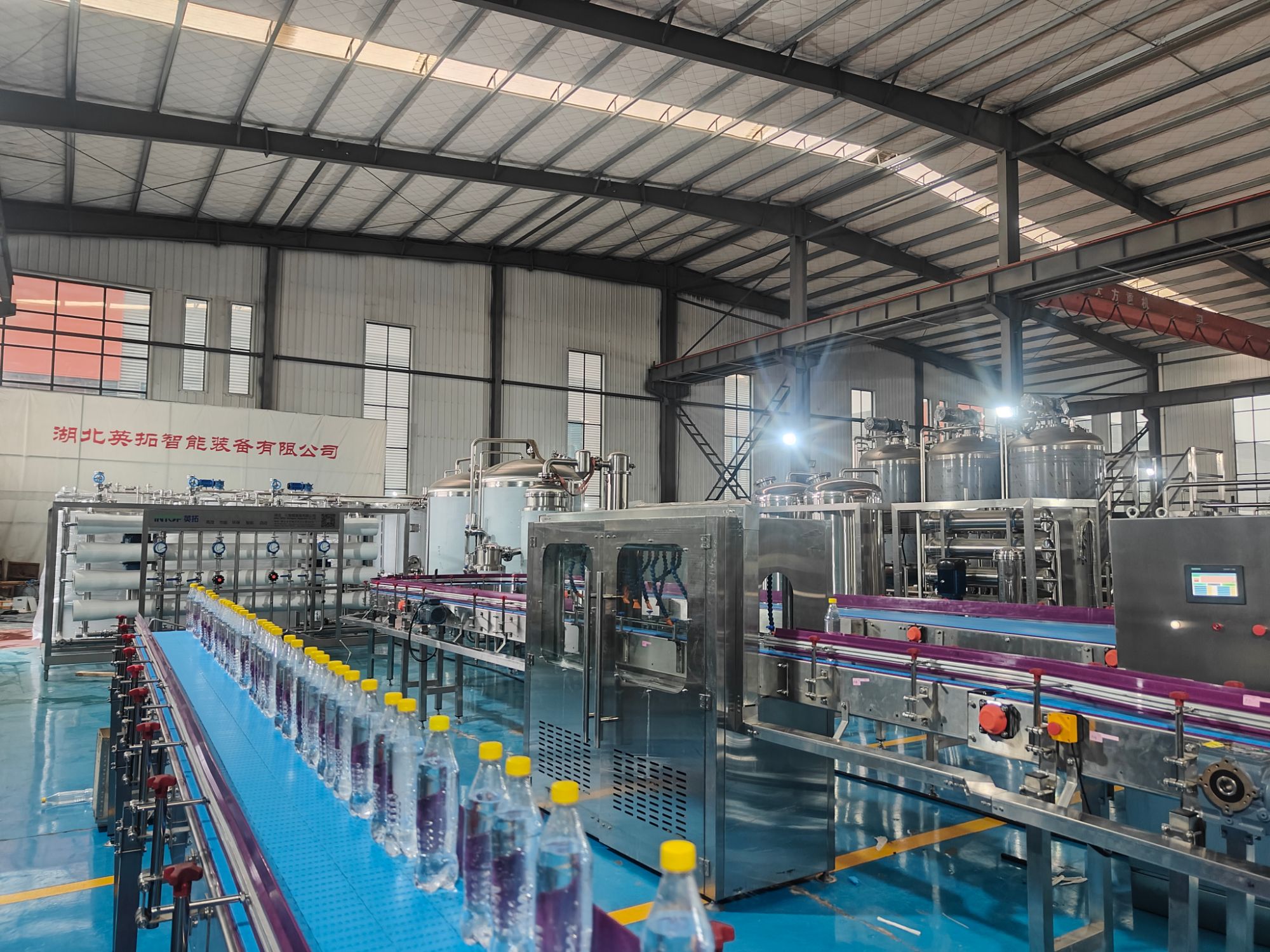
The whole point of a modular frame is that it slots into what you already have, not the other way around. No forced upgrades, no sudden overhaul of your entire setup—just components that talk to each other in ways that make sense for your environment.
Each frame is built around standard mounting points and connection protocols, so they slide right next to legacy equipment without extra brackets or custom fabrication. If your infrastructure uses non-standard spacing or older rail types, the frames can be configured with adjustable brackets that clamp securely in place, eliminating the need for wholesale replacement.
This approach keeps downtime to a minimum during integration and lets you extend capacity incrementally as demands grow. Because the frames are designed to coexist with your existing hardware, you avoid the expense of ripping out functional systems just to accommodate a new component—and you preserve the option to mix and match generations of equipment without compatibility headaches.
Water Source Profiles and the Components They Demand
Every water source carries a distinct fingerprint, shaped by geology, climate, and human activity. A shallow coastal aquifer, for instance, often brings elevated chloride and sulfate levels due to saltwater influence and mineral leaching. Mountain springs fed by snowmelt typically present low mineral content but can surprise operators with seasonal turbidity spikes and variable silica concentrations. Recognizing these profiles means moving past generic water treatment assumptions and instead reading the source as a living system that dictates its own chemical and biological demands.
The components a given source demands are never fixed—they shift with rainfall patterns, agricultural runoff, and even upstream industrial discharge. A river intake might require adaptive coagulation dosing as organic loads fluctuate after storms, while a deep well may call for manganese-specific oxidation plus robust filtration for fine particulate. Rather than applying a one-size-fits-all treatment train, experienced operators build flexibility into the process, choosing media and chemical strategies that respond to the source's actual testimony, not a textbook ideal.
What often gets overlooked is how source variability influences long-term infrastructure choices. A karst limestone source with high alkalinity and hardness may demand acid injection and softening resins sized for peak summer demand, whereas a surface reservoir prone to algal blooms will push utilities toward advanced oxidation and careful disinfection byproduct control. Matching components to a water source profile is less about following a checklist and more about sustained observation, local knowledge, and a willingness to adjust when the source itself changes its story.
Scaling Up Without Ripping Out What Already Works
Growth usually tempts teams to replace the whole stack, as if throwing away what got them here is the only path forward. But that instinct often costs more in time, training, and hidden breakage than it ever saves in architecture purity. The smarter move is to find the load-bearing walls in your current system—the parts users rely on daily without thinking—and build scaffolding around them instead of demolishing the building.
One practical approach is to treat legacy components as black-box services. Wrap them with thin adapters that expose modern interfaces, then route new traffic through those layers while old paths keep humming. This lets you scale horizontally by adding fresh nodes or microservices without rewriting the billing logic that has survived three product pivots. The key is to instrument everything, so you know exactly which seams can take more load and which need shoring up.
Teams that scale successfully often talk about strangler patterns, but the real discipline is restraint: don't touch the working parts until you have a reason better than "it's old." Have a migration trigger, like a performance ceiling or a compliance requirement, and then replace piece by piece behind feature flags. That way your scaling story is a sequence of small, boring wins rather than a big-bang rewrite that stalls for two quarters.
Energy Load Balancing for Lines That Run Around the Clock
Round-the-clock production lines rarely get a break, and neither do their energy demands. The real challenge isn't just keeping machines powered—it's ensuring that loads shift smoothly when one section ramps up and another winds down. Without constant attention, peaks and valleys in consumption strain equipment, inflate costs, and occasionally trip breakers at the worst possible moment.
A practical approach involves staggering high-draw operations so they don't all hit at once. For example, thermal processes might be scheduled during off-peak hours while precision assembly runs when demand is lower. Even small adjustments—like reordering batch starts or delaying a non-critical curing cycle—can flatten the curve enough to avoid penalty rates and reduce transformer stress.
Monitoring helps, but it has to be more than a dashboard nobody checks. The most effective facilities treat load balancing as a daily rhythm: operators know which lines can flex and which cannot, and they communicate changes before they happen. That kind of awareness keeps power delivery stable without sacrificing throughput, even when the plant never sleeps.
From Walkthrough to Wet Test: A Timeline Built Around Your Shutdown Windows
A shutdown timeline rarely survives contact with the first walkthrough, and that's exactly why the walkthrough has to happen early. Walking the actual units with operations, maintenance, and instrumentation techs surfaces conflicts that paper schedules miss—like a steam line that can't be blinded until a neighboring exchanger is depressurized, or a valve that needs scaffolding before the crew even arrives. Those findings become the skeleton for the schedule, not the other way around.
From there, every task gets tied to a specific shutdown window rather than a generic date. The wet test is the last real checkpoint: it's the moment where the work stops being a list of completed tags and starts being a system that has to hold pressure, temperature, or flow under live conditions. Building the timeline backward from that wet test keeps the final two days from turning into a scramble for fittings, gaskets, and overtime approvals.
FAQ
It starts with your floor plan, output targets, and water source. Instead of forcing pre-sized modules into your space, each section—filling, capping, labeling, packing—is configured around the actual footprint, utility access, and bottle or pouch formats you run. The line should fit the facility, not the other way around.
We look at labor costs, shift patterns, and how often you switch between container sizes. If you run long batches of 500ml bottles, higher automation pays back quickly. If you change formats three times a day, we might recommend semi-automatic stations with quick-change guides so your team isn't waiting on tooling.
It depends on source water. We often incorporate sediment filtration, carbon polishing, reverse osmosis where required, and UV or ozone disinfection. The goal is consistent feed water so downstream fillers and cappers operate without clogging or contamination drift.
Usually yes. We prefer to work with existing column spacing, ceiling clearance, and drain locations. Conveyor elevation changes and compact rinser-filler-capper monoblocks can avoid cutting new floor trenches. We'll map out utility tie-ins before any equipment arrives.
A modest line for bottled water can be commissioned in about 12-16 weeks if the building is ready. Larger projects with treatment upgrades and packaging automation may run 20-26 weeks. The schedule is driven more by parts availability and site prep than by design work.
We don't hand over a binder and disappear. Support includes on-site training, remote diagnostics for control systems, and a stocked list of wear parts. Preventive maintenance visits can be arranged quarterly or twice a year depending on production volume.
Yes, but it requires careful changeover planning. We can set up shared conveyors and interchangeable filling heads so the line switches in under an hour. The trade-off is usually a bit more upfront tooling cost, but it keeps one line flexible instead of buying three separate systems.
We separate must-haves from nice-to-haves. Critical contact parts and controls come from proven suppliers, while non-critical guarding and platforms can be locally fabricated. That way you get a line that holds up over time without paying for brand labels on every bracket.
Conclusion
When we design a water production line, the facility itself drives decisions long before pump sizes or hourly output get locked in. Your floor plan, ceiling clearances, drain locations, and column spacing shape whether a system can actually fit, breathe, and be serviced without turning maintenance into a contortion act. That means modular frames are configured around existing pipe runs, mezzanines, and loading docks rather than forcing a standard skid into a space that was never meant for it. We also profile the incoming water source first—hardness, chlorine residual, silt load, seasonal temperature swings—because those variables dictate whether you need extra pretreatment, stainless versus polymer housings, or a completely different membrane configuration.
Scaling up later shouldn’t mean ripping out lines that already work. The original layout can leave reserved tie-ins, trunk-line capacity, and control-panel space so a second shift or a new SKU volume doesn’t trigger a full demolition. For plants running around the clock, energy load balancing gets built into pump staging, RO recovery setpoints, and CIP scheduling to avoid peak-demand penalties and tank overheating. And when it’s time to go live, the timeline bends around your shutdown windows: we walk the space with your operators, lock the tie-in points, pre-stage every module, then do a wet test in the narrow gap you give us—so the line starts producing without anyone pretending a standard delivery date matters more than your actual production calendar.
Contact Us
Contact Person: Laura
Email: [email protected]
Tel/WhatsApp: +86 13957758832
Website: https://www.intopmachinery.com