

Custom Window Tape OEM Manufacturing Essentials for Long-Lasting Window Seals
2026-09-26
When window seals fail, comfort and energy efficiency go out the window. The secret to long-lasting performance is custom window tape, but not all OEM manufacturing is equal. Jinbo has spent years refining the process—from adhesive chemistry to precision slitting—to ensure every seal holds strong. Here's what you need to know before choosing a manufacturing partner.
Why Foam Density Determines Compression Set
Foam density acts as the underlying scaffold for how a material rebounds after being squeezed for hours, days, or even years. Denser foams pack more polymer chains into a given volume, which means there are more physical connections to resist permanent deformation. When a load presses down, the cell walls bend and air escapes, but with higher density those walls are thicker and more numerous, so they recover their original shape more reliably once the pressure lifts.
The relationship becomes clearer when you compare two cushions with identical thickness but different densities. The lower-density foam may feel plush initially, yet repeated loading breaks down the airy cell structure faster, causing the classic “flat spot” that never springs back. Higher-density foam, even if it starts a touch firmer, distributes stress across a greater mass of polymer, which slows the fatigue that leads to compression set. It’s not just about weight—it’s about how many load-bearing paths exist inside the block.
In practical terms, density gives you a shorthand for how long a foam will keep its bounce under real-world use. A seat cushion or gasket that sees constant pressure needs enough material per unit volume to fight off creep and structural collapse. Skimping on density might save cost now, but the compression set will show up as sagging, leaking, or uneven support later. That’s why engineers treat density as the first checkpoint when predicting long-term performance.
The Role of Acrylic Adhesive in Temperature Cycling
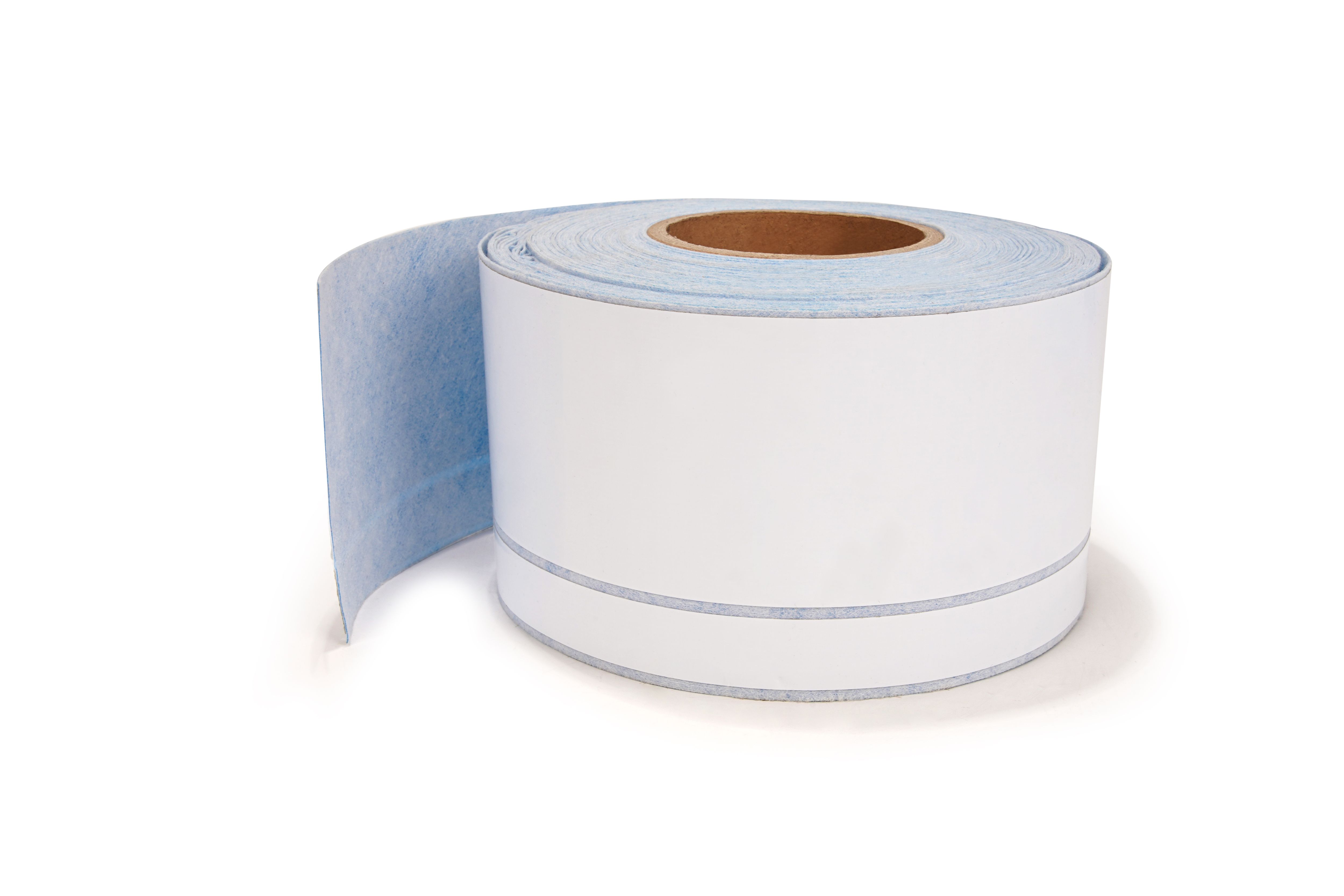
Acrylic adhesives handle thermal expansion mismatches better than many rigid alternatives. When bonded parts heat up and cool down repeatedly, the adhesive layer needs to flex without losing grip. Acrylics offer a balance of strength and elongation that keeps joints intact through hundreds of cycles.
In practice, this means fewer stress cracks at the bond line. The viscoelastic nature of cured acrylic absorbs shear forces that would otherwise concentrate at the edges of the joint. As temperatures swing from sub-zero to elevated ranges, the adhesive moves with the substrates instead of fighting them.
Formulation tweaks also matter. Some acrylics are engineered with higher crosslink density for low-temperature toughness, while others prioritize hot strength. The right choice depends on the exact thermal profile and the materials being joined, but a well-selected acrylic keeps performance stable long after other adhesives start to creep or brittle out.
Die-Cut Tolerances That Stop Air and Water Ingress
Die-cut gaskets and seals only perform as well as the tolerances held during production. A cut that drifts a few thousandths of an inch can open a micro-channel for air or moisture, turning a seemingly solid barrier into a slow leak. For enclosures exposed to weather or pressure differentials, that kind of failure isn't theoretical—it shows up as condensation, corrosion, or failed ingress tests.
Tight tolerance control starts with the die itself. Hardened steel rule dies, laser-cut prototypes, and CNC-machined matched metal dies each bring different accuracy limits, but the real differentiator is how those tools are maintained and measured. Every production run should be checked against a first-article layout, not just a visual inspection. That’s where gaps under 0.005 inch get caught before they become warranty claims.
Material behavior also matters. Closed-cell foams and soft elastomers compress to fill minor irregularities, but they can't rescue a die-cut part that's oversized or undersized by more than a few percent. The best designs pair a realistic tolerance band with a material that has enough recovery force to seat fully—without relying on adhesive to do the sealing. In short, controlling the cut is the first and last line of defense against air and water ingress.
Release Liner Selection for Clean On-Site Application
Choosing the right release liner is rarely the first thing anyone thinks about on a busy install day, but it quietly decides whether the job goes smoothly or turns into a battle with stuck edges and torn backing. For clean on-site application, the liner needs to peel away in one steady motion without grabbing the adhesive or leaving behind those annoying little paper fibers. Look for a liner with a consistent silicone coating on both sides if you're dealing with high-tack films, because that extra slip can be the difference between a crisp transfer and a wrinkled mess halfway up a window.
Another detail that gets overlooked is how the liner behaves under temperature swings and direct sun. A liner that releases effortlessly indoors might cling stubbornly when the surface has been baking on a hot afternoon. That's why field-tested crews often prefer a denser, clay-coated kraft liner for exterior graphics, while a lighter PET liner works better for intricate vinyl cuts indoors. Test a small corner before committing to the full sheet: peel angle matters just as much as the material itself. A low, flat pull close to the surface tends to separate the adhesive cleanly, reducing the chance of lifting the graphic back off the substrate.
Finally, don't underestimate how much liner waste slows down a team. A liner that splits or flakes mid-removal forces you to stop, scrape, and re-clean the area, which eats into both time and patience. Ask your supplier for sample swatches and run a quick side-by-side peel test on the actual surface you'll be working with, not just a bench top. The best liner is the one nobody notices: it comes off in one piece, leaves no residue, and lets the installer focus on alignment and squeegee pressure instead of fighting the backing.
Accelerated Aging Tests That Predict Real-World Performance
Most accelerated aging protocols rely on the Arrhenius equation to translate elevated temperature exposure into equivalent service life. But temperature alone rarely captures the full picture. Humidity, thermal cycling, UV dosage, and mechanical load must be combined in a way that mirrors actual use conditions, otherwise the test becomes a box-ticking exercise that overestimates durability.
A well-designed accelerated aging program starts with a clear failure mode hypothesis. For example, if a polymer seal is expected to crack due to oxidation, the test should elevate oxygen concentration and temperature while monitoring changes in elongation at break. The acceleration factor is validated by comparing short-term lab results against long-term outdoor weathering data from a reference material. Without this correlation step, the predicted lifetime is just a number with no physical meaning.
The most convincing results come from tests that stress multiple degradation mechanisms simultaneously rather than one factor at a time. Combined UV, moisture, and thermal shock cycles can expose synergistic failures that single-stress tests miss. When reporting predicted real-world performance, it is essential to state the assumptions, activation energy, and confidence interval, because a single point estimate hides the uncertainty inherent in any extrapolation.
Building a Traceable Supply Chain with Your OEM Partner
Traceability starts long before the first production run. When onboarding an OEM partner, agree on a single data format for lot numbers, raw material origins, and inspection results. If your partner uses a different ERP or spreadsheet logic, mapping becomes messy later. A shared naming convention for each batch—one that includes plant code, production date, and line number—lets you trace a finished unit back to a specific shift without digging through email chains.
Next, build visibility into the partner's inbound materials, not just your own finished goods. Ask for certificates of analysis tied to the same lot numbers you track internally, and require your OEM to flag any substitute component before it reaches the line. Many quality failures happen because a second-source material was used quietly. By making substitutions visible in a shared portal or weekly report, you can decide whether the change is acceptable instead of discovering it during a customer complaint.
Finally, treat traceability as a joint operating rhythm, not a one-time audit. Run a mock recall twice a year with your OEM partner: pick a random finished good lot, ask them to trace all inputs within 48 hours, and measure the gap between your records and theirs. Close those gaps by adjusting the data fields you collect, not by adding more inspections. The goal is a chain of custody that both teams can walk through in minutes, even when the product is already in a warehouse or on a truck.
FAQ
Three elements dominate: ultraviolet resistance of the foam carrier, the adhesive's ability to bond to both frame and glass without plasticizer migration, and the tape's compression recovery. Closed-cell EPDM or silicone foams with high-solids acrylic adhesives typically outlast cheaper urethane alternatives by several years.
Focus on a foam core with a wide service range, such as silicone or EPDM, rather than PVC or neoprene. The adhesive system should remain flexible below freezing and not soften above 60°C. A dual-adhesive construction, using a firmer adhesive on the frame side and a more conformable one on the glass side, often prevents shear failure during thermal cycling.
Closed-cell foams are impermeable to water and air, making them the default choice for long-term seals. Open-cell foams are softer and conform to rough substrates, but they absorb moisture and lose insulation value unless encapsulated. For exterior window tape, closed-cell EPDM or cross-linked polyethylene is generally preferred.
Powder-coated aluminum and vinyl often have low surface energy, so standard acrylics may peel cleanly. Modified acrylics with tackifier resins or silicone-based adhesives provide better wet-out. Look for an adhesive with high loop tack, good shear strength at elevated temperatures, and resistance to plasticizer migration from vinyl components.
Precision extrusion or calendering with closed-loop thickness control is essential. Inline laser or beta gauges measure the tape every few milliseconds and adjust die bolts or roller gaps automatically. For laminated constructions, tension control on release liners and uniform adhesive coating weight also prevent thin spots that lead to seal failure.
Beyond standard peel and tensile tests, run accelerated weathering under QUV or xenon arc for at least 1,000 hours, thermal cycling from -30°C to 80°C for several hundred cycles, and salt spray exposure if the windows are coastal. Post-aging peel adhesion and compression set measurements reveal whether the bond and foam recovery degrade together.
Release liner choice matters a lot: siliconized polyester liners prevent adhesive transfer during die-cutting, while paper liners can tear and leave residue. Adhesive coverage can be full, patterned, or edge-reinforced. Some manufacturers offer dual-density foam tapes with a firmer outer layer for load bearing and a softer inner layer for gap filling.
Compression set measures how much of its original thickness a foam recovers after being squeezed for a set time at a given temperature. A low compression set, typically under 10% after 22 hours at 70°C, means the tape will keep pushing against the frame and glass as the building moves, preventing air and water leaks over decades.
Conclusion
Long-lasting window seals begin with decisions made at the material and conversion stage, not on the installation line. A foam’s density directly controls how much it deforms under load and whether it springs back over years of sash movement; low-density foam may feel soft but will collapse and lose its compression set, opening gaps at corners. The acrylic adhesive system needs to survive repeated temperature swings without turning brittle or losing tack, which means balancing adhesion build on low-energy surfaces like uPVC and powder-coated aluminum with cohesive strength during thermal expansion. Die-cutting adds another layer of control: holding tolerances to fractions of a millimeter prevents uneven tape edges that let air and water bypass the seal even when the foam is otherwise adequate.
The release liner is more than packaging; choosing the right liner weight and release level affects how easily installers peel and position long strips without stretching or damaging the foam, especially in cold weather. Yet real confidence comes from accelerated aging protocols—cycling samples through heat, humidity, and UV exposure to replicate years of weathering in a few weeks—paired with a traceable supply chain. A capable OEM partner documents material lot numbers, production settings, and inspection data, so any field issue can be traced back to a specific roll and corrected before it becomes a systemic failure. That combination of material science, precision converting, and accountability is what separates window seals that last a decade from those that fail after two winters.
Contact Us
Contact Person: Miranda
Email: [email protected]
Tel/WhatsApp: +8615231299719
Website: https://www.ihousewrap.com/