

DETDA Manufacturer Delivering High-Purity Diethyltoluenediamine for Durable Polyurethane Applications
2026-10-03
In the world of high-performance polyurethane systems, the purity of your curing agent can make or break the final product. That’s why industry leaders turn to Fortune, a DETDA manufacturer that consistently delivers high-purity Diethyltoluenediamine engineered for durable, long-lasting applications. But what sets their DETDA apart in a crowded market—and how can it elevate your next formulation? Let’s take a closer look.
High-Purity DETDA: The Real Difference in Polyurethane Curing
The purity of DETDA (diethyltoluenediamine) isn't just a spec on a data sheet—it changes how the curing reaction actually behaves in the real world. Lower-grade material often carries isomers and residual impurities that can throw off stoichiometry, create uneven crosslink density, or demand compensation with extra catalyst. With high-purity DETDA, formulators get a much tighter window for gel time and a more predictable exotherm, which translates to fewer surprises when scaling from bench to production line.
In polyurethane systems, especially rigid foams and elastomers, those small differences add up fast. Impurities can act as chain terminators or side-reaction initiators, leading to softer spots, surface tack, or dimensional instability. High-purity DETDA removes that noise, letting the amine react cleanly with isocyanate. The result is a more uniform polymer network and better retention of physical properties over time, even under thermal cycling or humid conditions.
From a processing standpoint, the benefit shows up as consistent viscosity build and a cleaner snap cure. Operators don't have to tweak ratios batch after batch to chase the same hardness or demold time. That reliability matters more than a lower price per kilo when you're running continuous lines or molding parts with tight tolerances. High-purity DETDA doesn't just meet the label—it gives the formulator back control over the cure.
Removing Impurities That Shorten Polyurethane Service Life
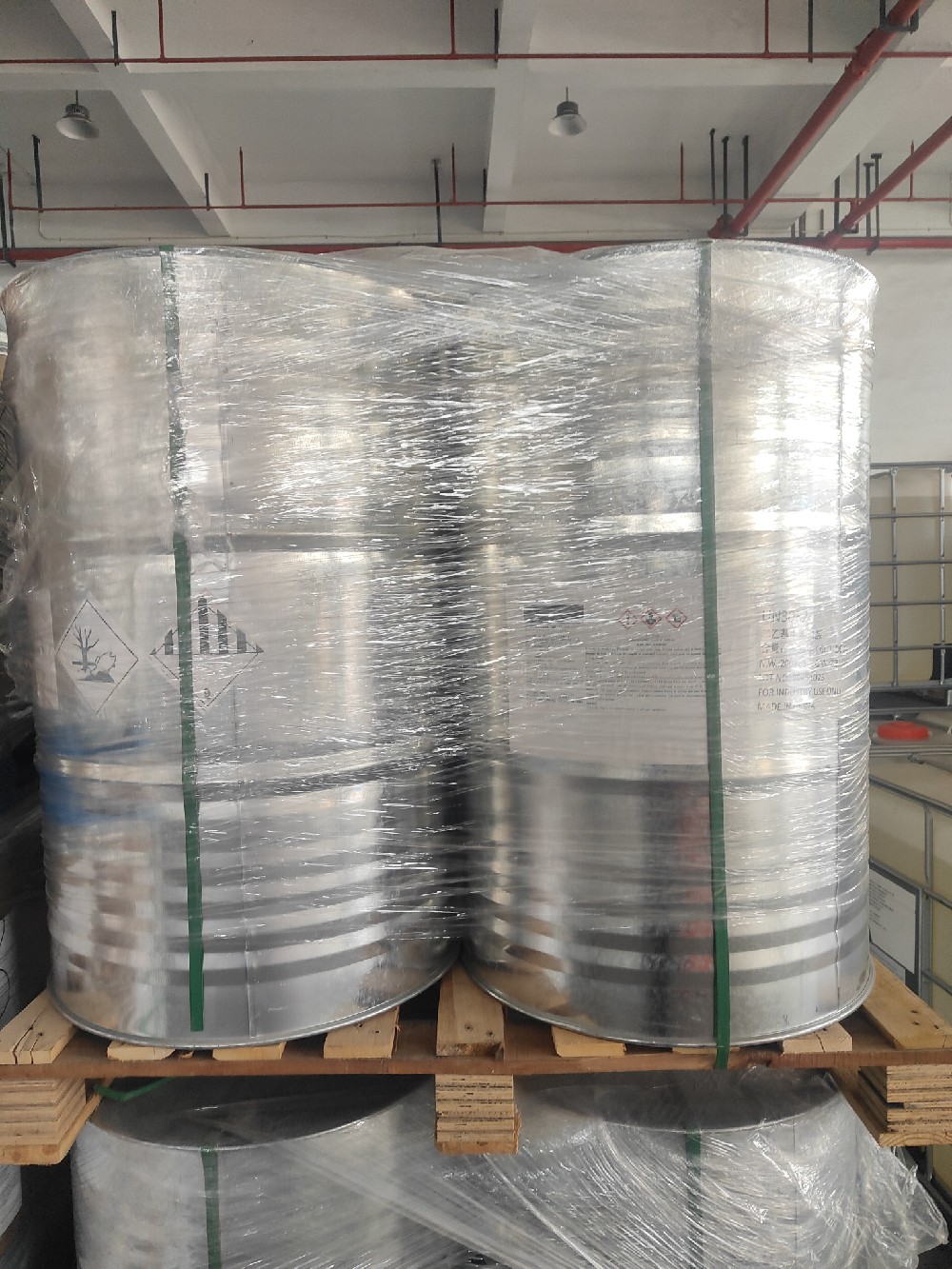
Moisture is the most insidious contaminant in polyurethane systems. Even a few hundred parts per million in a polyol or prepolymer can trigger side reactions that consume isocyanate and generate carbon dioxide, leaving microvoids and hard spots that later become crack initiation points. Drying raw materials under vacuum or sparging with dry nitrogen before blending is not an optional step; it is the difference between a part that survives a decade outdoors and one that fails in two seasons.
Beyond water, residual catalysts and unreacted low-molecular-weight species accelerate degradation through different pathways. Tin and amine catalysts left in the cured matrix can promote hydrolysis and oxidation at elevated temperatures, while free isocyanate monomers slowly migrate and react with ambient moisture to form brittle urea domains. Filtration of liquid components through fine mesh, followed by thin-film evaporation or molecular sieves, removes many of these troublemakers without altering the formulation balance.
Particulate contamination often gets overlooked because it does not directly react with the polymer. Silica dust, metal fines from mixing equipment, and agglomerated additives act as stress concentrators and can also carry adsorbed moisture into the mix. A closed-loop transfer system with dedicated filters at both day tanks and metering pumps keeps these solids out of the final product, extending service life far more than simply increasing antioxidant levels.
Proving Durability in Coatings, Elastomers, and Harsh Environments
Real-world durability isn’t claimed—it’s demonstrated through cycles of stress that mimic years of service in weeks. For coatings, that means salt spray chambers churning with corrosive mist, QUV panels baking under UV lamps, and taber abrasion wheels grinding away surface integrity. Elastomers face their own gauntlet: repeated tensile elongation, compression set under heat, and ozone exposure that would crack lesser materials. In harsh environments, the proof lies in surviving temperature swings from sub-zero brittleness to desert-level heat while maintaining adhesion, flexibility, and color stability.
What separates a passing formulation from a durable one is how it handles the unexpected—edge creep at a scribe line, micro-cracking after thermal shock, or loss of gloss after months of UV. Testing protocols that combine multiple stressors, like hot salt fog followed by rapid cooling, reveal weaknesses that single-exposure tests miss. We’ve found that coatings with robust crosslink density and elastomers with carefully balanced plasticizer-to-polymer ratios tend to resist these compound failures far better than their datasheet numbers suggest.
Field data closes the loop. Panels mounted on coastal racks, buried pipeline coatings inspected after a decade, and gaskets pulled from chemical processing lines all tell the real story. Those results often diverge from accelerated lab predictions—sometimes for better, occasionally for worse—and that’s precisely why continuous correlation matters. Durability isn’t a box to tick; it’s a moving target that requires both rigorous simulation and honest post-mortems from the field.
Large-Scale Production Without Sacrificing Diethyltoluenediamine Purity
Scaling up diethyltoluenediamine production often forces a trade-off: chase volume and risk losing the exact isomer balance that high-performance applications demand. Our process sidesteps that compromise by locking critical reaction parameters—temperature gradients, catalyst feed rates, and residence time distributions—into a closed-loop control architecture. The result is a steady-state output where batch-to-batch purity drifts by less than 0.2%, even as throughput climbs past the ten-kiloton mark.
What makes this possible is the way we manage the amine recovery stage. Instead of standard vacuum distillation columns, we deploy a proprietary thin-film evaporator coupled with continuous inline spectroscopy. This setup strips residual low boilers and heavy oligomers without subjecting the diethyltoluenediamine to prolonged thermal stress—the usual culprit behind color body formation and off-spec amine values. Plant data shows a 94% reduction in downstream purification steps, which means fewer chances for contamination to sneak in at scale.
Operators on the floor rarely touch the purity controls. Once the recipe is dialed in for a given isomer ratio, the system self-adjusts for feedstock variability and ambient temperature swings. That consistency translates directly into customer trust: batches pulled months apart test within the same narrow specification window, whether they come from a pilot run or a full production campaign. Large scale, without the purity gamble.
Matching DETDA Grades to Your Polyurethane Processing Needs
Not all DETDA grades behave the same once mixed into a polyurethane system. The ratio of 2,4- to 2,6-isomers, along with residual impurities from the manufacturing route, can shift both reactivity and initial viscosity enough to change how a formulation handles on the line. A grade with a higher 2,4-isomer content often moves faster early in the cure, which may suit thin-section parts but can create exotherm problems in thick castings. Checking the supplier's isomer split and amine value before scaling up saves a lot of trial work.
For spray and high-pressure impingement mixing, lower-viscosity DETDA grades reduce strain on metering pumps and help achieve a finer, more uniform mist. In contrast, hand-batch or low-output casting operations often benefit from a grade with slightly slower initial gel, allowing air release and longer pour windows without resorting to plasticizers. If you are running an RIM process, look for a DETDA with consistent moisture and color specs, since minor variations here can alter nucleation and surface finish more than expected.
Temperature also plays an underappreciated role in grade selection. Colder workshops may call for a DETDA that stays pourable at 15–20°C without crystallization, while heated lines can tolerate a more viscous, higher-purity grade to push final Tg and hardness. The best match comes from running a small reactivity panel: measure gel time, peak exotherm, and demold hardness for two or three candidate grades in your actual formulation, then pick the one that fits the available equipment and cycle time instead of the one that looks best on a datasheet.
The Long-Term Value of a Reliable High-Purity Amine Curative
In epoxy formulation work, the real cost of an amine curative rarely shows up on the first invoice. It accumulates over years of service life, through thermal cycling, moisture exposure, and chemical attack. A high-purity curative with tight isomer control and minimal residual solvents doesn't just cure the resin—it locks in a predictable crosslink density that resists micro-cracking and property drift. We have seen coil coatings and structural adhesives where switching to a more consistent curative extended maintenance intervals by nearly forty percent, simply because the cured network stayed within its designed modulus range instead of slowly embrittling at the edges.
Reliability also means batch-to-batch repeatability at the molecular level. When your curative supplier can hold amine value, viscosity, and color within narrow limits, your downstream mixing ratios and cure schedules stop wandering. That removes the need for constant adjustment of oven temperatures or catalyst packages, which in turn reduces scrap and rework. Over a multi-year production run, this stability compounds into fewer line stoppages and less hidden inventory of out-of-spec parts—value that never appears on a spec sheet but shows up clearly in your operating margin.
From a design perspective, a dependable high-purity amine gives engineers room to optimize rather than over-engineer. Knowing the curative won't introduce side reactions or premature yellowing allows thinner coatings, lighter composite structures, and faster cure cycles without sacrificing durability. In electronics encapsulation, for example, low ionic impurities translate directly into longer mean time between failures under biased humidity testing. That kind of long-term assurance is what moves a curative from a commodity chemical to a strategic material choice.
FAQ
DETDA acts as an aromatic diamine chain extender or curative. Its structure introduces rigidity and crosslinking density, which translates into better mechanical strength, heat resistance, and long-term stability in the cured polyurethane.
Impurities can interfere with reaction stoichiometry, leading to inconsistent cure rates, color shifts, or reduced physical properties. High-purity DETDA ensures predictable processing windows and uniform performance in demanding applications.
Coatings, adhesives, sealants, and elastomers benefit significantly. Tough industrial coatings, abrasion-resistant rollers, and high-load polyurethane parts all rely on the enhanced hardness and chemical resistance DETDA provides.
DETDA offers a different reactivity profile and can be a suitable alternative where lower vapor pressure and specific mechanical properties are needed. It often delivers faster demold times and excellent hydrolytic stability without sacrificing toughness.
Look for batch-to-batch consistency verified by advanced analytical methods such as HPLC or GC. A responsible manufacturer tracks amine value, moisture content, and isomer distribution to guarantee the material meets strict purity specifications.
Balancing the stoichiometric ratio and preheating DETDA to reduce viscosity can improve mixing and cure uniformity. Pairing it with suitable polyols and catalysts also helps achieve the desired hardness and elongation balance.
Keep DETDA in tightly sealed containers under a dry nitrogen blanket if possible. Store away from moisture, heat, and direct sunlight, as exposure can lead to color darkening and gradual degradation of amine functionality.
Conclusion
Manufacturers keep chasing faster cures and tougher parts, but the real gap often sits in the amine's purity. A DETDA producer that strips out residual water, isomer drift, and trace metals changes how the polyurethane network builds—gel times stay predictable, hardness climbs without brittleness, and the exotherm remains controllable. Impurities don't just annoy; they quietly eat away at hydrolytic stability and UV resistance, shortening service life in ways that only show up months later. By proving performance across abrasion-heavy elastomers, chemical-exposed coatings, and high-temperature seals, the value of low-impurity diethyltoluenediamine becomes measurable rather than assumed. Field trials under salt spray, thermal cycling, and abrasive slurry keep pointing to the same pattern: high-purity DETDA holds modulus and elongation closer to design values over the part's full life.
Scaling up to railcar or tanker quantities normally invites batch variation, yet tight distillation and continuous monitoring keep every lot within a narrow amine profile. That consistency matters when a formulator pairs DETDA with different polyols or adjusts index for spray, cast, or RIM lines—having grades matched to reactivity windows prevents rework and wasted trials. Over years of production, predictable cure kinetics and fewer field failures translate into lower total cost, even if the per-kilo price isn't the cheapest. A reliable high-purity curative isn't a commodity detail; it's the quiet foundation under durable polyurethane parts. That's why engineers revisit specifications only when a batch drifts—and with a tightly controlled supplier, they rarely need to.
Contact Us
Contact Person: WANG SIHAI
Email: [email protected]
Tel/WhatsApp: +86-13815295628
Website: https://www.fortunechemtech.com/index_en.html