

Direct Expansion Air Handling Unit Manufacturer: What to Look for Before You Buy
2026-10-18
Choosing a direct expansion air handling unit manufacturer isn't just about comparing datasheets—it's about long-term reliability, energy efficiency, and support when things go sideways. The market is crowded, and many buyers only discover critical flaws after installation. That's why it pays to know exactly what to check before you commit. Brands like shairko have earned attention for a reason, but what really separates a dependable partner from a costly gamble? From coil construction to airflow customization and after-sales response, this guide unpacks the checks most people miss until it's too late.
Does the Shop Really Build DX Air Handlers, or Just Badge Them?
Walk through any fabrication floor and you'll see the usual signs: sheet metal being cut, coils being stacked, wiring harnesses hung on racks. The question is whether those components actually turn into DX air handlers on site, or if finished units from elsewhere simply get a nameplate swap before they leave the dock.
Look closely at the assembly stations. If the shop builds DX air handlers, you'll find custom coil cabinets, internally mounted compressors, and brazed refrigerant lines being done in-house. But when pallets arrive shrink-wrapped with pre-built fan decks, pre-charged condenser sections, and only the outer panels are removed and replaced, that's a different story. A badge is not the same as a build.
The real test comes down to paperwork and process. Ask for engineering drawings with the shop's own title block, not a supplier's PDF with a logo pasted on. Ask where the coil expansion valve is set and where the unit is charged. If those answers circle back to 'our partner factory handles that,' then the DX air handler isn't really built here. It's just signed here.
Coil and Compressor Origins Tell You More Than the Spec Sheet
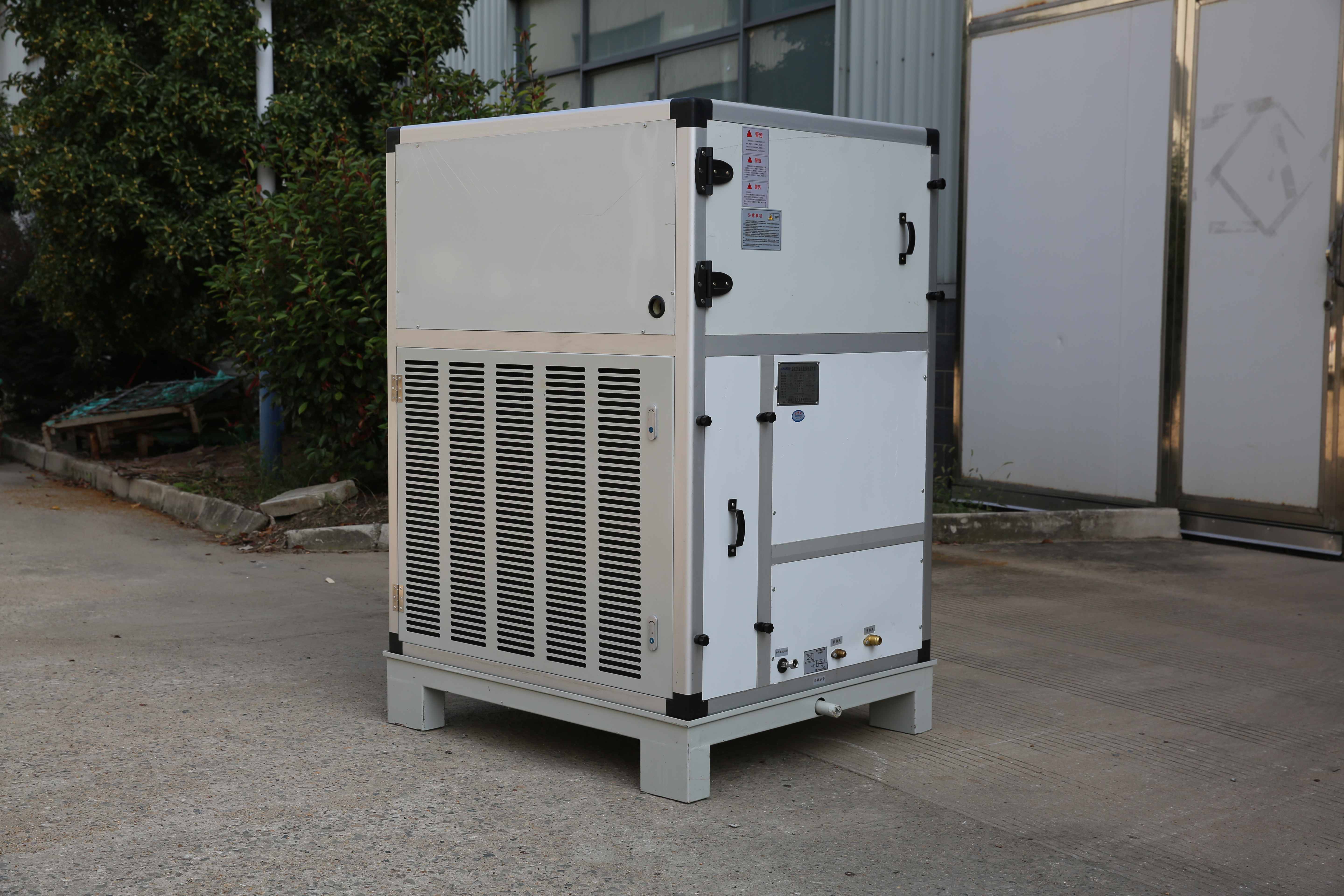
A spec sheet lists cooling capacity and efficiency, but it rarely mentions whether the copper tubing was sourced from a mill with consistent wall thickness or if the compressor was assembled in a facility known for tight leak testing. Those origins shape how the unit behaves after five years of cycling through humid summers and cold winters. A coil wound with slight variations in fin spacing or a compressor with a marginally different piston clearance might still hit the rated numbers on day one, yet diverge noticeably in sound, vibration, and refrigerant retention as wear accumulates.
Consider the supply chain behind the components. Some manufacturers buy coils from the same regional supplier for a decade, allowing them to refine brazing joints and return-bend geometry based on field failure data. Others source compressors from whichever vendor offers the lowest quarterly price, which can lead to a mix of rotary, scroll, and reciprocating designs inside the same model line. That inconsistency rarely shows up in a brochure, but a technician pulling the access panel can often spot it in the mounting brackets, the position of the accumulator, and even the smell of the factory oil.
Origins also hint at the level of end-of-line testing. A compressor plant that runs every unit through a helium leak check and a run-time vibration sweep will produce far fewer early failures than one that relies on batch sampling. Likewise, coils formed on well-maintained fin dies with automated hairpin bending tend to have fewer stress cracks at the tube sheet. These aren't details you can derive from EER or SEER numbers, but they show up in warranty claim rates and in how quietly the system starts on a mild spring morning.
Demand a Full-Load Run Test Before the Unit Leaves the Floor
A unit that runs fine with no load can still fall apart the moment you ask it to do real work. Most factory tests only check that the machine spins up and holds idle speed, but that tells you almost nothing about how it will behave under rated load. Bearings that seem cool at 30% load can overheat at 100%, wiring that looks adequate can drop voltage under high current, and vibration that is barely noticeable at low speed can shake the entire frame apart when the generator is pushing full output. If you don't insist on a full-load run test before the unit leaves the factory floor, you are essentially paying for an unverified assumption.
A proper full-load test does more than just measure output—it forces every subsystem to operate at its design limit simultaneously. Cooling loops, fuel delivery, exhaust temperatures, control response, and harmonic distortion all reach their maximum stress at the same time, which is exactly the condition that exposes weak components. I've seen brand-new units fail during full-load testing because a single undersized hose clamp burst, or a control parameter was set wrong in the firmware, or a heat shield was installed backwards. These are not exotic failures; they are the normal result of pushing a machine to its rated capacity for the first time. If the test is skipped, those failures get shipped to your site, where they become expensive emergency repairs instead of cheap factory corrections.
Never accept a manufacturer's promise that the unit was "tested according to standard procedures." Ask for the actual test log showing full load, rated voltage, and stable frequency for at least four hours—and if possible, send your own engineer to witness the run. A reputable factory will welcome this; a factory that resists is telling you something important about how much they trust their own work. The cost of a witnessed full-load test is trivial compared to the cost of discovering a defect after the unit has been installed on your foundation, plumbed into your system, and wired into your grid. Demand the test before the unit leaves the floor, not after it fails on your watch.
Custom Airflow and Tight Footprints Should Not Inflate the Quote
When a job site presents unusual airflow constraints or a footprint that barely accommodates the equipment, some contractors treat it as an excuse to pad the estimate. That approach misses the point. Experienced teams see these conditions as design challenges, not automatic cost multipliers. The right equipment selection and a bit of creative layout can often keep the budget grounded, even when the physical space tries to push back.
The real issue is whether the quote reflects actual work or simply a fear of the unfamiliar. Tight clearances might mean swapping in a unit with a different coil configuration or staging components differently during installation. Custom airflow might require a more thoughtful duct transition, not a complete re-engineering of the system. These are normal problem-solving steps, not premium add-ons. When you see a line item that spikes purely because the space is awkward, it is worth asking what specifically drives that increase.
A fair number on the page comes from knowing the equipment, understanding airflow fundamentals, and respecting the client's budget. If a contractor regularly works in constrained mechanical rooms or retrofit situations, those conditions are not exceptional—they are the everyday. The quote should reflect that familiarity, not punish the project for its own geometry.
Local Service Response Often Outweighs a Longer Warranty
A decade-long warranty sounds reassuring until you actually need a repair and find yourself waiting days or weeks for someone to arrive. That delay is where local service teams earn their keep. They can often diagnose and fix the problem the same day, limiting downtime and preventing the cascade of missed deadlines and unhappy customers that follows an equipment failure.
Proximity changes how a service provider operates. A nearby technician doesn't have to squeeze your call into a regional route or fight traffic from two states away. They're familiar with the quirks of local installations and usually keep common replacement parts within reach. Some extended warranty plans, by contrast, add layers of approval and dispatch that slow everything down before help even starts moving.
That doesn't mean you should dismiss warranty coverage entirely. But a promise on paper is only as useful as the speed with which it can be fulfilled. For many operations, the difference between a quick local fix and a lengthy warranty wait shows up directly in lost productivity and repair costs.
Sizing for Part-Load Conditions Separates Noise From Comfort
Most HVAC systems spend the vast majority of their operating hours well below peak load, yet traditional sizing methods fixate on that single extreme condition. When equipment is selected solely for maximum demand, it often cycles on and off during mild weather, creating abrupt starts and stops that translate into audible airflow surges and mechanical clatter. These short cycles not only wear down components but also pull conditioned air through ducts at velocities far higher than necessary for most of the year. The result is a system that sounds loud precisely when occupants are most likely to notice—during quiet evenings or early mornings with little background noise.
Shifting the focus to part-load behavior changes the entire acoustic profile. By evaluating how a unit performs at 30%, 50%, and 70% of capacity, designers can select equipment with modulating compressors, variable-speed fans, and staging controls that hold airflow steady. Instead of a sudden blast of air at full speed, the system ramps gently and maintains a low, consistent background whoosh. This approach reduces the pressure differences that cause duct rumble and diffuser hiss, making the difference between a room that feels calm and one that constantly reminds you of the machinery hidden above the ceiling.
The separation between noise and comfort becomes evident when you compare two similarly sized buildings: one designed for peak load only, the other tuned for part-load operation. The first may meet its capacity numbers on paper but leaves occupants reaching for the thermostat or complaining about the racket. The second runs longer at reduced output, holding temperature and humidity steady without the disruptive stops and starts. In effect, sizing for part load is not a compromise—it is the only way to deliver both thermal comfort and acoustic peace in real-world conditions.
FAQ
Very important. DX coils respond differently to part-load conditions than chilled water coils. A company that mostly builds hydronic units may overlook refrigerant distribution, coil circuiting and frost protection. Ask for past DX projects with similar tonnage or climate, not just general AHU references.
Check the evaporator coil's tube diameter, fin spacing, and circuiting. If the circuiting doesn't match the refrigerant type and operating conditions, you'll get uneven cooling, coil icing, or poor humidity control. Request performance data at your actual design conditions instead of relying on catalog ratings.
Many say yes, but you need proof. Ask if they can relocate fan sections, alter coil connections, or change access door positions without starting from scratch. Genuine customization is often what separates a real DX AHU specialist from a company selling fixed box sizes.
Look for suction line temperature sensors, discharge air sensors, and filter status switches already wired in the unit. This saves on startup time and avoids communication issues between the AHU and the outdoor condensing unit. If the controls are left entirely to field installers, troubleshooting becomes harder.
Ask for detailed submittal drawings, casing material specs, and insulation details. Pay close attention to double-wall panels, thermal breaks, and continuous gasketing. If a manufacturer is vague about cross-section drawings or refuses to share material test data, that often points to shortcuts.
Yes, most will commit to airflow, static pressure, and cooling capacity under defined conditions. Ask for a written guarantee linked to testing or field verification. If they only promise 'standard industry performance' with no numbers, treat that as a warning sign.
Hinged doors with solid handles, removable fan assemblies, and clear coil header access make a big difference over the unit's lifetime. Check whether you can change filters or clean the drain pan without removing large panels. Bad access leads to skipped maintenance and early failures.
Because DX systems need stable airflow to prevent coil freeze-ups and compressor problems. Forward-curved fans may look cheaper, but they can drift with duct pressure changes and belt wear. Direct-drive plenum fans or backward-curved impellers usually keep air volume steadier over time.
Conclusion
When evaluating a direct expansion air handler builder, the first thing to do is separate genuine manufacturers from companies that simply stick their name on someone else's equipment. Ask to see the fabrication floor, not just the brochure. The origins of the coil and compressor carry more weight than any glossy spec sheet—reputable suppliers with traceable serial numbers mean fewer surprises down the road. Insist on a full-load run test before the unit ships; if a shop hesitates, that's your answer. Custom airflow and tight footprints are routine engineering tasks, not premium add-ons, so walk away from quotes that inflate cost for these basics.
Once the hardware checks out, think about what happens after installation. Local service response matters more than a long warranty that's difficult to enforce from across the country. A nearby technician who knows your building's quirks will beat a distant call center every time. Also, sizing for part-load conditions is where real comfort lives—many units look great at peak load but drone or short-cycle when demand drops. Demand part-load data and listen to a running unit at half speed before committing. These quieter, less obvious details separate a well-built DX air handler from one that will irritate occupants for years.
Contact Us
Contact Person: Crystal
Email: [email protected]
Tel/WhatsApp: 8613524235353
Website: https://www.airkohvac.com