

Flexo Printing Machine for Plastic BOPP Exporter Essential Buying Guide
2026-11-16
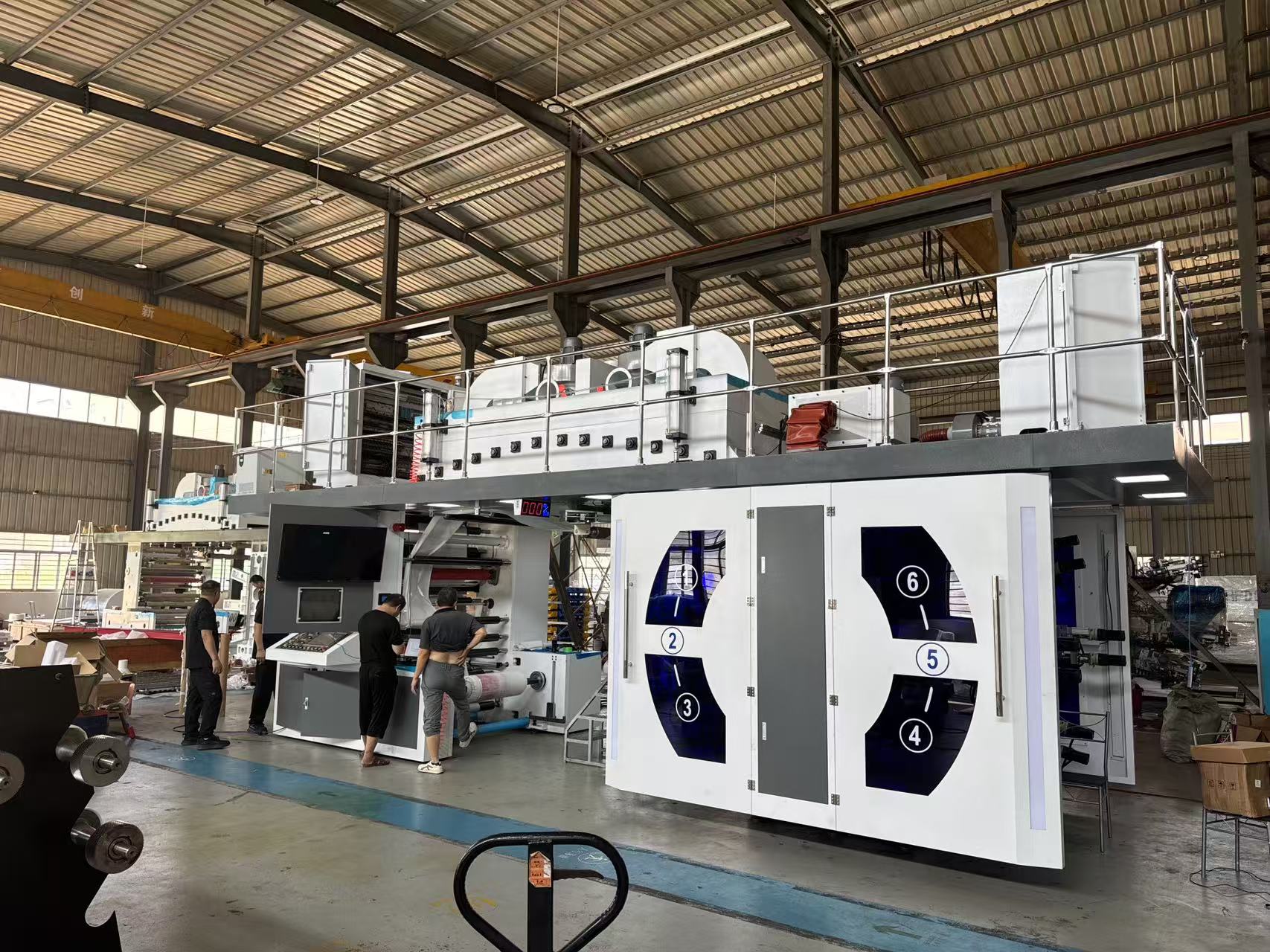
If you are sourcing a flexo printing machine for plastic BOPP film, the choices can look similar on paper yet differ sharply on the production floor. This buying guide cuts through spec-sheet noise to focus on what actually affects print consistency, waste, and uptime. Along the way, we look at how HuiPeng approaches exporter requirements, so you can shortlist equipment with clearer eyes instead of relying on glossy claims.
Start with your actual BOPP roll widths and print repeat lengths, not a wish list
Before you quote a job or schedule a run, pull the real widths from the BOPP rolls already sitting in your warehouse and check them against the cylinder repeat range on each press. Plans unravel when someone works from a nominal size that hasn't matched the floor in years. If your slitter takes 840 mm but the stock shows up at 870 mm, the extra trim is not a rounding error; it becomes waste and lost time before the shift ends.
Build the production plan around repeat lengths you can actually hold without stretching film or fighting registration. A 320 mm repeat on one line may need a different cylinder setup than the same label on another line, so note what each machine really carries, including gear tooth counts and cylinder diameters. Let those numbers set the boundaries instead of chasing a format that only works on paper.
When new dimensions land on your desk, make the first step a fit check against current roll widths and repeats. If the layout calls for 370 mm but your line tops out at 340 mm without another tooling purchase, raise that before sampling starts. Working from real numbers keeps prepress and finishing conversations grounded, and it keeps a quote from turning into an expensive assumption.
Ask an exporter how their drying system behaves on polypropylene, not just on paper
Most drying data sheets are built around cellulose. Paper absorbs and releases moisture in a predictable, almost gentle curve, and systems tuned for that material often sail through demos. Polypropylene is a different animal. It barely holds moisture in the first place, but what little it does hold clings to the surface charge and hides in low-molecular-weight tails. That changes the game for dew point control, residence time, and even airflow direction. An honest exporter should be able to walk you through what happens when the polymer is slightly off-spec, humidified by ambient air in a silo, or loaded straight from a gaylord that sat on a dock through a wet weekend.
Ask them what their drying hopper does when the inlet temperature overshoots by ten degrees and the material starts to soften at the walls. Ask how their desiccant wheel responds when the return air carries a faint whiff of oxidized additive, not just clean paper dust. If the answer loops back to generic curves or a brochure claim about minus-forty dew point, you are not talking to someone who has actually dried olefins at scale. A good response will mention things like bridging tendencies, static-driven clumping, and the need to drop throughput slightly when running recycled PP flake with high surface area.
What you are really probing is whether the system was designed for the material or merely papered over with adjustable setpoints. Polypropylene will not punish you with moisture streaks on day one. It will wait until the third shift, when a shift in melt flow shows up as brittle sprues or a haze band in thin-wall parts. Then the drying audit begins, and the exporter who could not answer a simple material-specific question is suddenly hard to reach.
Look past the painted panels at frame castings, gearboxes, and doctor blade rigidity
Paint hides a lot, but it does not damp vibration or hold register. The frame castings deserve a closer look because wall thickness, ribbing, and stress relief determine whether the side frames stay put when speed and tension climb. A heavily ribbed, aged casting tends to settle into a stable shape, while a lighter fabrication can flex enough to turn minor roller misalignment into repeating print defects.
Gearboxes are another area where the spec sheet rarely tells the whole story. Open one up and check the tooth contact pattern, backlash, and bearing preload rather than trusting the housing. Tight, consistent backlash matters more than a brand name, especially on decks that reverse or run at high line speeds. Any slop here shows up as dot doubling or barring long before a gear actually fails.
Doctor blade rigidity works the same way. A stiff blade holder and a well-supported clamp beam keep contact pressure even across the full width, so the blade wipes cleanly without digging into the anilox or plate edges. If the holder twists under load, operators end up chasing wear streaks and ink density shifts that no amount of blade pressure adjustment will fix.
Match print stations and registration controls to the packaging jobs you already sell
Think about the actual packaging work moving through your shop before quoting or scheduling. A label run with four colors and a short run length rarely benefits from an eight-station press with automated register presets. When station count and register control match the job, makeready stays short and the press operator is not managing unused units.
Jobs with tight print-to-cut registration or multi-layer films need more than basic side-lay correction. Those packaging formats may call for camera-based register systems, additional print stations for specialty coatings, or higher resolution controls on each deck. Packaging sales teams that understand these limits can quote a standard folding carton without adding hidden cost for equipment the job never touches.
Aligning the two also makes scheduling cleaner. Instead of tying up a fully configured press for straightforward work, production can route basic jobs to simpler lines and reserve the high-capacity stations for packaging that actually demands them. The result is fewer late-stage surprises, better press utilization, and promises to customers that reflect what the floor can realistically run.
Turn spare parts support into a timed test before you sign the purchase order
A purchase order can look reassuring on paper, but the real question is whether the supplier can move when a machine is down and every hour costs money. Instead of accepting a generic promise about spare parts availability, set a concrete deadline before you commit. Ask for a formal quote on a list of critical wear items, a confirmed dispatch date, and the name of the person who would handle an emergency order. Give them 48 hours. If the response is vague, late, or full of excuses, that tells you more than any glossy document.
The timed test is not about creating extra work. It forces the vendor to demonstrate the same process they will use after the sale. You get to see whether their stock system actually knows the parts, whether their logistics team can quote realistic lead times, and whether their after-sales staff treat a pre-sale request with urgency. A supplier who cannot produce clear answers under a short deadline will rarely become faster once the invoice is paid.
Run the test on the parts that would stop your operation, not just easy consumables. Compare the responses side by side. The supplier that gives you exact part numbers, pricing, and a shipping date without being chased is showing you how they will behave when the pressure is real. That evidence belongs in the decision, right next to the price.
Compare waste rates and energy draw on short runs, because those numbers hide the real margin
Short runs are where the profit quietly slips away. A machine that looks efficient on a full production day can burn through material and power during warm-up, purging, and frequent changeovers without anyone noticing. When you only compare waste percentages across an entire shift, those first few cycles get buried under thousands of good parts. The real margin lives in those ten-minute setup windows, not in the six hours of steady running that follow.
Energy draw tells a similar story. Peak startup loads are rarely captured by a monthly utility bill, so two lines can appear to cost the same while one consistently spikes during every restart. If you track waste and power use per job instead of per shift, the short-run penalty becomes obvious: more trim, more rejected warm-up parts, more idle heating. Those small losses repeat every single run, and over a year they can outweigh the savings you thought you were getting from a cheaper material or a faster cycle time.
Look at the first fifteen minutes of any run and the last five. Measure exactly how much material gets thrown out before the process stabilizes, and meter the real power draw during that window. You will often find that a machine with a slightly slower steady-state speed actually keeps more money in your pocket because it reaches stable conditions faster and with less scrap. Ignore the short-run numbers and you are not comparing machines, you are comparing illusions.
FAQ
For BOPP, focus on corona treatment placed just before each print deck, closed doctor chambers that limit solvent evaporation, and drying tunnels designed for both water- and solvent-based inks. Since BOPP has a slick surface, the press should deliver 38 to 42 dynes at the point of printing. Sleeve-based plate cylinders also make repeat jobs easier because you can keep different repeat lengths on hand without a large cylinder inventory.
Ask the builder for a sustained run on 18 micron film, not a short demo. Watch for register drift after the press reaches normal operating temperature. Servo-driven decks with automatic register control are much better suited to this than older gear-driven designs. Check whether the web path has short, controlled spans between colors and whether tension is managed with load cells or dancers. Existing users printing film in the same thickness range can often give the most honest waste figures.
Speeds quoted on paper or board will mislead you. With BOPP, ink sits on the surface, so drying relies on air movement and heat, not absorption. You need high-velocity interstation dryers and a final tunnel long enough to keep retained solvent under 5 mg/m² at your real top speed. If water-based inks are part of the mix, demand higher air volume and corrosion-resistant tunnel surfaces. Otherwise you end up reducing speed to keep the job safe and compliant.
Many suppliers talk about top speed but stay quiet on changeover. Ask for a timed switch between two repeat lengths with different ink colors. Sleeve systems, quick-lock anilox rollers, and doctor chamber wash-up routines can bring a changeover from over an hour to under 20 minutes. If the sequence involves manual lifting or long rail adjustments, short export jobs will cut into your margins. Have the builder run the entire change in front of you, unedited.
Lock in a spares package that covers roughly the first 18 months of wear: doctor blades, chamber seals, anilox sleeves or rollers, filters, belts, and one spare servo drive. Find out where parts are actually stocked. If the nearest hub is two weeks away by air freight, you need more inventory on your floor. Require remote diagnostics access and a written response-time commitment. Service support is often a better predictor of uptime than the machine specification sheet.
Compare capability instead of price alone. List mechanical speed next to realistic BOPP speed, drying capacity at that speed, register tolerance over a 30-minute run, changeover time, and energy consumption. Ask each builder to print on your own BOPP film with your own ink set, then keep the samples. Separate one-time costs from recurring expenses like replacement sleeves, anilox rollers, and service visits. A lower purchase price often hides fewer servo axes, a lighter frame, or narrower dryer capacity.
They usually buy for the current order and ignore film gauge range, ink types, and shorter future runs. They look at printing width but not minimum repeat length. They run tests only on thick film at low speed. They do not ask about solvent residue levels or food-contact compliance. They also forget that BOPP generates heavy static, so static elimination bars and web cleaning should be part of the machine build, not a later add-on. These gaps often appear as high waste in the first few months.
Conclusion
Buying a flexo printing machine for BOPP film through an exporter rarely goes wrong on the quoted speed or color count; it goes wrong on the details nobody puts in the brochure. Start from the reel widths and repeat lengths already moving through your plant, not from a wish list. A machine that handles narrow bags beautifully can become a bottleneck the first time you quote a wide wrap job. While you are at it, press the exporter on how the drying system actually behaves on polypropylene, because heat transfer and retention on BOPP are completely different from paper or board. If their answers drift back to paper-based examples, treat that as a warning.
Mechanical quality hides under the painted panels, so look at frame castings, gearbox machining, and doctor blade rigidity before paying attention to cosmetics. Registration controls and the number of print stations should match the packaging work you already sell, not the work you hope to win someday. Finally, make spare parts support a timed exercise before signing the purchase order: request three specific wear items and see how long a real quote and dispatch date take. On short runs, small differences in waste rate and energy draw quietly decide whether a job makes money, so ask for realistic numbers from similar BOPP operations rather than polished averages.
Contact Us
Contact Person: Isaias
Email: [email protected]
Tel/WhatsApp: 86-13868693129
Website: https://www.hpflexo.com/