

Fully Automatic Paper Bag Machine Service Explained for Growing Packaging Businesses
2026-11-16
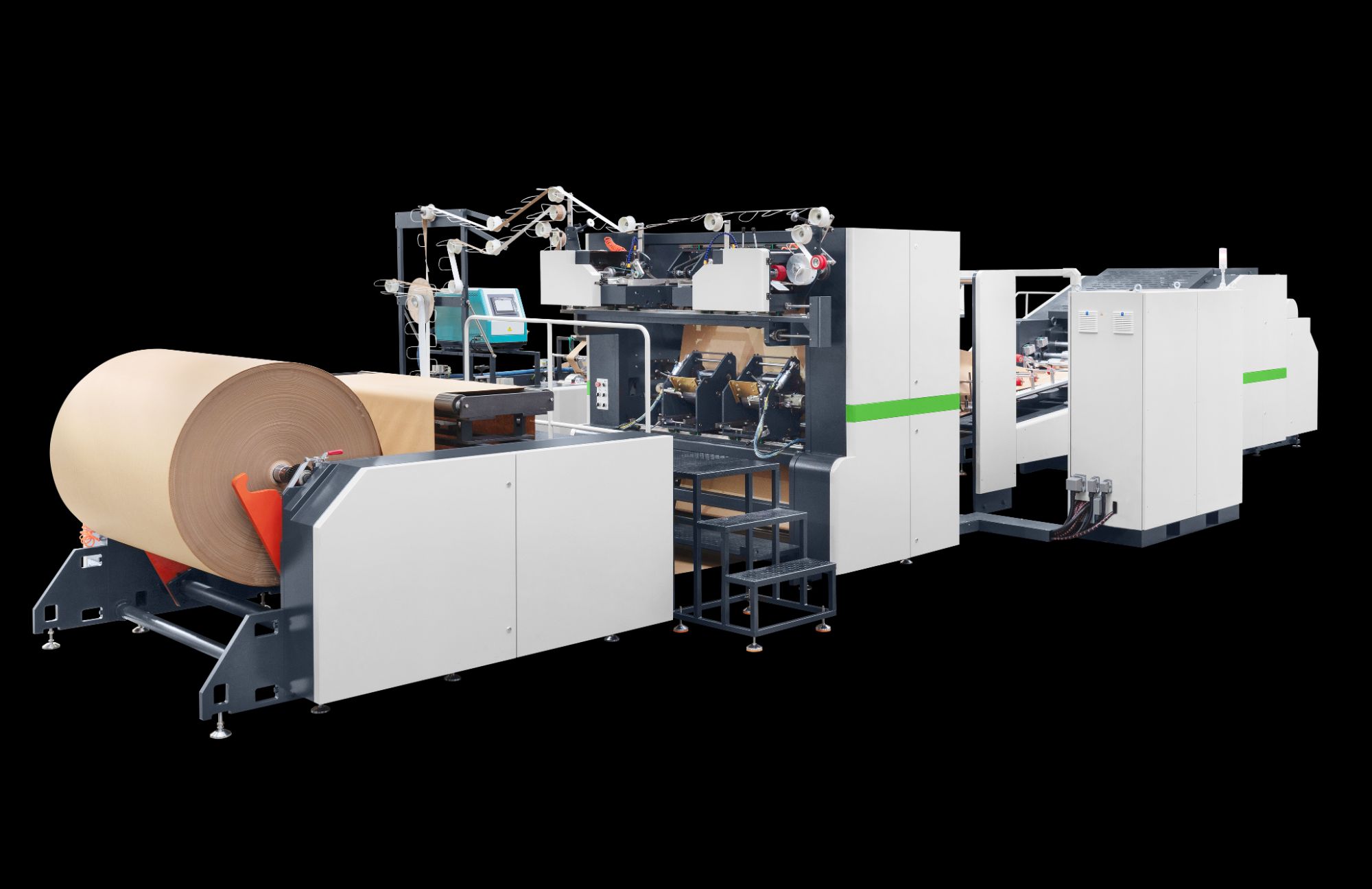
An order surge is great—until a paper bag line goes quiet. For packaging businesses trying to scale, the real test isn’t just how fast a machine runs on day one; it’s how well it’s supported in month six. That’s where service makes the difference. Here, we unpack what fully automatic paper bag machine service actually covers and why ROKIN has made support a central part of the purchase, not an afterthought.
Where Full Automation Changes Daily Work, Not Just Output
Automation is often framed around how much more gets produced, but that misses the quieter shift in how people actually spend their hours. Once a repetitive sequence disappears, the rhythm of the day changes: mornings no longer start with batch processing, inboxes no longer swell around the same handoffs, and the small pauses that used to belong to manual checks get reallocated to judgment calls, exception handling, and cross-team conversations. The output may shift, but the texture of the workday changes first.
This change can feel disorienting because it alters informal coordination, not just formal workflows. Colleagues who once talked while waiting for a report now need other reasons to sync. Managers lose the visible cue of a busy queue and have to read progress through different signals. Full automation rebuilds the social and cognitive map of a job: who asks whom for help, where delays become visible, and which skills get practiced daily.
What matters is not simply replacing steps, but redesigning the day around the parts only people can do well. That might mean more time spent interpreting anomalies, negotiating priorities, or improving the rules the automation follows. When that redesign is ignored, teams often invent new manual work just to regain a sense of control. When it is done thoughtfully, daily work becomes less about feeding the process and more about steering it.
The Speed Question Most Buyers Only Ask After Install
It's easy to compare download speeds on paper, but the real test comes the moment you start streaming a 4K film or pulling a large software update while a video call runs in the background. Most buyers don't realize how much a router's buffer management matters until their connection stutters. A device that handles multiple data streams without collapsing under pressure isn't just fast—it stays fast when your household actually uses it.
Installation day feels smooth, and basic browsing never exposes weak spots. The frustration usually appears days later, when smart home gadgets, gaming consoles, and work laptops all compete for the same airtime. That's when the question nobody asked at purchase time finally surfaces: why does the speed drop exactly when we need it most? The answer often lies in how the hardware schedules traffic, not just the numbers printed on the box.
If you're still in the research phase, ask about performance under mixed load, not just peak throughput. A router that delivers 900 Mbps to one device can choke at 40 Mbps when ten devices wake up simultaneously. Real-world speed is a behavior, not a benchmark—and it's the one thing you can't test until after everything is already plugged in.
Changeover Time Is a Service Issue Too
Most operational reviews treat changeover time as a purely technical constraint, something for the engineering team to shave down with better fixtures or faster tool swaps. But when you watch a line transition from one product to the next, the real bottleneck is rarely the machinery. It is the uncertainty about who is supposed to be where, which settings are current, and whether the first piece off the new run will actually meet spec. That uncertainty is a service failure in disguise. Operators wait for approvals, technicians search for the latest revision, and supervisors repeat instructions that were never written down clearly. The minutes lost are not mechanical; they are informational.
Framing changeover as a service issue changes where you look for improvement. Instead of only asking how long the physical adjustment takes, you start asking how fast a shift lead can get a clear, confirmed answer about material readiness, calibration status, or downstream capacity. A well-designed service response during changeover means the right person is reachable immediately, the needed data is already updated, and exceptions are visible before they block startup. In many plants, reducing changeover time by twenty percent does not require a single new tool. It requires making the support around the changeover as reliable as the production process itself.
The payoff shows up in more than the stopwatch. Shorter, more predictable changeovers reduce the pressure to overproduce long runs just to avoid switching. They also reduce the hidden cost of first-run scrap and the emotional drain of repeated firefighting. When teams stop treating changeover as an unavoidable mechanical pause and start treating it as a service moment with clear ownership, response expectations, and real-time information flow, the whole production schedule becomes more honest. The time between products is not wasted time. It is an opportunity to prove that the organization can coordinate as well as it can manufacture.
Running a Small Crew on a Fully Automatic Line
Keeping a fully automatic line moving with only a handful of people sounds efficient on paper, but it shifts the real workload from manual tasks to constant attention. A small crew rarely has the luxury of fixed roles; one person may be watching the control interface, another is clearing a sensor fault, and the third is already restocking packaging material. The line does the heavy lifting, but it still needs someone who can read its rhythm and spot small deviations before they turn into downtime.
The biggest trap is assuming fewer hands means fewer problems. With automated equipment, a single missed alarm can idle every downstream station while the team is busy elsewhere. Cross-training becomes more important than specialization. Each operator needs enough familiarity with the filler, labeler, and case packer to step in without waiting for a technician. Short, focused walkthroughs at shift start tend to work better than long procedure manuals when the crew is small.
Scheduling breaks and rotations also gets harder because there is no extra person to absorb a gap. Many lines run best with overlapping responsibilities rather than strict stations. A team that communicates casually but clearly, often through a shared radio or a quick look at the same dashboard, can keep output steady without adding headcount. The goal is not to run the line with as few people as possible, but to make the people you have respond faster than the machine can drift.
Service Calls You Can Avoid With a Simple Shift Routine
Most breakdown calls that start with 'the car won't move right' trace back to the same overlooked habit: rushing the shift. Waiting for the revs to settle before moving from park to reverse, and giving the transmission a full beat between drive and reverse, removes the clunk that eventually turns into a tow truck request.
On hills, letting the parking brake take the vehicle's weight before shifting into park is a half-second move that saves the parking pawl from becoming a very expensive phone call. The same goes for cold starts: rolling away gently while the fluid is still thick prevents the hard engagement that wears seals and valve bodies long before their time.
None of this requires mechanical skill. It is just a rhythm: stop, brake, shift, pause, release. Stick with it for a month and the difference shows up as fewer dashboard warnings, quieter gear changes, and a phone that stays silent when you would normally be describing a noise to a service advisor.
Expanding Capacity Without a Costly Floor Plan Rewrite
A floor plan looks permanent, but most of its constraints are just habits. Before touching a wall, watch where work actually stalls, where carts get parked, and which shelves stay empty. Shifting a receiving zone by ten feet or moving a slow-selling product line to a higher shelf can release hundreds of square feet. The goal is not more space; it is fewer obstacles in the space you already have.
Another underused move is to make storage and workstations mobile. When fixtures sit on casters and shelving can be adjusted without a contractor, the same footprint can serve three different functions across a day. That kind of flexibility often outperforms a blueprint change, because it lets the room evolve with demand instead of locking you into another expensive guess.
FAQ
It covers on-site commissioning, a full test run with your chosen paper stock, and basic operator training. The technician usually stays until the machine holds a stable speed and bag dimensions match the specs you signed off on.
Most crews handle routine size changes within three to five days if they have had hands-on practice during training. We also leave a quick-reference card on the control cabinet for less frequent adjustments like gusset depth and handle patch timing.
Daily greasing of the main cam followers, weekly checks on the suction cups and perforation blades, and monthly belt tension checks cover most of it. Machines that run two shifts usually need a deeper inspection of the bottom folder and glue unit every 600 hours.
Yes. We keep drawings for discontinued drive components and can often match aftermarket bearings, timing pulleys, and servo amplifiers. If an exact part is no longer made, we suggest a retrofit kit instead of forcing an obsolete replacement.
Watch the stock mix, especially if you are shifting to thinner or recycled paper, because that changes the vacuum and folding settings. Also check floor space and air supply: a fully automatic line needs dry, stable compressed air and enough room for an inline handle attachment if you plan to add it later.
Yes, and the first step is a sample run with your actual material rather than a catalog spec. We adjust the former size range, bottom patch dimensions, and glue pattern based on that trial, then save the recipe so repeat orders switch over quickly.
We keep remote access enabled for most machines, so an engineer can check the PLC alarms and servo history before a site visit. For urgent mechanical failures, we dispatch from regional hubs and aim to have the line moving again within 24 to 48 hours, depending on the part.
It can be. That is why we offer short refresher clinics for night-shift crews and record the core setup procedures on video. The biggest mistakes we see come from new operators overriding safety interlocks or skipping the glue purge, so those two points get extra attention.
Conclusion
Most packaging shops discover that a fully automatic paper bag machine reshapes the floor long before the output numbers show up on a spreadsheet. The real change is in how operators spend their hours: instead of babysitting glue stations and hand-stacking blanks, a small crew can handle roll changes, monitor register, and still keep an eye on downstream bundling. That shift matters because the speed question almost never gets asked during the demo. Buyers tend to focus on rated bags per minute, but after installation the conversation turns to whether the line can hold that pace through an afternoon without drifting out of square. A machine that runs fast only when everything is perfect is not much use to a growing business. Service support that explains those limits honestly—and helps set realistic expectations for different paper weights and handle styles—ends up being more valuable than a spec sheet.
Changeover time is another service issue hiding in plain sight. If a crew needs forty minutes to move from a standard grocery bag to a wider sack, that lost window is a cost driver, not just an inconvenience. Fully automatic equipment should make size adjustments repeatable, with fewer hand tools and fewer guesses. On a small crew, that predictability keeps one operator from being pulled away for half the shift. It also reduces the service calls that come from rushed setups: misaligned perforators, crooked handles, or tension settings knocked out of range. A simple shift routine—wiping the pickup arms, checking vacuum levels, clearing the bottom fold area—prevents many of those failures before they become emergency tickets. For a growing packaging business, this kind of service guidance is what allows capacity to expand without tearing down walls. The same footprint can absorb a second shift or a higher-mix schedule when the machine is supported properly, not just installed and left to run.
Contact Us
Contact Person: CARA
Email: [email protected]
Tel/WhatsApp: +8619519778302
Website: https://www.rokinmachinery.com