

Gel Phone Sticker Manufacturer: How to Choose the Right Partner for Custom Designs
2026-11-16
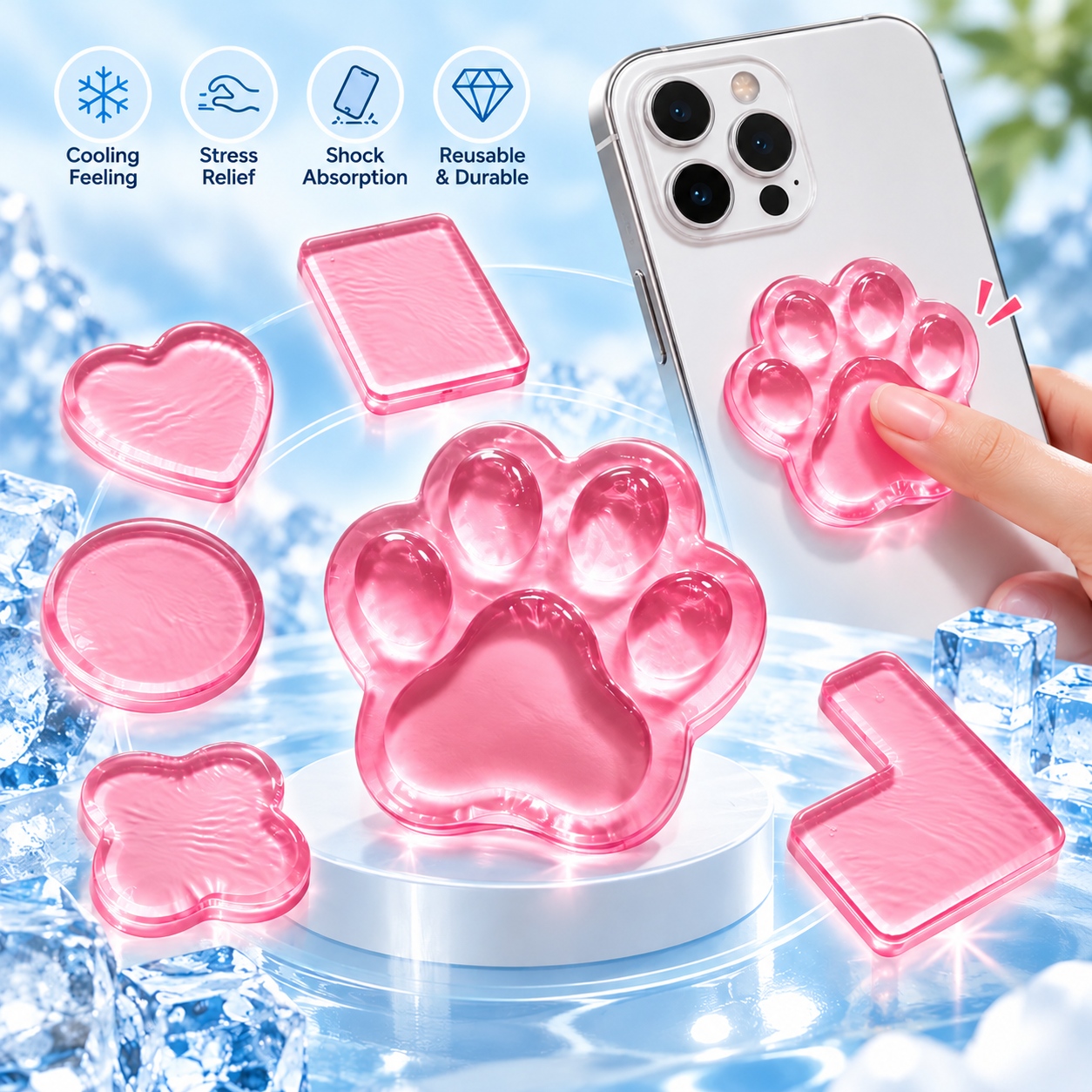
Custom gel phone stickers can look flawless in a render and still arrive with dull edges, weak adhesion, or colors that miss the sample by a mile. The real variable isn’t your artwork—it’s who is molding, curing, and finishing the product. This guide walks through the checks that matter before you commit: material feel, mold clarity, sampling speed, and how reliably a factory repeats the same result at scale. If you’re building a shortlist, Kunbao is a manufacturer worth comparing against those standards, not just on price.
Inspect the Gel Formula Before You Fall for a Pretty Sample
A swatch on a glossy card or a shimmering jar can make almost any gel look impressive, but that first impression rarely tells you how the product behaves on your skin, hair, or nails over time. Instead of reaching for the most photogenic sample, flip the container around and spend a minute with the ingredient list. Look for the actual gelling agents, humectants, and preservatives, not just fragrance and dye; these functional ingredients are what decide whether the formula holds up or turns sticky and unstable by midday.
Texture also deserves a closer look before you commit. Rub a small amount between your fingers and notice whether it drags, pills, or leaves a tight film. A well-made gel should spread evenly and settle without tackiness, while a formula that leans on alcohol or cheap thickeners may feel smooth at first and then dry into a cracked, flaky layer.
If you have access to a full-size version, put it next to the tester and compare them directly. Some brands put extra effort into tiny samples so they feel silkier and more forgiving, only to ship a thinner, harsher batch once the order arrives. When the ingredient deck, texture, and batch behavior match, the pretty sample has earned your trust; when they drift apart, you are mostly paying for the packaging.
Ask How Fine Lines and Tiny Text Hold Up After Repeated Stretching
After weeks of tugging, folding, and yanking at the fabric, the fine printed lines start to show their true character. Unlike bold graphics that can crack into obvious flakes, the tiny text and hairline details tend to wear down more quietly. Under a loupe, you might notice the edges of each letter turning slightly fuzzy, as if the ink is slowly bleeding into the surrounding fibers. The lines don't disappear all at once; instead, they lose their crispness bit by bit, especially where the material flexes most often.
Repeated stretching also reveals how well the print actually bonded with the surface. On some samples, the fine text held up surprisingly well because the thin ink layer flexed along with the fabric rather than fighting it. On others, the same delicate lines developed tiny discontinuities—little gaps where the ink had been pulled apart from itself. These breaks were most obvious at the tops of lowercase letters like 'e' and 'a', where the curvature creates natural stress points.
Something curious happened around the tenth wash-and-stretch cycle: the tiny text began to look almost intentional, like a distressed or vintage treatment. What had started as a high-precision print now read as a softly eroded mark, still legible but with a hand-drawn roughness to it. For anyone evaluating long-term durability, that shift from crisp to weathered is the real story—not whether the lines vanish completely, but how gracefully they fall apart.
Test the Adhesive on Matte, Glass, and Silicone Phone Cases
Matte cases often look like they should grip adhesive well, but the fine texture actually reduces the surface area making contact with the tape. Wipe it down with isopropyl alcohol first to clear away skin oils and pocket dust, then apply the adhesive with steady pressure for about half a minute. If the edges lift after a day, a very light scuffing with a fine sanding sponge can give the adhesive more to bite into without leaving visible marks.
Glass cases are the easiest to read because the surface is smooth, but many have an oleophobic coating that can repel some adhesives. A quick wipe with a damp cloth followed by a dry pass usually takes care of the coating, and the bond tends to feel solid within a few hours. Keep in mind that glass doesn't flex, so if the adhesive fails, it's usually because the case flexed near the corners or the tape was exposed to a lot of heat.
Silicone is the trickiest of the three. It has a naturally low surface energy, which means many adhesives stick poorly until the surface is prepped with a dedicated primer or a solvent-based cleaner. Even then, you may notice the adhesive holds at rest but starts peeling under repeated pocket friction. For silicone, the most reliable result comes from testing a small strip near the bottom edge before committing the whole mount.
Map Their Production Floor Capacity to Your Launch Calendar
A production floor rarely runs at a single, fixed rhythm. Some lines sit quiet for weeks waiting on a component, while others are pushed past their comfortable cadence when a new product drops. If you treat capacity as a flat number on a spreadsheet, your launch calendar will eventually collide with reality — late shipments, overtime costs, and half-finished orders stacking up near the dock.
Instead, sketch your actual available hours per week, per line, and layer in the quirks: changeover time, maintenance windows, operator training days, even the seasonal slowdowns when a key material gets scarce. Then place each launch on that map and look for the overlaps. A pre-order surge hitting the same week as a routine retooling isn’t bad luck; it’s a scheduling choice you can see coming.
The goal isn’t to squeeze every minute out of the floor. It’s to leave enough slack that a late container or a batch of defective parts doesn’t domino through your entire roadmap. When your production capacity and launch dates share the same visual language, the conversation shifts from “we’ll figure it out” to “we already know where the pressure points are.”
Clarify Who Owns the Digital Cut Files and Custom Molds
It is easy to assume that paying for a custom mold or a set of digital cut files means you own them, but that assumption falls apart quickly when the relationship with a supplier changes. The mold may sit in their facility, the files may live on their server, and without a written agreement, either side can claim control in a way that stalls production or forces an expensive legal review.
Payment alone rarely settles ownership. A tooling invoice may cover the labor and material to machine the mold, not the underlying design data or the right to reuse it elsewhere. Some fabricators keep the cut files as proprietary production assets, meaning you cannot simply take those files to a lower-cost shop later. If you need portability, the contract has to state that deliverables include native files, not just finished parts.
The cleanest approach is to define ownership before any tooling work begins. Specify who holds the mold, who may use or modify the cut files, and what happens if the vendor closes, changes ownership, or ends the business relationship. Also clarify whether files must be returned, deleted, or handed over in a usable format. A short addendum to the purchase order can prevent the kind of ambiguity that only surfaces after a production line has already stopped.
Request a Real Batch Sample Instead of a Hand-Finished Prototype
When you are this close to signing off on a production run, a hand-polished prototype can hide more than it reveals. The edges feel perfect because someone spent an afternoon coaxing them into shape, not because the tooling actually holds those tolerances under pressure. Ask for a piece pulled from the same mold, stamped on the same line, or cut with the same blade settings that will run at full speed. The difference is rarely visible at first glance, but it shows up in the way a seam shifts after fifty cycles or how the finish wears against a real gasket instead of a designer's mockup.
Batch samples also carry the fingerprints of the process itself: slight sink marks near a boss, a faint flow line where the material hesitated, a burr that the finishing station missed because the operator was new. None of these show up in a prototype that has been fettled, sanded, and reassembled by someone who knows exactly where to look. If your goal is to validate the supply chain rather than admire a one-off art piece, insist on the version that comes off the line with its flaws intact. That is where the real negotiation between design intent and manufacturing reality begins.
One practical way to frame the request is to tie it to a specific failure mode you care about. Instead of asking for a better sample, ask for three consecutive pieces from the first hour of a shift, without any secondary touch-ups. Then compare them side by side. The variation between those three tells you more about repeatability than any single flawless model ever will. It also signals to your supplier that you are not looking for a showpiece, but for evidence that the process can be trusted when nobody is watching.
FAQ
Start with the gel base itself. Ask for physical samples, bend them, and watch how quickly the surface recovers. Check that the edges stay clear and the adhesive layer is even. A factory that is vague about the gel compound or thickness is usually cutting corners.
Send a file with tight lines, small text, gradients, or an irregular contour and ask for a physical proof instead of only a digital mockup. A good partner will point out what may need adjusting for print bleed, cut lines, or gel shrinkage before you ask.
It depends on the printing method and packaging, but many mid-sized manufacturers now allow 100 to 300 pieces per design for digital production. If someone insists on 5,000 pieces for a simple clear gel sticker, they are usually trading flexibility for volume.
Ask for uncoated testers and stick them on curved, textured, and low-energy surfaces such as a silicone phone case or a matte laptop. Leave them for a day, remove them, and check for residue or lifted corners. That tells you more than a stated tack level.
Full production cost almost always matters more. Include setup fees, sampling rounds, packaging, waste allowance, shipping weight, and rework risk. A slightly higher unit price can be cheaper overall if the manufacturer catches defects before packing.
For digital production, expect roughly 7 to 14 days after artwork approval, plus shipping. If die-cut molds are needed, add another 5 to 10 days. Be careful with very short lead times because they often mean less curing time for the gel, which affects clarity and edge stability.
Request the exact material spec, adhesive backing type, dimensions with tolerance, print color reference, cut line path, packaging method, and a signed physical sample. Also confirm who owns the mold or digital file and what happens if the batch fails quality inspection.
That usually comes from low-grade TPU or insufficient UV stabilizer. Ask whether the gel is optically clear and UV-resistant, and place samples in indirect sunlight for a few weeks. A dependable manufacturer will state the yellowing resistance instead of just calling the material premium.
Conclusion
Choosing a gel phone sticker manufacturer usually starts with samples that look charming on a screen, but the real test happens when you bend, stretch, and stick them onto surfaces people actually use. Ask for the gel formula details instead of relying on a glossy photo, because some materials turn cloudy or lose their shape after a few weeks in a pocket. Pay attention to whether fine lines and small text stay crisp after repeated pulling, and run the adhesive across matte, glass, and silicone cases before committing. A sticker that grips a smooth glass back may lift within hours on a textured silicone case, which says more about the production process than any spec sheet.
Beyond the physical sample, look closely at how the factory schedules runs and whether their floor capacity matches your launch dates, especially if you need restocks around a drop or holiday push. Also settle ownership of digital cut files and custom molds before the first order goes into production, because you do not want your most detailed artwork or a mold you paid for held hostage later. Finally, request a real batch sample rather than a hand-finished prototype, since the version a technician carefully assembles rarely reflects what comes off the line at full speed. That gap between prototype and batch is where most disappointing partnerships start, so closing it early keeps your custom designs consistent when orders scale.
Contact Us
Contact Person: Catherine Peng
Email: [email protected]
Tel/WhatsApp: +86-13434169510
Website: https://www.kbcoolgel.com/