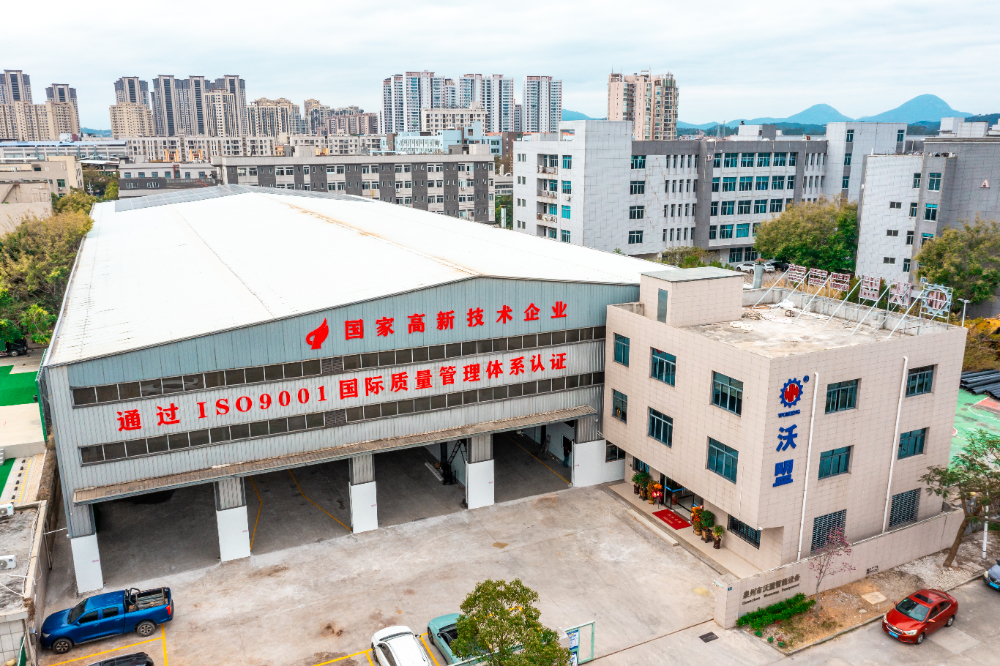

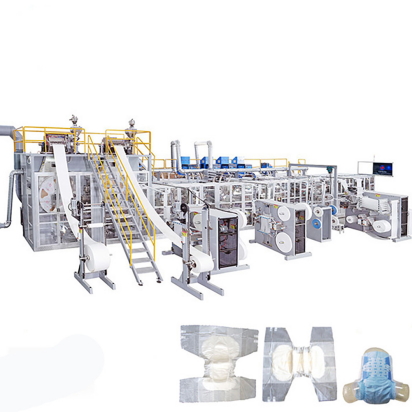
How Full Automatic Adult Diaper Making Equipment Boosts Production and Quality
2026-06-30
In the competitive hygiene products industry, staying ahead means embracing automation that truly delivers. The shift to full automatic adult diaper making equipment is rewriting the rules—powers up production speed without compromising on quality. At the heart of this transformation is Womeng, a name synonymous with precision engineering and relentless innovation. Imagine lines running smoother, waste dropping, and every diaper meeting the same high standard, batch after batch. That’s the reality advanced machinery brings. But how exactly does it achieve both scale and excellence? Stick around as we unpack the mechanics, the metrics, and the real-world impact that’s turning heads on factory floors.
The Speed Secret Behind High-Volume Adult Diaper Lines
What separates a line that produces 300 adult diapers per minute from one stuck at half that pace usually comes down to materials that don't fight the machine. High-speed converting relies on substrates engineered to run at tension levels that would shred standard nonwovens, paired with adhesives that set almost instantly under pressure. When a core can be formed and wrapped in under a second without shifting or clumping, it's not magic—it's tight integration between raw material specs and machine timing.
The real edge often sits in how the line handles transitions between components, like applying elastic strands without slowdowns or switching pad sizes on the fly. Systems that merge rotary die cutting with vacuum-based transfer points keep the web stable at velocity, while vision-guided rejection gates catch defects without pausing the flow. The difference between a good line and a great one isn't a single breakthrough; it's a chain of tiny, deliberate decisions that eliminate every micro-stop before it happens.
Consistent Quality Without the Human Error
Maintaining high standards in every single output used to mean relying on skilled professionals who could spot and correct mistakes before anything reached the customer. But even the best humans have off days—fatigue, distractions, and simple oversights lead to inconsistencies that can chip away at trust over time. Removing this variable isn’t about replacing people; it’s about building systems where quality is engineered into the process rather than inspected in at the end. By automating the repetitive checks and using precise, rule-based validations, the result is a steady line of flawless deliverables that don’t drift depending on who’s on shift.
Think about the last time a tiny data entry mismatch caused a cascade of issues downstream. Those errors often slip through because manual reviews can only focus on so many details at once. When machines handle the monotonous verification, they never blink, never get bored, and they treat the thousandth item with the same attention as the first. This consistency means your brand voice, formatting, and accuracy remain untouched by human variability—creating a dependable experience that clients come to count on without having to double-check everything you send out.
The real beauty is how this approach frees up actual humans to do what they’re best at: creative problem-solving and strategic thinking. Instead of burning hours proofreading or rechecking figures, your team can innovate, build relationships, and tackle projects that require genuine insight. The absence of human error isn’t an absence of humanity; it’s a deliberate choice to let technology handle the predictable so people can shine in the unpredictable. And that balance is what keeps quality not just high, but sustainably, effortlessly high.
Smarter Material Handling Cuts Costs and Waste
Rethinking how materials move through a facility often uncovers surprising savings. Instead of defaulting to conveyor belts or manual carts, a shift toward modular, adaptable systems allows companies to reconfigure flows as production needs change. This flexibility reduces idle equipment and trims the energy bills that accumulate when machines run half-empty. More importantly, it cuts down on the minor spills, misplacements, and double-handling that quietly erode profits and fill dumpsters.
Precision in inventory staging is another overlooked lever. When stock is placed exactly where it’s needed, in the right quantity, there’s less temptation to over-order “just in case.” That discipline reduces the risk of materials expiring or becoming obsolete on shelves, directly minimizing waste. It also shortens travel paths for workers and forklifts, lowering labor hours and vehicle wear without any major capital investment. Small adjustments in bin location or delivery frequency can compound into meaningful cost reductions over a quarter.
Pairing these physical tweaks with simple tracking tools—like barcode scans at key touchpoints—gives teams real-time visibility without complexity. Knowing exactly what’s on hand and where it’s headed prevents the excess orders and frantic expedited shipments that blow budgets. Managers can spot patterns, like a recurring bottleneck at a packing station, and address it with a floor-level layout change rather than expensive automation. The result is a leaner operation where material moves only when it should, and waste becomes a rarity, not a routine.
How Automation Keeps Every Diaper Identical
In a modern diaper production line, automation removes the variability that human hands inevitably introduce. From the moment raw materials unroll, laser-guided cutters shape each layer to micron-level precision, while robotic arms position absorbent cores and elastic bands without the slightest drift. Every single component lands exactly where it should, time after time, because the machinery follows digital blueprints that don't tire, blink, or second-guess.
Sensors embedded along the line perform hundreds of checks per second, measuring thickness, moisture distribution, and adhesive coverage. If even a tiny anomaly appears, the system instantly recalibrates or diverts the defective piece before it becomes a finished product. This closed-loop feedback means the final diaper emerging at the end of the run is identical to the first one produced hours earlier, no matter how long the line keeps running.
For parents, that consistency translates into trust: they know the diaper they pull from the pack at 3 a.m. will fit, absorb, and protect exactly like the last one. Automation doesn't just speed things up—it builds a quiet promise of reliability into every single unit, turning a mass-produced commodity into something that feels personal and dependable.
Real-Time Adjustments That Prevent Defects
Catching a flaw after it’s already set in stone is costly and time-consuming. That’s why more production lines are leaning on systems that monitor conditions continuously and tweak settings the moment something drifts off target. Whether it’s adjusting the temperature in a molding machine or recalibrating the alignment of a cutting tool, these micro-corrections happen in milliseconds, long before a part ever reaches quality inspection.
The real magic isn’t just speed—it’s the feedback loop that learns from every shift. Sensor data feeds into algorithms that recognize early warning patterns, like a slight vibration that typically precedes a surface defect. Instead of waiting for a human to notice, the machinery simply nudges itself back into the sweet spot, often without pausing production at all.
Operators used to rely on scheduled maintenance or post-production sampling, but those approaches always leave room for error to sneak through. By embedding adjustability directly into the process, companies see fewer scrap parts, less rework, and a noticeable drop in customer complaints. It’s prevention at the pace of production.
Scaling Production with Minimal Downtime
When growth surges, the real test isn't just ramping up output—it's doing so without grinding operations to a halt. The secret lies in designing processes that flex under pressure, not fracture. Think modular equipment layouts that let you plug in new capacity alongside running lines, or staggered shift patterns that saturate existing assets before adding new ones. It's about making scaling a rhythm, not a disruption.
Technology that predicts before it protects is a game changer. Armed with real-time analytics, teams can spot the early tremors of a bottleneck and adjust on the fly—rerouting workflows, prepping backup machinery, or shifting maintenance windows before a minor hiccup becomes a full stoppage. This isn't just about avoiding downtime; it's about building a muscle memory for seamless expansion, where every incremental step feels like business as usual.
But technology alone won't carry the day. The unsung hero is a workforce fluent in change. Cross-training gives operators the agility to pivot across roles when production scales, while a culture that celebrates proactive fixes over heroic firefighting turns everyone into a guardian of uptime. When people, processes, and smart systems move in sync, scaling becomes a quiet evolution, not a jarring overhaul.
FAQ
It's a specialized production line that handles everything from raw material feeding to finished diaper packaging without manual intervention. These machines integrate processes like pulp molding, SAP application, elastic attachment, and folding in one continuous workflow.
By eliminating manual handling stops, the line runs at consistent high speeds—often reaching 300–500 pieces per minute. Smart sensors keep material tension correct and automatically splice rolls, so there's almost no downtime for changeovers.
The precision of servo-driven components ensures every diaper has uniform absorbent core distribution, symmetrical elastic placement, and flawless sealing. Vision inspection systems catch defects in real time, so only perfect products make it to packaging.
Look for modular designs that allow quick size changes, touchscreen controls with recipe management, integrated waste removal, and remote diagnostics. Advanced models even offer AI-driven adjustments to maintain consistency as raw material batches vary.
Precision cutting and real-time process feedback minimize trim waste. Automatic splice units use almost the entire roll, and the consistent quality reduces rejected products. Over time, material savings alone often cover the equipment financing.
Modern lines are designed with self-lubricating components and predictive maintenance alerts. Most require only routine cleaning, occasional belt changes, and software updates. Many manufacturers offer remote support to troubleshoot without an on-site visit.
Quick-change modules and servo positioning let operators switch between briefs, pull-ups, or pad-like products in under 30 minutes. The machine automatically adjusts cutting lengths, elastic tension, and glue patterns based on the selected recipe.
With higher output, lower labor costs per unit, and less material waste, most plants see full ROI within 18–24 months. The boost in product consistency also opens doors to premium retail channels and private-label contracts.
Conclusion
Full automatic adult diaper making equipment transforms production by merging high-speed operation with precise engineering. At its core, these systems run continuously at remarkable speeds, effortlessly handling high-volume orders that manual or semi-automatic lines struggle to meet. But speed alone isn't the story—it's how the machines maintain flawless consistency. By removing human handling from critical steps like material feeding, folding, and bonding, they eliminate the subtle variations and errors that even skilled workers can introduce. Every diaper emerges with identical dimensions, absorbent core placement, and elastic tension, batch after batch. This uniformity isn't just about looks; it directly improves product reliability and user comfort, creating a level of trust that manual production can't match.
Beyond speed and consistency, the smart logic built into these machines actively cuts costs and waste. Advanced sensors and material handling systems adjust in real time to variations in raw material thickness or tension, preventing misalignments and defects before they occur. When a defect is detected or a parameter drifts, the equipment makes micro-adjustments instantly, saving entire production runs from spoilage. This real-time responsiveness also slashes material waste and reduces downtime, because fewer stops are needed for manual corrections. The result is a line that scales up effortlessly, handling longer runs with minimal operator intervention. In the end, full automation doesn't just produce more diapers—it produces better diapers, with every stage of the process optimized for quality, efficiency, and cost control.
Contact Us
Contact Person: Jessie Lai
Email: [email protected]
Tel/WhatsApp: 86-188594442931
Website: https://www.wm-machinery.com