

Milled Parts Supplier Selection Guide for Precision Manufacturing
2026-10-22
Choosing the right milled parts supplier can make or break your precision manufacturing line. From tight tolerances to surface finish consistency, every detail matters—and so does the partner behind the machining. That’s where BOYIKUN steps in. But before you lock in a vendor, you need a clear-eyed way to weigh technical capability, lead times, and quality systems. This guide cuts through the noise, giving you a practical selection framework tailored for demanding production environments—so your next sourcing decision is grounded in engineering logic, not guesswork.
Material Selection Sets the Stage for Everything
Choosing the right material isn't just a preliminary step—it defines how every subsequent decision unfolds. From structural integrity to tactile experience, the material dictates what is possible, what is practical, and what feels authentic. A well-considered selection can elevate the simplest design into something memorable, while a careless one undermines even the most sophisticated concept.
Think of material as the vocabulary of a project. Wood invites warmth and familiarity; steel suggests precision and endurance; glass creates openness but demands thoughtful light management. The interplay between these choices shapes not only the look but also the longevity and maintenance story. Ignoring this early stage often leads to costly revisions or compromised results that no amount of surface polish can fix.
In practice, the best outcomes come from treating material selection as an active design tool rather than a checkbox. Test samples under real conditions, consider how they age, and listen to how they respond to touch and sound. When the material aligns with both the functional demands and the intended atmosphere, the entire project gains a quiet confidence that feels inevitable rather than forced.
Tolerances That Survive Heat, Load, and Time
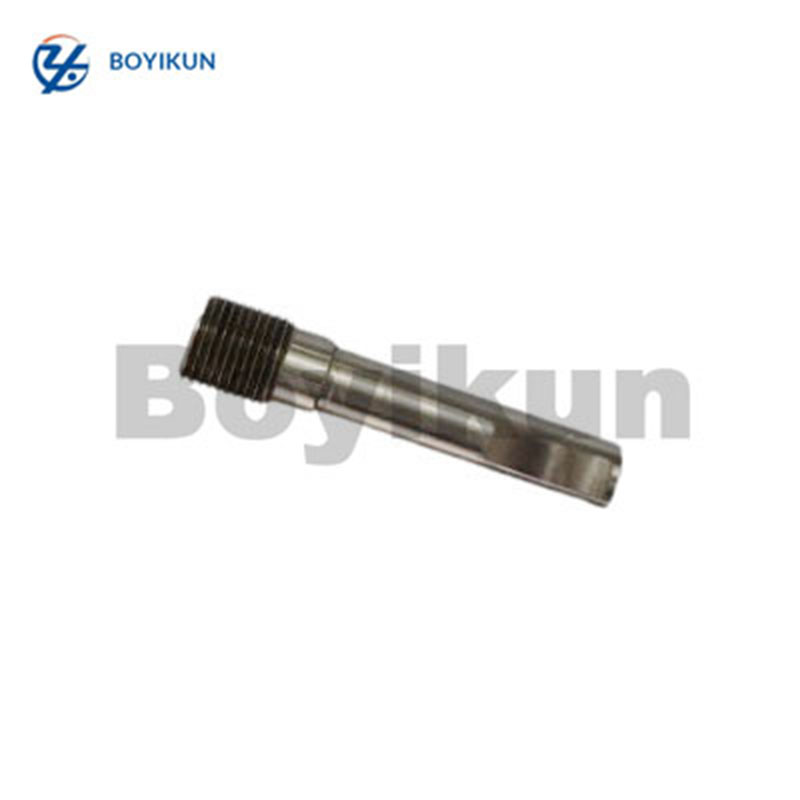
Few engineering challenges demand as much from a material as the combination of sustained heat, fluctuating mechanical load, and the slow creep of time. Most off-the-shelf bearings, seals, and structural joints begin to drift out of spec once temperatures climb past 150°C, or once cyclic stress starts to accumulate micro-deformation. What separates a genuinely robust tolerance from a hopeful one is not just the initial machining precision, but how little it changes after ten thousand thermal cycles and a few hundred operating hours under real-world vibration.
In practice, this means moving beyond nominal clearance values and into the realm of matched thermal expansion coefficients, stress-relieved geometries, and surface treatments that resist galling and fretting. For example, a shaft journal ground to ±0.005 mm at room temperature can easily lose half of that allowance if the housing grows faster than the shaft and the lubricant film thins. Designers who work with high-temperature alloys and ceramics often specify tolerances at the expected operating temperature, then work backwards to a room-temperature machining window that accounts for thermal growth. It is a tedious but necessary inversion of the usual drafting workflow.
The time factor is the quiet killer. Even when heat and load are within limits, long-duration exposure can relax interference fits, oxidize mating surfaces, or allow lubricant to migrate out of the loaded zone. A tolerance that survives a short bench test may fail after a year of intermittent duty cycles. The most reliable approach is to build in a deliberate, measurable margin for dimensional drift—typically 20–30% above the calculated thermal and mechanical deformation—and to validate it with accelerated aging tests that mimic months of service in a few days. Only then does a tolerance truly earn the right to be called durable.
Maintenance Habits Reveal More Than Machine Age
A loader that gets its daily greasing, regular filter changes, and prompt attention to minor leaks will often outwork a newer machine that's been neglected. The hours on the meter tell one story, but the condition of the pins, the color of the hydraulic fluid, and the wear on the bucket edges tell a much more honest one.
Fleet managers who keep tight service records and log every repair can spot patterns that age alone never shows. A five-year-old machine with consistent care may have fewer hidden problems than an eighteen-month-old unit that missed its first two scheduled services. Those maintenance logs become the real predictor of downtime, not the model year.
When you walk around a used machine, look for grease that's actually been pushed into the joints, not just smeared on the zerks. Check if the air filter is clogged with dust or the radiator fins are packed with debris. Those small habits, repeated over months and years, add up to a machine that feels younger than its serial number suggests.
Look Past the ISO Certificate on the Wall
An ISO certificate on the wall may signal a commitment to quality, but it tells you almost nothing about how that commitment plays out in real time. A piece of paper proves only that a snapshot was taken—usually during a scheduled audit when every procedure was polished and every employee was on their best behavior. What happens the other 51 weeks of the year matters far more. Look at how problems are actually handled when no auditor is in the building, and you'll start to see whether the system lives in the walls or in the work.
Certification is often treated as a finish line, a badge to display in the lobby. But the most genuinely reliable companies treat it as a starting point. They don't ask "What do we need to pass?" but "What could break next and how will we catch it early?" That shift in mindset shows up in small ways—maintenance logs filled out with actual notes instead of initials, root-cause analyses that name real process flaws rather than blaming operator error, and training sessions that feel like honest discussions instead of box-ticking exercises.
If you're evaluating a supplier or partner, ask to see the certificate by all means, but don't stop there. Ask to walk the floor without a guide. Ask how they've handled a recent customer complaint. Ask an operator on the line what they'd change if they could. The answers you get—and the hesitation before them—will tell you more about their quality culture than any framed document ever will. A wall can hold a certificate; only people can hold a system alive.
Prototyping Without Relearning the Part Later
Early design decisions often get locked into a prototype in ways that force you to retrace steps once real production constraints appear. Instead of treating the first model as a disposable sketch, build the core relationships between features, dimensions, and references so they stay intact across revisions. This means using parametric anchors and stable references rather than fragmenting geometry into isolated patches that collapse when one dimension shifts.
A practical way to avoid relearning the part later is to capture intent explicitly: name critical measurements, group related features, and replace fixed values with expressions wherever the logic repeats. When the prototype evolves, you tweak the driving inputs instead of patching downstream geometry. The result is a model that behaves more like a working draft you can refine, not a brittle artifact that forces a restart.
This approach doesn't require over-engineering every early concept. It simply means leaving a clear trail from what you intended to what you built, so when tolerances, materials, or tooling change the part, the model responds without demanding a second discovery phase.
Why a Cheap Mill Quote Rarely Stays Cheap
A low initial quote from a mill often hides the real costs that surface once production begins. The price you see on paper rarely accounts for rushed tooling adjustments, material waste from inconsistent tolerances, or the extra handling needed when parts don't fit right the first time. Those savings evaporate quickly when your team spends hours reworking components or waiting for replacements.
Another overlooked factor is how a bargain price can signal corners cut in surface finish or heat treatment. What starts as a minor visual flaw turns into premature wear, corrosion, or even failure under load. By the time you factor in downtime, reorders, and the risk to your own reputation, that 'cheap' mill quote has quietly become the most expensive option on the table.
Experienced buyers learn to read beyond the number. They ask about the mill's scrap rate, whether tooling is included, and how deviations are handled. A quote that seems too good usually means someone else will pay for it later—either in delays, quality disputes, or hidden change fees that only appear after the first article is signed off.
FAQ
A capable shop should hold ±0.005 mm on critical features without constant babysitting, but ask for their actual capability studies on your geometry rather than trusting a spec sheet.
Ask about their nonconformance tracking, corrective action turnaround, and whether they use in-process probing. A shop that can show you recent CPK data for similar parts is more credible than one that just points to a certificate.
Look for experience with your specific alloy families—aluminum, stainless, titanium, or engineered plastics. The right supplier will know how to manage thermal expansion and tool wear differences, not just list materials on a website.
Machine models matter less than how well they're maintained and matched to your part size. A smaller shop with a well-kept 5-axis machine and skilled programmers can beat a large shop with idle equipment.
Quotes that come back suspiciously fast, no questions about tolerances or finishes, or pricing that undercuts everyone by 30% usually mean the supplier doesn't understand the job or plans to cut corners.
Send a slightly ambiguous drawing or ask how they'd handle a tricky thin-wall feature. Their questions back to you reveal whether they think through manufacturability or just push paper.
Conclusion
Choosing a milled parts supplier for precision manufacturing starts long before the first chip is cut. Material selection sets the stage for everything, and the best suppliers will talk about how a specific alloy behaves under your machining and finishing processes, not just quote a spec sheet. Equally important are tolerances that survive heat, load, and time—dimensional accuracy only matters if it holds in the real operating environment, not just on a climate-controlled inspection table. Maintenance habits reveal more than machine age: a disciplined shop with older equipment can consistently outperform a neglected facility full of new machines. And when you walk the floor, look past the ISO certificate on the wall. Ask how they handle process drift, tool wear, and nonconformance records; those details tell you whether their quality system is alive or just framed.
A strong supplier also ensures prototyping without relearning the part later. They should use the same fixtures, toolpaths, and setup logic from first article to full production, so your design intent survives the transition. That continuity is often missing when a shop chases the lowest initial quote. In fact, a cheap mill quote rarely stays cheap—rework, scrap, missed tolerances, and delayed shipments quickly erase any upfront savings. The real cost of a milled part includes the supplier's ability to hold tolerances under stress, maintain equipment honestly, and translate a prototype into repeatable production. Select on evidence, not promises.
Contact Us
Contact Person: Xianchen Hu
Email: [email protected]
Tel/WhatsApp: 86-13248645200
Website: https://www.hexnb.com/