

OEM Cheese Sauce Guide for Food Brands and Private Labels
2026-11-21
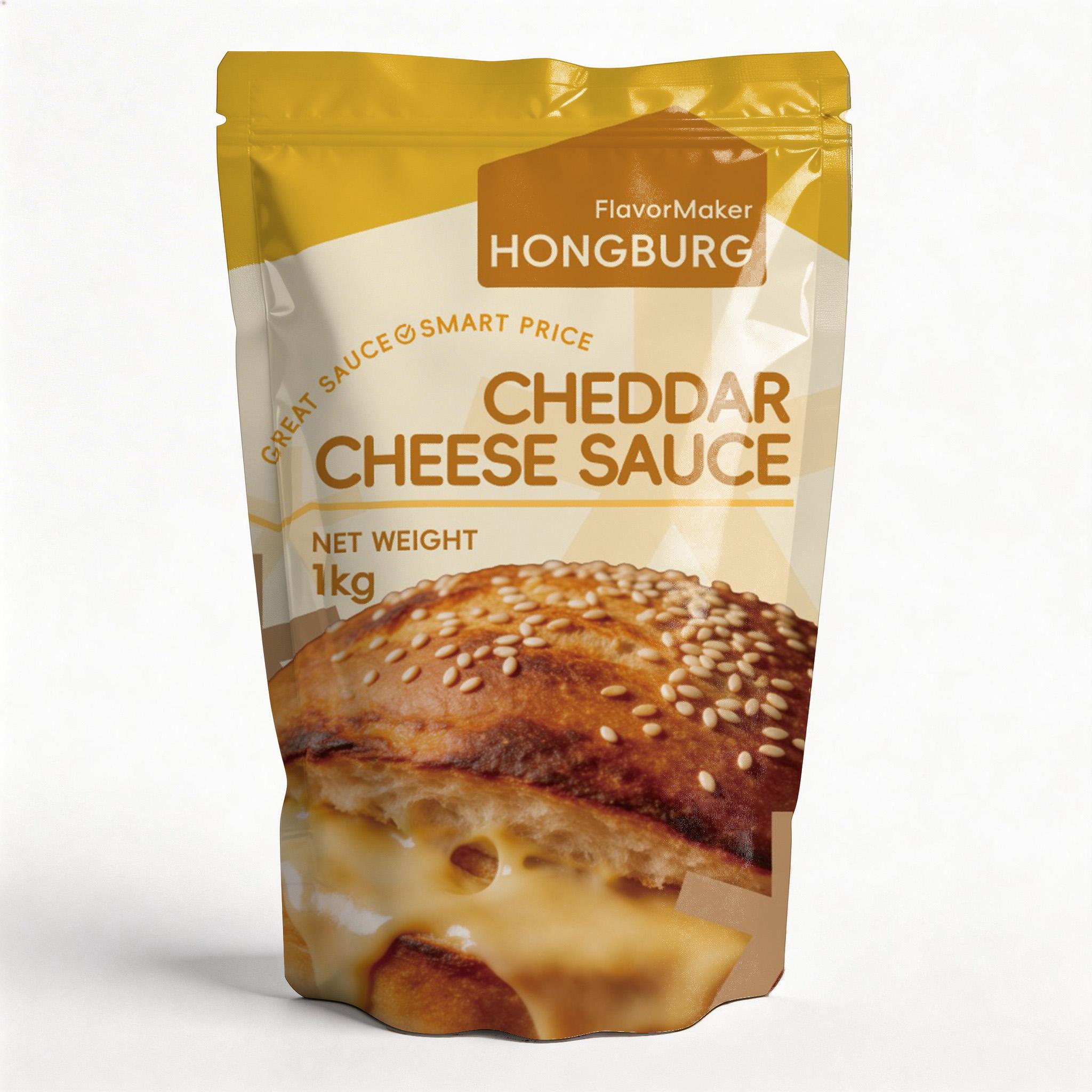
Private-label cheese sauce is no longer a quiet commodity—it’s a brand signature waiting to happen. The right texture, melt, and flavor balance can turn a simple nacho tray or mac bowl into the reason buyers remember your label. In this guide, we look at what matters when sourcing OEM cheese sauce for food brands, from base formulations to flavor profiles and production consistency. Along the way, you’ll see how HONGBURG FLAVORMAKER approaches the category—not as a one-size-fits-all supplier, but as a partner in building a sauce that actually tastes like yours.
Why Most Private Label Cheese Sauce Launches Stall in the Kitchen
The problem rarely shows up in the sample cup. It appears when a line cook sets the sauce in a sixth pan on a steam table and stirs it during a slow hour. Some formulas thin out after the first reheat, others seize when a cook pours cold milk into a half-empty bag to stretch portions. Bench tests don't copy the stop-and-start heat, the open air, or the constant scraping of a ladle. So a product that looked glossy and stable in the lab starts separating before the first ticket goes out.
Flavor is equally fragile once it leaves the demo table. A cheddar-forward sauce approved in a quiet office can taste one-dimensional next to a pile of salty tortilla chips, or turn oddly sweet when it hits a baked potato loaded with bacon. Private label development often locks in a recipe under narrow tasting conditions (plain spoon, specific temperature, no competing ingredients). Kitchens don't work that way. Sauces get mixed, spiked, held over indirect heat, and served on everything from nachos to broccoli, and that is when off-notes and texture flaws become impossible to ignore.
The final stall often comes from a handoff problem. The chef or purchasing manager who signed off on the sauce is not the person who has to thaw it, reheat it, and keep it looking decent through a four-hour service. If the product needs a slower reheat than the national brand or breaks if it boils, that information rarely reaches the prep staff. Instead, the kitchen team treats it the way they treat the sauce they already know, then blames the product when it curdles. Closing that gap matters more than any tweak to the formula.
Building a Sauce Around Your Star Ingredient, Not the Other Way Around
The mistake most home cooks make is treating the sauce as a finished product that happens to have something dropped into it. But when you have a truly remarkable ingredient, the logic needs to reverse. Let the star speak first. A deep, nutty miso, a handful of peak-season tomatoes, a piece of white fish with a delicate sweetness, maybe a wheel of aged goat cheese. Ask what it already carries: salt, acid, fat, bitterness, umami, a floral note. The sauce becomes a supporting cast, not the lead.
Start by breaking the ingredient down into its basic tastes, then fill only what is missing. If the fish is rich and creamy, lean toward something sharp and bright, like a quick salsa verde or a splash of yuzu. If the tomatoes are already sweet and acidic, don't drown them in a heavy tomato sauce. Instead, a small amount of olive oil, a torn basil leaf, a few drops of good vinegar might be all the sauce they need. This way of building means you use less, not more, and each element has a reason to be there.
Another benefit is that your cooking starts to feel less like following a template and more like listening. A splash of pasta water, a spoonful of the pan juices, a last-minute squeeze of lemon. These move the star forward without hiding it. When you stop forcing every dish into the same sauce shape, you begin to taste the ingredient for what it actually is, and your plates gain a clarity that a complicated, pre-made sauce never gives you.
The Customization Points That Actually Reach the Customer’s Fork
Most menu customization stops at the ordering screen. The options look endless, but too many of them never survive contact with a busy line cook or a prep station running low on chopped herbs. The choices that actually matter are the ones you can see, smell, and push around with a fork: an extra ladle of chile oil pooled at the edge of the bowl, a pile of pickled shallots added after the dish leaves the heat, or a protein cooked just shy of medium so it finishes resting on the plate.
The real test of a customization point is whether it changes the physical architecture of the dish. Swapping brown rice for white alters how a sauce clings. Asking for sauce on the side doesn’t just move a liquid; it changes how the first bite hits and how the last few bites taste after everything has cooled. Even something as quiet as “light salt” only becomes real when the line cook’s hand hovers differently over the dish. If a modification can’t be seen in the final plating, it was never a customization—it was a note on a ticket.
Restaurants that get this right tend to keep the list short and let each choice earn its place. Instead of offering fifteen protein options that all get the same sear, they offer three, but they let you choose the doneness, the crust, or the way the fat is rendered. That kind of precision travels from the pass to the table intact. The customer doesn’t remember how many buttons they clicked; they remember the char on the edge and the sauce pooled exactly where they asked for it.
What to Look for in a Manufacturer’s Batch Notes
A batch note that only says “passed” tells you almost nothing. Look for actual measurements, the test method used, and the acceptance range. If a manufacturer lists viscosity, particle size, or potency as numbers instead of checkmarks, that’s usually a sign they are paying attention to drift between runs, not just clearing a bar.
Pay close attention to corrections and out-of-spec results that were resolved. A good note will show what went wrong, how it was contained, and what changed afterward. Blank spaces, crossed-out entries without initials, or unexplained retests deserve more scrutiny than a failed result that comes with a clear corrective action.
Dates, equipment IDs, and material lot numbers matter more than they seem. If those are missing or repeated too neatly, you lose the ability to trace a problem later. The most useful batch notes read like a short, honest lab diary—specific enough that someone who was not there can reconstruct the run.
Keeping the Same Sauce Across Multiple Plants and Seasons
Maintaining the same sauce from one plant to another is less about using identical equipment and more about hitting the same sensory and chemical targets. Tomatoes, peppers, and other base ingredients shift in acidity, moisture, and sweetness depending on the harvest, and two facilities rarely cook at exactly the same rate. So the goal is not to repeat a fixed recipe blindly, but to define the sauce by a narrow set of measurable characteristics that every batch must meet.
A practical way to do this is to lock down the few variables that matter most: pH, Brix, salt content, and viscosity. Each plant can then adjust local inputs around those anchors. If one season brings tomatoes with extra water, the batch may need slightly longer evaporation or a small change in the sweetener balance. Those adjustments are made against the same target ranges, which keeps the flavor stable without forcing every site to follow the same step-by-step routine.
Regular sensory calibration helps catch drift that numbers alone miss. Teams from different plants should taste the same reference samples side by side, using a simple scoring sheet for sweetness, acidity, body, and aftertaste. Before a new crop cycle starts, small pilot batches can be checked against frozen retain samples from the previous season. If the gap is too wide, the formula is nudged in small increments until it falls back inside the accepted range.
Choosing Packaging That Protects Both the Sauce and Your Unit Economics
Packaging decisions for sauces usually get reduced to a single question: will it leak? That matters, but it's only the entry point. A rigid container with a foil seal might survive a drop, yet the extra gram weight and taller profile can quietly add cents to every unit shipped, which compounds across a production run. The real job is to match the barrier properties of the material to the product's acidity, oil content, and fill temperature rather than defaulting to the heaviest option on the shelf. Sometimes a slightly thinner PET wall with the right liner outperforms a thicker generic plastic because it flexes instead of cracking around the cap threads.
Unit economics shift when you account for damage that never shows up as a formal return. A slow weep around the lid leaves a sticky film on the retail shelf, and that store may simply stop reordering without filing a complaint. Testing should simulate the worst leg of your distribution chain: a courier van in summer, a pallet double-stacked in a cold warehouse, a customer squeezing the bottle with wet hands. Packaging that survives only ideal conditions transfers risk to the customer and erodes repeat purchase rates, which is a more expensive loss than paying slightly more for a reliable closure.
Cost per unit is not the same as cost per delivered, undamaged, sold unit. Compare options by taking the landed cost and adding an estimated spoilage, leakage, and handling multiplier. A closure that costs two cents more but cuts leakage by half may improve margin more than switching to a cheaper label or reducing box inserts. Look for opportunities to simplify: fewer components, one recyclable material, a cap that can be torqued with standard equipment. That reduces changeover time and inventory complexity, both of which hit the same financial line as material price.
FAQ
Start with the finished dish, not the sauce. Know your target viscosity, melt behavior, salt curve, and whether the sauce needs to survive freezing, retort, or hot-hold. That brief keeps the development conversation focused and cuts down on back-and-forth sampling.
They lean on base selection and fat profile. For example, choosing enzyme-modified cheese or a specific aged cheddar note can shift the whole character. Pairing that with texture tweaks, like a longer string or a cleaner break, gives the product a point of view instead of another bland nacho dip.
Ambient sauces generally rely on emulsifying salts and a low water activity for stability, so they favor smooth, heat-and-hold applications. Chilled versions can be fresher-tasting but need cleaner label stabilizers. Frozen formulations are built around freeze-thaw tolerance, usually with modified starches or fat blends that prevent splitting.
A straightforward line extension with an existing base can move in four to six weeks. A fully custom private label sauce with specific cheese notes, packaging, and shelf-life testing usually runs three to five months, longer if the brand wants plant-based or clean-label constraints.
Choosing a pouch or cup based on cost alone often leads to portioning or reheating complaints. The sauce's viscosity, fill temperature, and end-use environment should drive the format. Single-serve portions, for instance, need a clean release and a narrow fill tolerance, while bulk bags work better for kitchen use.
Focus on a specific usage occasion. A beer cheese for pretzel kits, a brunch-friendly cheddar for biscuit sandwiches, or a pepper jack for roller grill items can carve out space. Smaller runs with a flexible OEM partner make it possible to test those niche angles without committing to massive inventory.
Ask for examples of reformulation work, not just a list of existing bases. Request a pilot run before full production, and clarify who owns the formula and raw material sourcing. A capable partner should also walk you through their stability testing protocol for your packaging, not just a generic shelf-life number.
Conclusion
Most private label cheese sauce launches lose momentum in the test kitchen, and the usual culprit is not a weak flavor set. Teams cycle through sample after sample while paying too little attention to the base formula, the production line it will run on, and the ingredient that should be doing the heavy lifting. A stronger brief starts with that star component—aged cheddar, roasted pepper purée, a specific cultured blue—and builds the sauce outward from there. After that, customization is narrowed to the details a customer actually notices on the plate, such as cling, viscosity at holding temperature, salt build, reheated texture, and the way the sauce sits with the finished dish. That focus is what prevents the all-too-common loop where every benchtop batch is close but never quite approved.
The work does not end once a gold-standard sample exists. A manufacturer’s batch notes show whether that sample is repeatable outside a single pilot run, with attention to cook time, shear, moisture loss, and any mid-run adjustments. Without tight records across plants and seasons, drift is almost guaranteed, especially with natural cheese and dairy-based ingredients. Packaging plays a quieter but equally important role. It has to protect flavor and texture without breaking the operational budget. Fill speed, case count, freight, and damaged-product waste all sit next to shelf life in the final decision. The brands that avoid costly relaunches tend to treat the sauce formula, the production data, and the package as one connected system rather than separate checkpoints.
Contact Us
Contact Person: Peter Song
Email: [email protected]
Tel/WhatsApp: +86 18920189778
Website: https://www.hongburg.com