

OEM LED Fog Light Bulbs: The Ultimate Visibility Upgrade for Your Vehicle
2026-08-31
Factory fog lights do a decent job until you actually need them. The first time you're caught in thick fog or heavy rain on a dark backroad, you realize how limited the stock bulbs really are. That's where OEM LED fog light bulbs come in—specifically, the kind LUXFIGHTER builds for drivers who refuse to compromise on visibility. This guide breaks down why upgrading is worth it, what to look for, and how the right bulbs transform nighttime driving.
Why Factory Fog Lights Fall Short in Bad Weather
Factory fog lights often look the part, but their actual beam pattern is tuned more for a gentle haze than a proper downpour or thick ground fog. The low mounting position and tightly clipped horizontal spread are meant to reduce glare, yet that same design leaves the sides of the road nearly invisible in heavy rain or snow. You end up with a shallow pool of light right off the bumper that does little to reveal standing water, potholes, or the edge of the pavement once conditions get serious.
Another limitation comes from the bulbs and optics themselves. Most vehicles ship with basic halogen capsules and small reflectors shaped to fit a narrow opening in the bumper cover. The output is often below 1,500 lumens per side, and the yellowish beam scatters quickly when it hits airborne moisture. Over time, the lenses also haze or trap condensation, cutting usable light even further. The result is a fog light that meets a legal requirement but doesn't really push through the weather.
There's also a mismatch between how drivers use fog lights and what the hardware actually does. In dense fog or heavy wet snow, the bright foreground glow can pull your focus downward and cause your pupils to constrict slightly, making the darker distance harder to read. Rather than extending your view, weak factory units can create a false sense of security while the road beyond that short bright zone remains mostly guesswork.
A Plug-and-Play Upgrade You Can Finish in the Driveway
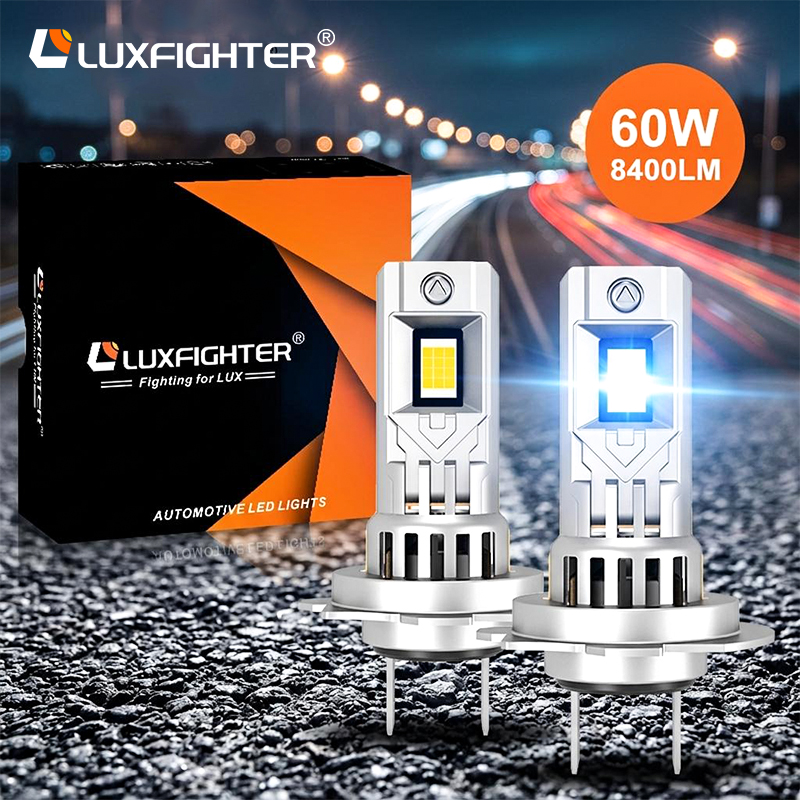
Most aftermarket upgrades now mirror the factory connectors, so you're not rewiring anything or drilling new holes. The old part comes out with a basic socket set, the new one slides into the same mount, and the wiring clicks back into place. If you can replace a headlight bulb without calling a friend, you can handle this in the driveway.
What keeps the job realistic for a home install is that the original layout never disappears. The routing stays the same, the harness length still works, and there's no need to trim panels or chase down a ground wire. That's why it often takes longer to find a 10mm socket than to actually swap the component.
The real payoff comes when you shut the hood and there's nothing left to adjust. No warning lights, no leftover fasteners, no test drive to listen for rattles. Just a clean install, a small pile of factory parts for the shelf, and the quiet confidence that you didn't need to book an appointment.
Beam Pattern Is the Real Star, Not Just Brightness
Lumen numbers are easy to advertise, but they tell you almost nothing about how a flashlight actually performs in your hand. A pocket light rated at 1,000 lumens can be frustrating if its beam has a dead spot in the middle, a harsh ring at the edge, or a hotspot so small you have to sweep it constantly to see anything. Meanwhile, a 300-lumen light with a clean, gradual transition from center to spill can feel far brighter and more useful simply because the light lands where your eyes expect it. The real difference is rarely the raw output—it's the shape of the beam.
Different tasks demand different beam patterns. For reading a map or working under a sink, a broad, even flood eliminates hot reflections and dark corners. For picking out a trail marker a hundred meters away, a defined hotspot with a soft corona lets you reach distance while still keeping peripheral awareness. When the pattern is wrong, extra brightness only creates glare, washes out detail, and forces your eyes to work harder. A well-designed reflector or optic doesn't just push out more photons; it arranges them into a gradient that feels almost invisible—until you compare it side by side with a poorly shaped beam.
The Right Color Temperature for Cutting Through Mist
If you've ever driven through thick fog with bright white headlights, you know the problem: the beam seems to bounce right back at you. That's because high color temperatures—say 6000K and above—pack a lot of blue light, and blue scatters hard when it hits tiny water droplets. The result is a glowing curtain just beyond your bumper, not a clear view of the road.
Warmer tones, usually between 3000K and 4300K, behave much better in mist. These yellower wavelengths are longer and don't ricochet around as much, so more of the light actually reaches the asphalt and whatever's lurking ahead. It's why proper fog lights often look amber or selective yellow rather than crisp white.
Color temperature alone won't magically fix poor visibility—beam aim, lens condition, and mounting height all matter too. But if you're picking bulbs or auxiliary lights for foggy drives, leaning warm is a smart move. The goal isn't to overpower the mist with raw brightness; it's to let your light slip through it.
What Changes After a Night Drive With These Bulbs
The first thing you notice after a night drive with these bulbs is how much less your eyes have to work. The beam reaches further and fills the edges of the road without that harsh cutoff that makes shadows jump. By the time you pull into your driveway, there's no lingering tension behind your temples, and you realize you weren't squinting at every curve.
Another change is the sense of control. Ordinary bulbs can make nighttime driving feel like guessing—dark patches, washed-out signs, that split-second delay when your eyes adjust. With this upgrade, the road ahead appears in cleaner, more natural contrast. You see the deer on the shoulder earlier, the pothole before it rattles the chassis, and the reflective paint on the lane lines actually looks white instead of murky yellow.
The difference is also in how you feel after several long stretches. Instead of arriving tired and wired from constantly scanning a dim tunnel, you step out of the car more relaxed. Your reaction time feels sharper throughout the drive, and you stop dreading those unlit county roads. It's not just brighter light—it's the difference between enduring a night drive and actually being present for it.
No Glare, No Error Codes, Just a Better View of the Road
Driving at night shouldn’t feel like squinting through a fogged-up window. The real issue isn't always your eyes—it's the glass in front of them. When streetlights and headlights scatter across a windshield, every tiny scratch and film layer turns into a distracting haze. You don't need more technology telling you something’s wrong. You need a surface that simply lets you see what's ahead without the visual noise.
That’s where a cleaner approach comes in. Instead of chasing error codes or relying on dashboard alerts to tell you when visibility has degraded, the focus shifts to prevention. A windshield that resists dirt buildup and repels water keeps the view crisp long after you pull out of the driveway. No blinking warnings, no confusing diagnostics—just glass that works with you, not against you.
Think about the last time you drove through light rain or passed under a row of bright lamps. If the glass isn't doing its job, every light source becomes a starburst, and your brain spends extra energy filtering the clutter. Remove that layer of interference and the road opens up. Better vision doesn’t come from alarms or software patches. It comes from a clear pane that gets out of the way.
FAQ
Yes, they throw a noticeably wider and cleaner beam without the dull yellow tint. Most drivers see a sharper cutoff and better side visibility in rain or snow.
In most cases, they are designed as direct replacements for the stock housings and connectors. Just remove the old bulb, plug in the LED unit, and secure it the same way.
They help when the color temperature is chosen well—around 3000K to 4300K cuts through moisture better than blue-white light. The improved contrast makes road edges and obstacles easier to read.
Pick bulbs with built-in CANbus drivers or load resistors if your vehicle monitors bulb resistance. Also check that the base size matches your fog light socket exactly.
A well-built set can run 20,000 to 30,000 hours or more, which usually outlasts the vehicle. They also hold brightness better over time compared to halogens that dim gradually.
Most people can do it in about 15 to 30 minutes with basic hand tools. On some cars you may need to remove a wheel liner or bumper cover, but it is rarely complicated.
That depends on your local regulations. If the bulb keeps the original housing and a proper beam pattern, it is generally accepted, but some areas restrict retrofits, so check before driving on public roads.
They run cooler than halogens at the bulb face, but the base has a heat sink or small fan. Make sure there is enough clearance behind the housing so airflow is not blocked.
Conclusion
Factory fog lights often disappoint when conditions get messy because they were built as basic equipment rather than dedicated foul-weather tools. Their beams scatter too early, leave dark pockets near the bumper, and fail to push a usable pool of light down the road. Swapping in OEM-grade LED fog bulbs changes that without turning your driveway into a project. The housing stays stock, the connectors click into place, and the upgrade is done in minutes. What matters most is not raw lumen count but the way the beam is shaped. A proper LED replacement keeps the cutoff tight and wide, sending light low where mist is thinnest, so you see lane edges instead of a white wall.
Color temperature plays a bigger role than most drivers expect. A pure white around 6000K slices through fog and light rain better than yellowish halogen output, while staying easy on the eyes during long night runs. After one drive, the difference shows up in small ways: you stop guessing where the shoulder ends, oncoming traffic is not flashing you because the beam stays below their mirrors, and the dashboard stays quiet without error codes or flicker. It is a rare upgrade that feels invisible in the best way—no glare, no warnings, just a cleaner view of the road ahead when the weather turns.
Contact Us
Contact Person: Gavin Chen
Email: [email protected]
Tel/WhatsApp: (+86)756-6831079
Website: https://www.luxfighter.com/