

Rapid Transfer Port Sourcing: A Practical Guide for Buyers
2026-10-10
Sourcing rapid transfer ports can feel like navigating a maze of specs, compliance demands, and supplier claims. Yet the wrong choice can stall contamination control and delay batch release. This guide cuts through the noise, offering buyers a clear path from requirement mapping to final qualification—with insights from AVM to keep your sourcing decisions grounded in real-world performance rather than marketing gloss.
Mapping Your Containment Needs Before You Contact Suppliers
Start with the messy details most people skip. List every chemical, solvent, or bulk solid by name, along with the volume you handle in a normal week and the worst-case temperature or pressure it reaches. If something reacts with moisture or eats through standard gaskets, write that down too. Suppliers can only design for the information you give them, and vague terms like 'hazardous material' usually lead to an expensive enclosure that misses the mark.
Then walk the floor and watch how the containment area gets used. Where do people stand when they pour or transfer? Does a drum need to roll in from a side door that's blocked by a pallet rack? These workflow details often change the shape, door placement, or internal layout of the equipment you're about to buy. Catching them now keeps you from paying for a retrofit six months after installation.
Before you pick up the phone, get your compliance limits and expansion plans on the same page. Know the spill volume you're required to contain, any fire rating or ventilation rule that applies, and whether you're likely to add a second shift or a new process line within a couple of years. A clear map of these constraints lets a supplier quote the right configuration the first time instead of guessing at your tolerance for risk.
Comparing Port Sizes, Flange Styles, and Transfer Interface Fit
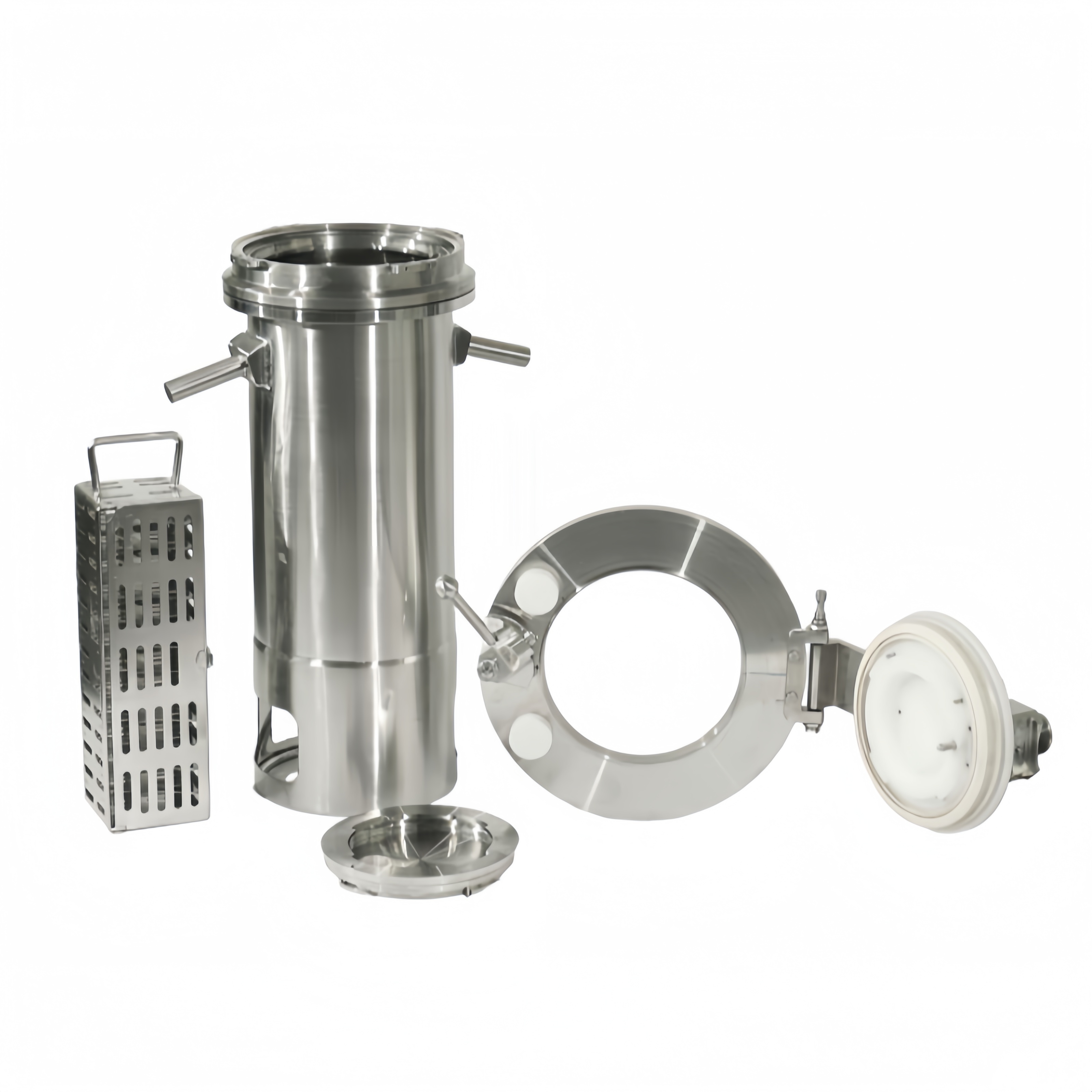
Port size directly affects flow capacity and pressure drop, so it is usually checked against the pipe or hose diameter rather than the equipment's overall dimensions. A larger port does not automatically mean better performance; if the downstream line is smaller, the transition can create turbulence and reduce efficiency. When comparing models, it helps to look at the actual bore diameter and any reduction at the connection point, not just the nominal size printed on the housing.
Flange style matters because it dictates how the unit seals and how much torque the bolts can handle. Raised-face, flat-face, and tongue-and-groove flanges each behave differently under load, and mixing styles between the equipment and the mating pipe can lead to leaks or uneven gasket compression. Beyond the flange, the transfer interface fit—how the internal passages align from one component to the next—is often ignored until installation. A slight offset or step at the interface can disrupt flow, trap debris, or accelerate wear on seals, so checking the alignment and bore match before finalizing a selection saves a lot of rework.
What to Look for in Seal Materials and Leak-Tight Performance Data
Material selection starts with chemical compatibility, but the real test is how a seal behaves under thermal cycling and pressure fluctuations. Look beyond datasheet maximums and ask for compression set values after aging in your actual media. A low compression set after 1,000 hours at temperature often separates reliable seals from those that fail quietly.
Leak-tight performance data should include not just helium leak rates at room temperature but also permeability coefficients for gases like methane or hydrogen if those are present. Pay attention to the test method: a standard O-ring groove leak test can mask extrusion or nibbling that shows up only under pressure reversal. Ask for leak rates before and after thermal shock, not just steady-state values.
Finally, compare surface finish requirements and installation damage resistance. Some low-permeability materials require near-polished flanges to seal, while others tolerate scratches but sacrifice resilience. A material that survives a 5,000-cycle pressure test with a stable leak rate is more useful than one with an impressive single-point permeability figure.
Questions to Ask About Installation, Validation, and Ongoing Service
Before signing any agreement, dig into the specifics of how the system will be installed and what exactly "done" looks like. Ask for a step-by-step walkthrough of the installation process, including who handles what, how long each phase takes, and whether your current infrastructure is truly ready. Don't settle for vague promises like "we handle everything"—push for details on cabling, hardware mounting, software configuration, and any down-time you should expect. A vendor that hesitates to share a written installation plan or dodges questions about potential obstacles is a red flag.
Validation is where many projects quietly fall apart. You need to know how the provider proves the system actually works in your environment, not just in a demo. Ask about the testing protocols: what metrics are measured, who signs off on each checkpoint, and what happens if something fails. Find out whether validation includes real-world scenarios with your own data and staff, or just a scripted run-through. Also clarify how long the validation period lasts and what kind of documentation you'll receive at the end. If they can't show you a sample validation report or define clear pass/fail criteria, keep looking.
Ongoing service is often treated as an afterthought, but it's where your long-term costs and frustrations live. Ask about response times for different severity levels, whether support is in-house or outsourced, and how updates or patches are handled. Request a copy of the actual service-level agreement, not a marketing summary. Find out what happens when a critical issue occurs on a holiday or after hours—some vendors promise 24/7 support but staff only a voicemail. Also ask about escalation paths: if the first person can't fix it, what's the next step? And don't forget to ask how they handle end-of-life or discontinued components, because that's often when hidden fees appear.
Reading Between the Lines of Supplier Quality Claims and Certifications
A supplier's glossy brochure may promise zero-defect production, but seasoned procurement teams know that the real story hides in the details: how recent is the ISO audit? Does the certification cover the specific process or just the parent company? One manufacturer's “fully compliant” claim fell apart when a quick cross-check revealed the certificate had expired eleven months prior, and the auditor's name didn't match any registered professional in the region.
Beyond the stamps and logos, ask for the audit trail. A meaningful quality claim should point to measurable evidence—batch inspection logs, corrective action reports, or live yield data. If a supplier hesitates to share raw test results but floods you with marketing decks, that imbalance often signals where the risk sits. Certifications like IATF 16949 or ISO 13485 are valuable only when the site-specific scope and validity dates align with your product line.
The best approach is to treat every certificate as a starting point, not a conclusion. Pick up the phone and speak with the quality manager who actually runs the line. Ask about their most recent customer rejection and how they traced root cause. A supplier that walks you through a real failure with concrete countermeasures tells you more about their culture than a wall of perfect scores ever could.
Balancing Initial Price Against Total Ownership Costs and Real Lead Times
Focusing only on the sticker price often hides a bigger story. A machine that costs 15% less upfront may consume 30% more energy, require specialized spare parts with long delivery times, or fail more often under normal load. Those factors quietly push total ownership costs well beyond any initial saving. At the same time, the quoted lead time is rarely the real lead time. Supplier delays of two to four weeks are common in many industries, and if the buying decision assumes an optimistic timeline, the business ends up paying for idle labor, missed orders, or expensive expedited shipping.
To balance these pressures, treat the purchase as a package of costs and time risks rather than a single price point. Build a simple model that adds expected maintenance, energy, training, and disposal costs to the purchase price over the asset's useful life. Then weight each week of potential delay against the operational cost of not having the equipment on site. A slightly higher upfront price can be the better deal if the supplier has a documented history of on-time delivery and lower failure rates. Conversely, a cheap offer with a history of missed dates often forces the buyer into costly workarounds.
In practice, this means asking for actual delivery performance data from the last six or twelve months, not just the number printed in the quote. It also means involving the maintenance and operations teams early to verify whether the lower-priced option will create extra workload or downtime. The goal is not to simply pick the middle ground, but to find the point where total cost of ownership and real lead time risk stop outweighing the initial price advantage. That point is different for every business, but ignoring either factor usually leads to a decision that looks smart on paper and expensive in reality.
FAQ
Confirm the alpha-beta flange size and locking mechanism your existing isolators or fill lines already use. I've seen buyers waste weeks collecting quotes for RTPs that physically can't mate with their equipment because they skipped that step.
Ask the vendor for documented leak-rate test data under repeated sterilization cycles, not just a single lab certificate. A well-designed RTP should maintain integrity after hundreds of autoclave or VHP cycles, and the supplier should be willing to share long-term durability results from actual customer installations.
Only if your process involves aggressive cleaning agents or frequent high-temperature sterilization. For standard aseptic transfer, 316L stainless with electropolished contact surfaces is usually sufficient. Upgrading to exotic alloys rarely adds practical value unless your facility has specific corrosion issues.
Request their batch-to-batch dimensional tolerance records for the alpha flange and beta flange mating surfaces. A supplier that can't provide this either doesn't measure it or has too much variation, which leads to field fit-up problems during installation.
Get a written breakdown that includes the port assembly, docking ring, gaskets, spare seals, and any required tooling for installation. Some vendors quote a low base price but then charge separately for the consumable gaskets you'll need to replace every few months.
At minimum, a Declaration of Conformity to applicable pressure or containment standards, material certificates for wetted components, and validation support for cleaning and sterilization. If the vendor hesitates to provide traceability documentation for the elastomer seals, move on.
Yes, especially if you're retrofitting an existing line. A standard port might ship in four to six weeks, but custom flange sizes or special surface finishes can push that to five months. Always confirm lead time with a written purchase order acknowledgment, not a verbal estimate from a sales rep.
Conclusion
Before you reach out to any supplier, pin down the exact containment challenge your facility is trying to solve. A rapid transfer port that works for sterile API handling may be overkill for a low-toxicity powder transfer, and the wrong flange geometry will force you into costly line modifications later. Write out the container sizes, door swing clearances, and the types of materials crossing the boundary, then compare those notes against the available port diameters and docking interface styles. This is not just a dimensional check; it is where most retrofit projects stall. A port that seals well on paper but cannot align with your existing glovebox or isolator front panel adds weeks of rework.
Seal material selection deserves far more attention than it usually gets. Ask for test data at the same temperature, pressure, and chemical exposure levels you actually run, not just a supplier's generic leakage certificate. Then push beyond the datasheet: get a clear answer on who handles installation alignment, what validation documentation is included, and whether spare seals or docking rings are stocked locally. Supplier quality claims often hide gaps in cleanroom compatibility or batch-to-batch consistency, so request evidence that ties each certification to the exact port model you are buying. Finally, balance the quoted price against real lead times for replacement parts and the labor cost of re-validating a poorly documented installation. A cheaper port that arrives without installation support or traceable seal lots can easily become the most expensive purchase in your containment line.
Contact Us
Contact Person: Ananda
Email: [email protected]
Tel/WhatsApp: 8619016718200
Website: https://www.wzaomi.com