

Rolling Mill Custom Engineering: Tailored Solutions for Precision Manufacturing
2026-02-03
In the world of precision manufacturing, off-the-shelf solutions often fall short—especially when it comes to rolling mills. That's where GRM transforms the game. We specialize in custom engineering that doesn’t just meet specs—it redefines what’s possible. From intricate designs to seamless integration, our tailored approach ensures every rolling mill performs with unmatched accuracy and efficiency. Curious how? Let’s explore the innovations behind GRM’s precision-driven solutions that are reshaping modern manufacturing.
Optimizing Rolling Mill Performance Through Custom Engineering
Rolling mills face unique challenges—from metal composition variations to production bottlenecks—that off-the-shelf solutions can't fully address. Custom engineering steps in by tailoring equipment, controls, and processes specifically to a mill's operational needs, whether it's a high-speed aluminum line or a specialized steel facility. This bespoke approach isn't just about tweaking existing machinery; it involves deep analysis of material flow, energy consumption, and wear patterns to design integrated systems that boost throughput while cutting downtime. By incorporating advanced sensors and predictive maintenance algorithms, mills can preempt failures and maintain consistent quality, turning unpredictable variables into manageable assets.
Beyond hardware, custom engineering extends to software and human factors, optimizing everything from rolling schedules to operator training. Engineers collaborate closely with mill teams to understand pain points like temperature fluctuations or surface defects, then develop adaptive control strategies that adjust in real-time. For example, a custom-grade setup might include machine learning models that analyze historical data to predict optimal rolling parameters, ensuring minimal scrap rates. This holistic tuning transforms mills from reactive operations into proactive, agile production hubs, delivering not just incremental gains but transformative leaps in efficiency and product uniformity.
In practice, implementing custom solutions has proven pivotal for mills aiming to lead in competitive markets. Case studies highlight how tailored cooling systems or specialized roll designs have slashed energy use by over 15% while enhancing surface finish standards. The key lies in viewing each mill as a distinct ecosystem—where no two setups are identical—and leveraging engineering creativity to solve its specific puzzles. This philosophy fosters resilience against market shifts and technological disruptions, positioning custom-engineered mills as benchmarks for innovation rather than just production sites.
Tailored Solutions for High-Precision Metal Forming Applications
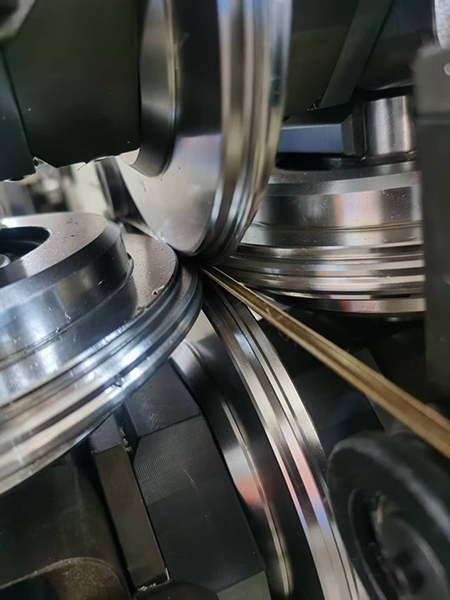
In industries where precision is non-negotiable—like aerospace, automotive, and medical device manufacturing—standard metal forming methods often fall short. Tailored solutions step in to bridge the gap, offering customized approaches that address specific tolerances, material behaviors, and production volumes. Engineers and designers collaborate to develop processes that ensure every component meets exact specifications, reducing waste and enhancing reliability in critical applications.
These solutions often leverage advanced technologies, such as computer-aided design (CAD) simulations and adaptive tooling, to predict and control material flow with unprecedented accuracy. For instance, in creating intricate parts for jet engines or surgical instruments, slight deviations can lead to failure, making bespoke forming techniques essential. By focusing on the unique demands of each project, tailored methods optimize both performance and cost-effectiveness, setting them apart from one-size-fits-all alternatives.
Beyond technology, the success of high-precision metal forming hinges on deep expertise and iterative refinement. Teams conduct thorough analyses of material properties and environmental factors, adapting processes in real-time to achieve flawless results. This hands-on, problem-solving approach not only boosts quality but also fosters innovation, allowing companies to tackle complex challenges and push the boundaries of what's possible in metal fabrication.
Engineering Adaptations to Meet Unique Manufacturing Challenges
Facing diverse manufacturing hurdles often calls for bespoke engineering solutions that go beyond standard approaches. For instance, in aerospace manufacturing, where precision is paramount, engineers have developed advanced robotic systems with sub-millimeter accuracy to handle delicate components like turbine blades. This adaptation not only enhances quality control but also reduces human error, addressing the unique challenge of producing intricate parts under tight tolerances. By integrating adaptive control algorithms, these systems can dynamically adjust to material variations, ensuring consistent output even in fluctuating production environments.
Another compelling example lies in the pharmaceutical industry, where strict regulatory requirements demand sterile and contaminant-free processes. Engineers have responded by creating closed-loop manufacturing lines with automated environmental monitoring. These adaptations use real-time sensors to detect deviations in air quality or moisture levels, triggering immediate adjustments to maintain optimal conditions. This proactive engineering approach mitigates the risk of product recalls and ensures compliance with stringent health standards, showcasing how tailored innovations can directly tackle industry-specific obstacles.
In custom fabrication, such as producing large-scale sculptures or specialized machinery, engineers often leverage modular design principles to overcome spatial and logistical constraints. By breaking down complex structures into prefabricated sections, they enable on-site assembly with minimal disruption, adapting to limited workspace or remote locations. This method not only accelerates project timelines but also allows for iterative testing and refinements, fostering a flexible response to unpredictable challenges like weather delays or supply chain interruptions.
Enhancing Efficiency and Accuracy with Customized Mill Designs
In the competitive landscape of industrial manufacturing, tailored mill designs emerge as a game-changer, optimizing both speed and precision. By analyzing specific production requirements, engineers craft solutions that minimize energy waste and reduce material handling time. This approach directly translates to faster throughput rates while maintaining tight tolerances, a combination that standard off-the-shelf equipment often struggles to achieve.
Beyond mere speed, customization enhances accuracy through features like integrated sensors and adaptive control systems. These elements allow for real-time adjustments during milling processes, correcting deviations before they impact final product quality. Imagine a mill that learns from each operation, fine-tuning its movements to deliver consistently exact cuts or shapes, thereby reducing scrap rates and rework.
Ultimately, embracing customized designs fosters a competitive edge by aligning machinery with unique operational needs. Whether it's for aerospace components requiring micron-level precision or high-volume consumer goods demanding rapid cycles, these bespoke solutions ensure that efficiency gains don't come at the expense of accuracy. The result is a streamlined workflow where every design element serves a purpose, driving productivity without compromising on quality standards.
Innovative Approaches to Rolling Mill Configuration and Integration
In recent years, the steel industry has seen a shift towards more agile and intelligent rolling mill setups, driven by the need for enhanced precision and reduced downtime. One key innovation involves modular design principles, where mills are configured with interchangeable components that allow for rapid reconfiguration based on production demands. This not only boosts flexibility but also cuts costs by minimizing the need for extensive overhauls. Additionally, the integration of real-time data analytics enables proactive maintenance, predicting equipment failures before they occur and ensuring smoother operations.
Another cutting-edge approach focuses on seamless integration with upstream and downstream processes, such as linking rolling mills directly with casting lines or finishing units through advanced automation systems. By employing IoT sensors and cloud-based platforms, these integrated setups facilitate continuous material flow and quality monitoring, reducing bottlenecks and improving overall efficiency. This holistic view helps manufacturers achieve tighter tolerances and better product consistency, which is crucial in competitive markets.
Furthermore, some companies are exploring hybrid configurations that combine traditional mechanical components with additive manufacturing techniques, allowing for custom tooling and parts on-demand. This reduces lead times and enhances adaptability to niche product requirements. Coupled with AI-driven optimization algorithms, such systems fine-tune rolling parameters in real-time, leading to energy savings and higher output rates without compromising on quality.
Driving Manufacturing Excellence with Specialized Rolling Solutions
Specialized rolling solutions are transforming manufacturing processes by enabling precision and efficiency in metal forming and other applications. By leveraging advanced technologies like custom-designed rollers and real-time monitoring systems, these solutions help reduce material waste and enhance product quality. This approach not only optimizes production lines but also supports sustainable practices, making it a cornerstone for modern industrial excellence.
In sectors such as automotive and aerospace, specialized rolling solutions offer tailored approaches to meet unique demands, from creating intricate components to improving surface finishes. The ability to adapt to varying materials and thicknesses allows manufacturers to achieve higher consistency and faster turnaround times. This flexibility is key to staying competitive in fast-paced markets, driving innovation and operational success.
Beyond technical benefits, these solutions foster collaboration between engineers and production teams, streamlining workflows and minimizing downtime. By integrating specialized tools into existing systems, companies can unlock new levels of performance, ensuring that every roll contributes to overall excellence and long-term reliability in manufacturing outputs.
FAQ
Custom-engineered rolling mills are precisely designed to meet specific production needs, such as handling unique materials or achieving exact tolerances, whereas standard models offer general capabilities that may not optimize efficiency or quality for specialized applications.
Tailored solutions enable adjustments in mill design—like roll geometry, speed controls, and automation integration—to minimize deviations and enhance consistency, crucial for industries requiring high-precision outcomes, such as aerospace or medical device manufacturing.
Industries like automotive, electronics, and energy often benefit due to their need for specialized metal forms with strict specifications; custom engineering ensures materials meet exact performance and durability standards, reducing waste and improving product reliability.
Design factors include material properties (e.g., hardness, ductility), desired output dimensions, production volume, environmental conditions, and integration with existing systems, all balanced to create an efficient, cost-effective solution.
Yes, they can be built with modular components and scalable controls, allowing for easy upgrades or reconfigurations as technology evolves or production demands shift, providing long-term flexibility and reducing obsolescence risks.
Automation enhances precision by enabling real-time monitoring, adaptive control systems, and reduced human error, leading to higher throughput and consistent quality, especially in complex or high-volume production scenarios.
It allows for specialized tooling, cooling systems, and advanced alloys in mill construction, mitigating issues like cracking or uneven deformation, ensuring smooth processing of materials like titanium or high-strength steels.
While initial costs may be higher, manufacturers often see reduced operating expenses through lower energy consumption, less material waste, and fewer downtime incidents, leading to improved ROI over the machine's lifespan.
Conclusion
In the realm of precision manufacturing, custom engineering for rolling mills stands as a cornerstone for achieving superior performance and adaptability. By optimizing rolling mill performance through bespoke solutions, industries can address specific challenges in high-precision metal forming applications. This approach involves meticulous engineering adaptations that are tailored to meet unique manufacturing hurdles, ensuring that each mill is designed to enhance both efficiency and accuracy. Through innovative approaches to configuration and integration, manufacturers can create systems that not only meet but exceed operational demands, paving the way for specialized rolling solutions that drive manufacturing excellence and foster a competitive edge in the market.
Tailored solutions for precision manufacturing necessitate a deep integration of custom engineering principles, where every aspect of the rolling mill is scrutinized and refined. From adapting designs to tackle complex metal forming applications to implementing specialized configurations, these customizations empower businesses to achieve unparalleled precision and productivity. By focusing on driving manufacturing excellence, custom engineering ensures that rolling mills are not just tools but strategic assets that support ongoing innovation and adaptation in an ever-evolving industrial landscape. Ultimately, this holistic approach to custom engineering transforms standard processes into dynamic solutions, enabling manufacturers to thrive in precision-driven environments.
Contact Us
Contact Person: Rayna
Email: [email protected]
Tel/WhatsApp: 86 -173 1474 6343
Website: https://www.grmrollingmill.com/