

Solar Pillar Light Factory: From Design to Durable Outdoor Lighting
2026-08-08
Outdoor lighting isn't just about visibility—it's about creating an ambiance that extends your living space into the night. At the heart of durable, elegant pathway and garden illumination lies the solar pillar light. In this exploration, we take you inside an SRS factory, where cutting-edge design meets rugged outdoor resilience, and every fixture is built to weather the elements while transforming landscapes.
From Sketch to Reality: Designing Solar Pillar Lights
Every solar pillar light starts with a quick, loose sketch—nothing polished, just rough lines to capture the silhouette and proportion. At this stage, it's about figuring out where the light source sits, how the panels tilt, how tall the column feels. You scribble ideas in the margins: maybe a frosted diffuser here, a slatted shadow effect there. The first drawings are always messy, full of arrows and question marks, but they hold the kernel of something functional and quietly beautiful.
Moving from paper to prototype means confronting real-world constraints—battery size, panel wattage, the way light spills onto a path at dusk. A sketch can promise elegance, but the physical mock-up tells you if the beam is too harsh, the proportions off-kilter. We tweak the housing angle, soften the LED placement, swap materials until the glow feels inviting rather than industrial. The design evolves through iteration: a slight curve here to catch evening shadows, a wider base for stability on uneven ground. It's a conversation between the drawn line and the cold reality of circuits and weather resistance.
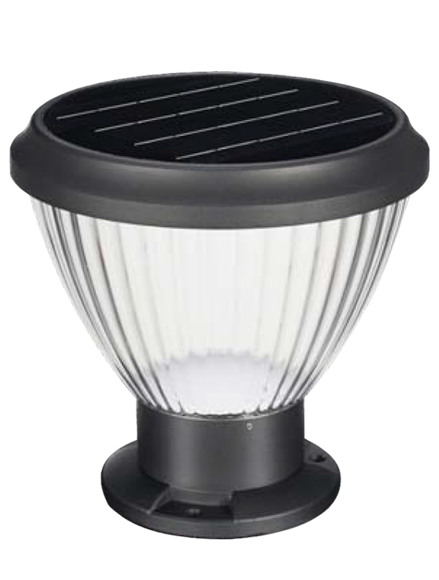
By the time a solar pillar light reaches production, the original sketch has been pushed and pulled into something that blends seamlessly into a garden or entryway. The final form hides the engineering neatly—solar cells integrated into the cap, batteries tucked inside the shaft. But if you look closely, you can still see the intent from that first drawing: the way the light pools at your feet, the subtle texture on the pillar's surface, the choice to make the fixture feel like it's always belonged there. That's the quiet satisfaction of the whole process—a scribble turned into a small, reliable beacon.
The Backbone of Durability: Material Selection Secrets
Choosing materials that last starts with an honest look at what actually causes failure over time. It’s rarely a single dramatic event. More often, it’s the quiet accumulation of micro-stresses: a subtle chemical reaction with moisture in the air, the slow creep of metal under constant load, or the way repeated thermal cycles gradually loosen molecular bonds. The secret isn’t chasing exotic alloys or the highest tensile numbers on a datasheet. It’s matching the material’s inherent weaknesses to the specific type of decay your application faces, then designing around those limits rather than fighting them.
What often gets missed is how materials behave as part of a system, not in isolation. Two perfectly durable substances can accelerate each other’s demise when paired without considering galvanic compatibility or differential expansion. A steel bolt in an aluminum casting isn’t just a fastener—it’s a tiny electrochemical cell waiting for a drop of water. Similarly, a polymer that thrives at room temperature might turn brittle after a year of exposure to the same UV light that barely touches glass. Smart selection means thinking beyond the spec sheet and into the messy real-world ecology of temperature swings, rubbing surfaces, and the unseen chemical reactions happening at interfaces.
The difference between a durable product and a disposable one is often a single material decision made early on, long before any prototype exists. It’s about asking uncomfortable questions: What if the protective coating scratches? What if maintenance schedules aren’t followed? What if a little condensation forms inside the housing? The best choices happen when engineers treat materials less like interchangeable commodities and more like collaborators—each with a unique personality of strengths, fatigue thresholds, and failure modes that can be understood and respected rather than overpowered.
Inside the Factory: Where Precision Meets Production
Step onto the production floor and the rhythm hits you first—a steady hum of machinery, the measured footsteps of skilled hands moving between stations. Every part has its place, every movement a purpose. It’s not chaos, but a carefully orchestrated dance where raw materials enter and finished precision emerges at the other end. Here, tolerances aren’t hoped for; they’re engineered in from the start.
What unfolds is a partnership between human instinct and robotic consistency. Operators read subtle cues—a slight vibration, a change in pitch—that no algorithm catches, while automated arms repeat the same flawless weld for the 10,000th time. Quality gates aren’t just checkpoints; they’re conversations between inspection sensors and the people who trust them, catching variances invisible to the eye before they become problems downstream.
The result isn’t just a product—it’s a promise kept. Each piece carries the quiet confidence of a place where tolerances are written in microns and deadlines meet delivery, batch after batch. There’s no drama, just the relentless pursuit of getting it right, every single cycle.
Harnessing the Sun: Smart Solar Tech Explained
Modern solar setups have come a long way from the simple rooftop panels of the past. Today's systems incorporate intelligent inverters, real-time monitoring, and adaptive algorithms that optimize energy capture throughout the day. Instead of passively collecting sunlight, these units track weather patterns, adjust panel angles automatically, and even forecast production based on cloud movements—all done quietly in the background while you go about your routine.
What really sets smart solar apart is its ability to learn your household's energy habits. By analyzing when you typically run appliances or charge an electric vehicle, the system can decide whether to store excess power in a battery, feed it back to the grid, or divert it to high-consumption devices. This isn't just about cutting bills; it transforms your home into a mini power plant that actively participates in stabilizing the local grid during peak hours.
Installation has also become far less intrusive. Thin-film solar materials can now be integrated into windows, roofing tiles, and even exterior cladding, blending seamlessly with architectural designs. Combined with wireless energy management hubs, you can oversee everything from a smartphone app—no complex dashboards or technical jargon required. The goal is to make clean energy generation so effortless that it fades into the background of everyday life.
Tested Tough: Simulating Years of Outdoor Exposure
We push every product through brutal, accelerated weather cycles—UV blasts, salt fog chambers, freeze-thaw shocks—to replicate the damage that usually takes years outdoors. The goal isn’t just to see if something survives; we want to know where and how it degrades, so we can reinforce those weak points before the design ever leaves the lab.
Materials face more than a light drizzle and some sun. In our testing bays, coatings are bombarded with concentrated ultraviolet light equivalent to high-altitude desert exposure, while mechanical pivots are grit-blasted and chilled to sub-zero, then immediately drenched in 95% humidity. This whiplash approach reveals hidden flaws that gentle, steady-state aging misses.
What emerges isn’t just a pass-or-fail report. Each round of simulated years generates data that feeds back into resin formulations, seal geometries, and anodizing specs. That’s why our products look and function the same after a decade on a coastal cliff as they do on day one—because they’ve already lived through something worse in testing.
Effortless Setup: Installing Lights That Last Decades
Getting your new lights up and running shouldn’t feel like a home improvement project gone wrong. These fixtures are designed with a straightforward, tool-free mounting system that clicks into place in minutes. You don’t need to decipher confusing diagrams or call in a professional—just follow the simple steps and you’ll have warm illumination filling your space almost before you know it. The hardware is thoughtfully packed and labeled, so you’re never left fumbling for the right screw or bracket.
Beyond the initial simplicity, there’s a deeper payoff: you’re unlikely to touch these lights again for a very long time. Built with robust, industrial-grade components, they’re rated to last for decades under normal use. Solid-state design means no fragile filaments or fluorescent tubes to burn out, and the weatherproof construction holds up in rain, snow, or blazing sun. That translates to fewer ladder climbs, lower replacement costs, and a steadfast glow that keeps your outdoor areas safe and inviting year after year.
FAQ
They blend practicality with style. Since they run on solar energy, you don't need to dig trenches for wiring, and they cost nothing to operate. Plus, they turn on automatically at dusk, so your pathways or garden always have a warm, inviting glow without any manual effort.
It starts with real-world use in mind. We look at common pain points—like glare control, easy maintenance, and how the light pattern hits the ground. Sketches evolve into 3D prototypes that get tested in actual outdoor settings before anything goes into mass production.
We throw a lot at them. There are water immersion tests to simulate heavy storms, UV exposure chambers that mimic years of sunlight in weeks, and repeated impact tests. We also check for corrosion resistance in salty air conditions to ensure they hold up near the coast.
The housing is often die-cast aluminum with a thick powder-coated finish—it doesn't rust and shrugs off bumps. The diffuser is polycarbonate that resists cracking and yellowing. All seals are silicone, not rubber, because silicone stays flexible and watertight for much longer.
We use high-efficiency monocrystalline panels that grab energy even on overcast days. The battery sits in a sealed compartment below the panel, and we size it to run the light for multiple nights without a recharge. The whole system is tuned so the battery never fully drains, which extends its life.
Absolutely. We know that a light has to fit the landscape, not scream for attention. So we offer multiple finish options—matte black, bronze, slate gray—and different height and cap styles. Some have removable decorative sleeves so you can switch the look without replacing the whole unit.
Every batch goes through a burn-in test, where lights run for at least 48 hours straight before shipping. Random units get pulled for full teardowns to check solder joints and seal integrity. And we track field returns obsessively—if a failure pattern emerges, the production line gets corrected that same week.
We don't cut corners on critical parts like the battery or LEDs, but we streamline assembly by designing parts that snap together rather than needing excess screws. We also invest in automated optical testing that saves labor and catches defects early, which keeps the final price reasonable while still delivering a light that feels high-end.
Conclusion
Behind every solar pillar light lies a meticulous journey from concept to creation, where industrial design meets the raw demands of nature. The process begins with hand-drawn sketches that evolve into precise digital models, each curve and edge engineered to catch the sun by day and cast an inviting glow at night. Material selection is the quiet hero here—marine-grade stainless steels, powder-coated aluminum, and UV-stabilized polymers are chosen not for their looks alone, but for their refusal to corrode, fade, or crack under relentless rain, salt spray, and scorching heat. Embedded within this rugged exterior is smart solar technology that does more than just harvest light; adaptive charging circuits track the sun’s arc, while high-efficiency monocrystalline panels and lithium iron phosphate batteries work in tandem to store power even on overcast days, ensuring the lights never miss a beat when dusk falls.
Inside the factory floor, precision robotics and seasoned craftspeople collaborate in a tightly choreographed dance—laser cutters shape components to micron tolerances, automated sealing stations lock out moisture, and every unit passes through a gauntlet of quality checks that replicate years of outdoor abuse in accelerated time chambers. Salt fog chambers, UV aging lamps, and vibration tables push these lights to their breaking points, all so that the final product shrugs off real-world storms without complaint. When it comes to installation, the engineering shines again in a design that requires little more than a spirit level and a few minutes of time. Tool-free mounting brackets, pre-connected waterproof cables, and intuitive alignment guides transform a once-daunting task into a straightforward weekend project. From the drafting table to the backyard fence post, this seamless integration of art, science, and practical thinking is what turns a simple pillar light into a decades-long companion for outdoor spaces.
Contact Us
Contact Person: kitty
Email: [email protected]
Tel/WhatsApp: +8618676039824
Website: https://www.srssolargroup.com/