

Steel Rule Manual Bender Solutions for Die Making Accuracy and Efficiency
2026-08-23
Precision in die making is non-negotiable, yet manual bending often introduces costly errors. What if a simple tool could deliver both accuracy and efficiency? That's where ADEWO steel rule manual benders come in—redefining what hand-operated bending can achieve in your shop.
Manual Bending Holds an Edge for Precision Die Rules
The feel of a manual bending machine is difficult to replicate with automated equipment. When working with precision die rules, small angular corrections and subtle pressure adjustments matter more than raw speed. An experienced operator can sense how the steel responds mid-bend, making micro-adjustments that keep the rule true to the intended profile. This tactile feedback loop gives manual bending a clear advantage when tight tolerances or complex contours are involved.
Unlike fully automated bending systems that rely on pre-programmed sequences, manual bending allows on-the-fly adaptation. Die rule stock often varies slightly in hardness, grain direction, and springback from batch to batch. A manual approach lets the operator compensate immediately, easing off or adding force where needed. That flexibility helps maintain consistent accuracy across short runs and prototype work, where recalibrating automated equipment would be slower and more costly.
Precision die rule bending still depends on well-maintained tooling and a skilled hand, but the manual process remains a practical choice for many die makers. It supports fine detail work, reduces the risk of over-bending brittle rule, and keeps the final cutting edge sharp and stable. For shops that value accuracy over high-volume output, manual bending continues to hold its edge in everyday production.
Bend Angles That Don't Drift After Setup
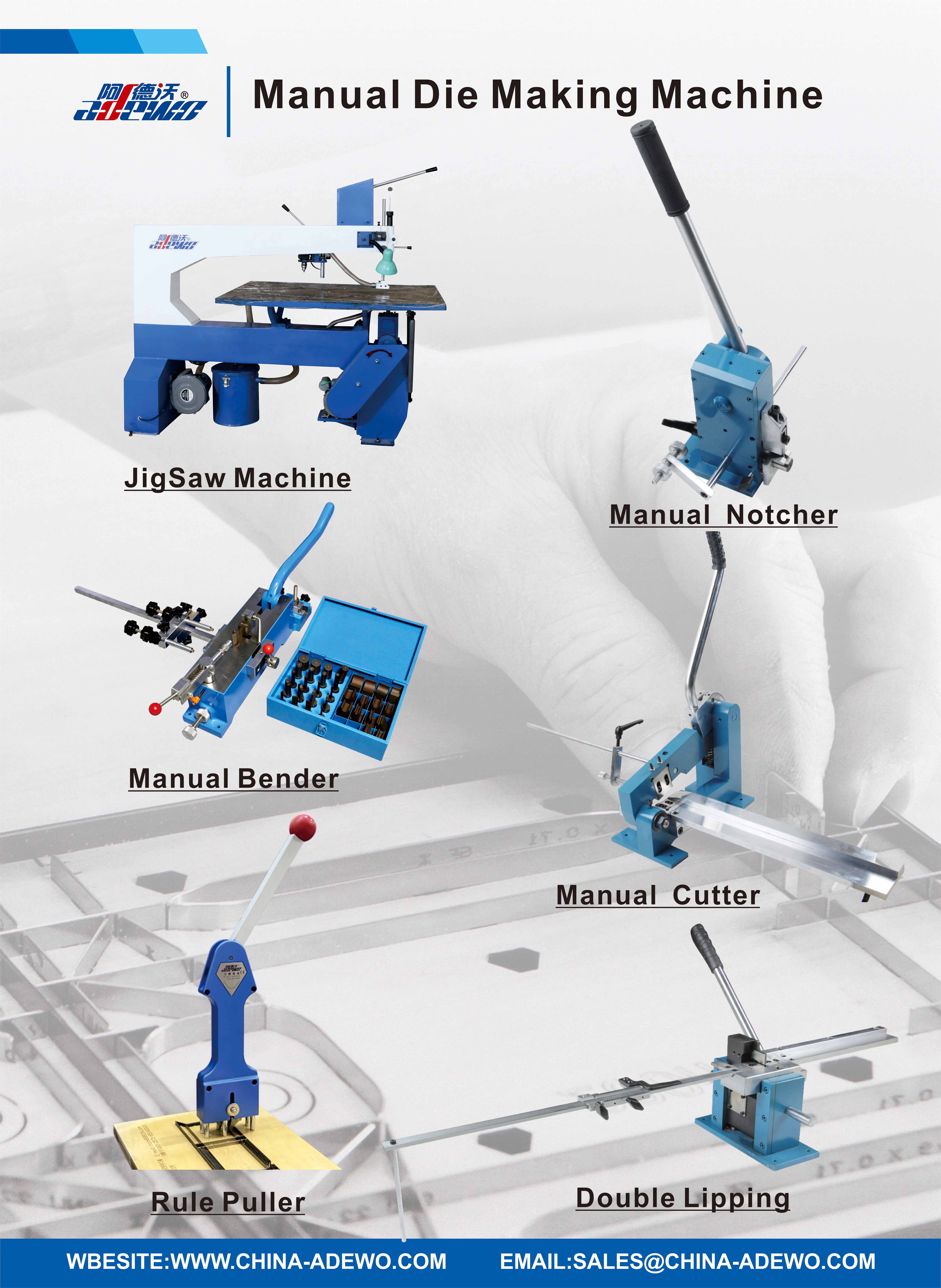
Most press brakes and panel benders hold an angle fine for the first few parts, then quietly start creeping. Thermal growth in the hydraulic fluid, tool seating, and even minor frame flex can shift the result by half a degree or more within an hour. That drift forces operators to keep measuring, tweaking the controller, and scrapping pieces until the machine settles again. The better approach is to design the angle reference out of the equation from the start.
Instead of relying on a single setup point, this system uses a mechanical stop geometry that fixes the bend angle at the tool level. Once the punch bottoms against the precision-machined reference surfaces, the material can't overbend or spring back past a known limit. Servo-driven back gauges and wedge compensation keep the alignment locked during long runs, so the first part and the hundredth part come out within a few minutes of arc. Even after changing material lots or thickness within a tolerance band, the angle stays put without recalibration.
The practical payoff is less babysitting. You set the angle once, run a short test piece, and then let the machine work through the stack while you handle other jobs. Because drift is designed out rather than chased with software corrections, repeat orders become straightforward and new operators don't need to learn a bunch of compensation tricks. It's the kind of stability that shows up in lower scrap rates and tighter dimensional control over a full shift.
Reading Steel Grain to Avoid Cracked Rule Profiles
Steel never behaves the same in every direction. Rolling elongates the grain into parallel fibres, and the metal becomes noticeably tougher along that flow than across it. When a rule profile—say a straight edge, a template, or a die insert—is blanked with its long contour running perpendicular to those fibres, stress concentrates along the short transverse path. The result is often a crack that follows the clean geometric line of the part, turning a crisp edge into a split one before it ever reaches service.
To read the grain, take a scrap piece from the same sheet and lightly etch it with dilute acid after sanding to a bright finish. The exposed flow lines show the rolling direction without guesswork. On thin stock, a simple bend test also works: a piece bent parallel to the grain will fold more smoothly, while a cross-grain bend snaps earlier and shows a rough, fibrous break. Once the direction is known, nest the rule profiles so their longest straight edges align with the grain, not against it. Even a 15-degree rotation away from the worst-case angle can push failure loads well beyond normal use.
Complex shapes rarely allow perfect alignment, and that is where process adjustments earn their keep. Stress-relieving before finish grinding, preheating the blank, or switching from a hard punch-and-die cut to laser profiling can all reduce the tensile stress that opens grain-boundary cracks. Yet none of these fixes replace reading the steel first. A quick etch on incoming material costs minutes and avoids the recurring pattern of straight-line fractures that shops learn to recognise as a grain problem, not a heat-treat problem.
Low-Cost Fixtures That Make Hand Bending Repeatable
Hand bending gets a bad rap for inconsistency, but the problem usually isn't the process—it's the lack of a physical reference. A small block of hardwood with a saw-cut notch does the job of an expensive back gauge. Clamp it to the bench so the stock butts against the end of the notch, then bend until the material just touches the bottom. Each piece lands in the same spot without measuring twice.
For angle control, skip the digital protractor. Cut a wedge from 16-gauge sheet with the exact bend angle you need, and use it as a go/no-go gauge. If the bent leg sits flat against the wedge without rocking, it's right. For tighter-radius work, drill a pair of holes in a plywood offcut and press in two hardened pins—space them by the desired outside radius plus half the stock diameter. This gives you a hand-bending fork that costs less than a lunch and handles rod up to about 3/16 inch.
The real trick is adding a stop for springback. Once you learn how many degrees your material overbends on a given die, stack a washer or two under the stop block to shim that amount. Write the shim recipe directly on the jig with a marker. Next time you run that part number, the setup is already there—no guessing, no dialing in scrap pieces.
Where Manual Bending Outperforms Automated Presses
Manual bending shines when the material refuses to behave according to a spec sheet. Cold-rolled sheet can vary in springback from one batch to the next, and hot-rolled or pre-finished stock adds even more unpredictability. An automated press relies on stored parameters and will stall or produce scrap once the actual metal drifts from those values. A skilled operator, on the other hand, can watch the bend form, feel the resistance change, and adjust pressure or bending speed mid-stroke to land the angle correctly the first time.
Prototyping and repair work are another area where manual methods come out ahead. Making two or three test pieces, or forming a one-off guard for an old machine, rarely justifies programming a press and locating the right tooling. With manual bending, you can mark the fold line, clamp the piece, and work it with a hand brake or a mallet and form block. There is no waiting for a program to load or a die set to be swapped, so the turnaround is often shorter for runs under a dozen parts.
Parts that need local adjustment or a non-standard bend sequence also favor manual work. Thin sections near a flange, a hole that distorts the fold line, or a workpiece with an existing weld can all trip up an automated press. Manual bending lets you choose a different clamping point, change the order of the bends, or use shims and wooden blocks to compensate for local deformation. Those on-the-fly decisions are hard to replicate with a fixed program, which is why experienced sheet metal workers still keep hand tools within reach.
Dealing With Springback Before It Reaches Final Assembly
Springback rarely announces itself in a single, tidy measurement. It creeps in through material batch changes, inconsistent lubrication, or a tooling setup that drifted half a degree since last shift. Waiting until the part reaches final assembly to discover a 2-millimeter gap is expensive. The smarter move is to force springback to show up early—run a short series of test blanks from the actual coil, measure the returned geometry on a surface plate or CMM, and map that deviation back to the forming simulation before you cut steel for the next die revision.
Compensation is not a one-time input. It works best when the die face is designed with an adjustable insert or a localized pad that can be shimmed after tryout. If your simulation assumes a constant Young's modulus and a fixed yield strength, you are already behind. Use the real stress-strain curve from the incoming mill certificate, and if the sheet comes from multiple suppliers, build a small database of springback tendencies by thickness and grade. That way, when the next coil shows a higher yield, your press setup and die adjustment are ready before the first bad part is stamped.
Finally, keep springback data attached to the part number, not buried in a trial report. A quick note at the press line—"this geometry returns 0.8° more on the left flange when material thickness drops below 1.4 mm"—will save more downstream fitting time than any post-assembly correction. Deal with it before the part gets a part number in the assembly BOM, and you won't be chasing dimensional noise on the line.
FAQ
In die making, the rule has to match the cutting path of the die board within a few thousandths of an inch. Manual benders built with hardened pivot points and adjustable angle stops let you sneak up on the final bend instead of forcing an overbend and hoping it springs back the right way.
You skip the setup time tied to CNC or hydraulic machines. Changing from one bend angle to another is just a matter of rotating a stop or swapping a nose piece, so a single operator can move through a mixed batch of rules without waiting on programming or recalibration.
Look for a rigid frame that does not twist under load, hardened bending noses and anvils, a clear angle gauge that reads in one-degree increments or finer, and stops that lock without drifting. Anything with slop in the pivot will show up as inconsistent flange lengths and off-angle bends.
Yes, you can, if the bender accepts interchangeable nose pieces. A small-radius nose paired with a matching pressure pad gives you tight bends without kinking the rule. The trick is to control the bend point precisely and use the right rule height and thickness for the nose radius.
Bending too fast, ignoring springback, and using dull or wrong-sized tooling. Many operators also skip checking the bend line against a scribed reference, which leads to cumulative error. Setting the rule square to the bending edge before each pull and recording springback for each rule batch fixes most of it.
Keep a log of stop positions and nose and anvil combinations for each rule spec. Even better, use a bender with quick-change tooling that holds its registration. Re-zeroing the angle indicator after every tool change prevents small offsets from stacking up across a multi-cavity die.
For long runs of identical dies, automation often wins on raw speed. But many shops keep a manual bender because it handles short runs, repairs, and custom inserts faster once you factor in job changeovers. It is not about replacing high-volume equipment; it is about keeping odd jobs off it.
Clean the bending surfaces daily to remove rule coating debris, check pivot bolts for wear, and lubricate only the moving joints specified by the maker. Every few months, verify the angle stops against a machinist's protractor and replace any nose piece that shows flattening or galling.
Conclusion
Manual bending still holds a real edge when it comes to precision die rules. A skilled operator can read steel grain orientation and adjust pressure on the fly, avoiding the hairline cracks that often appear when a rigid machine forces a profile against the grain. The bend angles stay put after setup because the operator feels the material settle into position, rather than relying on a press that may drift as tooling warms up. Low-cost fixtures—simple stops, protractors, and clamp blocks—turn this hand work into a repeatable process without the expense of CNC retooling. For short runs, tight radii, or unusual profiles, the manual approach often beats automated presses that need extensive programming and trial parts before they produce anything useful.
Springback remains the main variable to manage before final assembly. Hand benders learn to overbend just enough for a specific rule hardness and grain direction, then check the result against a reference angle instead of trusting a digital readout alone. This tactile loop prevents small errors from compounding into die frames that are out of square. The real advantage is adaptability: changing from one rule thickness to another takes minutes, not hours, because the operator adjusts the fixture stops rather than rewriting a bending program. In shops where die making accuracy must meet tight deadlines, manual bender solutions remain a practical, low-overhead way to keep profiles consistent and assembly-ready.
Contact Us
Contact Person: KAELYN LEE
Email: [email protected]
Tel/WhatsApp: +86 15012673758
Website: https://www.china-adewo.com