

Swiss CNC Lathe Manufacturer: Precision Solutions for Complex Parts
2026-07-26
In the world of precision machining, Swiss CNC lathes stand out as the go-to solution for crafting intricate, high-tolerance components. But not all machines are created equal—the real game-changer lies in partnering with a manufacturer that combines cutting-edge technology with hands-on expertise. Enter WINNRUI CNC, a name that’s redefining what’s possible for complex part production. If you’ve ever wondered how top-tier suppliers achieve flawless results with materials like titanium, stainless steel, or PEEK, the secret often starts on the shop floor of a Swiss turning specialist who thinks beyond the blueprint.
Mastering Micro-Machining: The Swiss CNC Edge
Swiss CNC machines redefine what’s possible at the micro scale, turning impossibly small components into everyday realities. Unlike conventional lathes, the guide bushing supports the workpiece right next to the cutting tool, slashing deflection and chatter. This means you can machine delicate 0.3-mm pins or intricate watch gears with mirror finishes and tolerances down to a few microns. It’s not just precision—it’s repeatable precision, part after part, without babysitting the machine.
What truly sets Swiss machining apart is how it compresses multiple operations into a single setup. With a sliding headstock and dual tool posts working simultaneously, you can turn, mill, drill, broach, and even thread-whirl in one pass. That eliminates secondary operations, stack-up errors, and handling damage—critical when you’re holding features concentric within 2 microns. Pair that with high-pressure coolant through the spindle and you’ve got chip control that lets you run unattended overnight, even in long-chipping materials like stainless or titanium.
But the real edge isn’t just in the hardware—it’s in the programming finesse. Mastering micro-machining means thinking in terms of synchronous operations and macro-based part families. You learn to manage chip evacuation in deep holes, adjust peck cycles to near zero dwell, and leverage vibration-dampened tool holders that make 0.1-mm drills last. It’s a discipline where thermal stability, tool runout, and even barstock straightness become make-or-break factors. Once you internalize that, you stop making parts and start crafting solutions that competitors can only reverse-engineer—and envy.
Complex Geometries, Flawless Execution
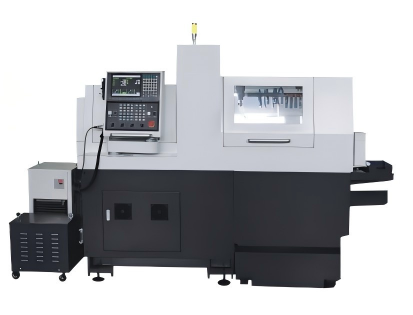
Bringing intricate designs to life demands more than just advanced machinery—it requires a deep understanding of how materials behave under stress, how subtle curvatures affect structural integrity, and how every joint or seam must align with near-microscopic precision. Our approach treats each unique contour not as an obstacle but as a signature feature, ensuring that even the most unconventional forms retain their intended elegance without compromise.
What sets our process apart is the fusion of traditional craftsmanship with computational insight. We don’t rely on cookie-cutter methods; instead, each project undergoes a rigorous simulation phase where we map out potential friction points, thermal expansions, and load distributions before a single physical cut is made. This preemptive analysis translates into tangible results: clean edges, seamless assemblies, and surfaces that seem to flow without interruption.
The outcome is a testament to controlled precision. Whether it’s a sweeping architectural facade or a dense internal lattice structure, the final product speaks a language of flawless execution. You see it in the way light catches a curve without distortion, and you feel it in the tactile perfection of a precisely fitted junction. That level of exactness doesn’t just happen—it’s engineered into every decision, from material selection through finishing.
From Prototype to Production: Scaling Precision
Bridging the divide between a meticulously crafted prototype and a high-volume production line demands more than just replication—it requires a fundamental shift in how precision is defined and maintained. In the early stages, tolerances are often aspirational, achievable through painstaking manual adjustments. But as you scale, those same tolerances must be embedded into automated processes, tooling, and material selection. The challenge isn't merely holding tighter numbers; it's ensuring that every unit, from the first to the millionth, reflects the same intent without drifting into variability.
True scaling of precision hinges on process capability, not just part inspection. It means designing for manufacturability from day one, factoring in thermal expansion, tool wear, and batch-to-batch material inconsistencies long before they become costly bottlenecks. By shifting the focus upstream—optimizing fixture designs, refining cutting strategies, and validating measurement systems—we can catch deviations at their source rather than chasing them downstream. This proactive approach transforms precision from a static target into a dynamic, scalable attribute that survives the rigors of full-rate production.
Perhaps the most overlooked aspect is the cultural transition. A prototype team thrives on iteration and agility; a production team relies on stability and repeatability. Merging these mindsets means valuing both creativity and discipline, encouraging engineers to interrogate processes as rigorously as they do designs. When the entire organization treats precision as a continuous variable rather than a binary pass/fail, scaling becomes less about sacrificing quality and more about amplifying it—turning isolated craftsmanship into institutional excellence.
Exotic Materials, Effortless Machining
Working with exotic materials like Inconel, titanium, or cobalt-chrome alloys used to mean accepting a trade-off: remarkable performance in extreme environments for a nightmarish machining process. These superalloys and advanced composites are notorious for rapid tool wear, unpredictable chip formation, and surface integrity issues that can scrap a part in seconds. Yet modern manufacturing has rewritten that narrative. With the right combination of cutting-edge tooling, adaptive control software, and high-pressure coolant delivery, machining these materials now feels less like a battle and more like a well-choreographed routine.
The secret lies in understanding the unique personality of each material rather than fighting against it. Nickel-based alloys demand slow, steady cuts with plenty of heat evacuation; titanium asks for sharp edges and a delicate touch to avoid work hardening; composites require diamond-coated tools and dust extraction strategies that respect their layered nature. When processes are tuned to these specific needs—often through iterative parameter optimization and real-time monitoring—the results are not only consistent but surprisingly fast. Shops that once dreaded exotic orders are now taking them on with confidence, knowing that cycle times, tool life, and surface finish are no longer wildcards.
Perhaps the biggest breakthrough has been in data-driven machining strategies. Instead of relying on outdated handbook speeds and feeds, modern toolpaths adapt on the fly using sensor feedback and machine learning algorithms that predict wear before it happens. This means even the most stubborn materials can be machined lights-out, with minimal intervention. The outcome is simpler than the technology behind it: parts come off the machine right the first time, freeing engineers to focus on design and innovation rather than babysitting a CNC. Exotic materials have finally met their match, and machining them has become an almost effortless extension of the creative process.
Tight Tolerances, Zero Compromises
Precision isn’t just a specification here—it’s an obsession. Every dimension is held to tolerances that most shops would push back on, not because it’s easy, but because that’s what the design demands.
When we say zero compromises, we mean it. No rounding corners, no “close enough” mentality. Each part leaves our floor only after passing checks that would make a metrologist smile.
This approach isn’t for everyone, and we’re fine with that. The engineers and buyers who come to us know exactly why: when failure isn’t an option, the only path is relentless precision.
Engineering Partnerships Beyond the Blueprint
True engineering collaboration rarely lives on the page; it breathes in the spaces between specifications, where mutual trust fills the gaps drawings leave behind. Our approach turns transactional handoffs into ongoing dialogues, weaving partner insights directly into the design lifecycle—not as afterthoughts, but as foundational threads. The result is a shared ownership that transforms static plans into living systems, ready to evolve without fracturing.
We sidestep the conventional vendor-client rhythm by cultivating a workshop mentality: partners aren’t briefed, they’re immersed. From day one, their manufacturing realities, material constraints, and field intelligence shape our CAD environments in real time. This isn’t about faster approvals; it’s about building a single technical vernacular that both sides speak natively, long before the first prototype takes form.
Beyond the blueprint, accountability becomes a joint asset. We stage what we call “stress sessions”—intentional moments where both teams deliberately challenge assumptions, exposing weak joints before they become failures. It’s uncomfortable by design, but it forges a partnership where the final deliverable isn’t just a structure, but a shared instinct for how it should perform under real-world pressures.
FAQ
Their sliding headstock design supports the workpiece close to the cutting tool, minimizing deflection and vibration during machining of long, slender components.
We integrate thermal compensation systems, high-resolution glass scales, and in-process probing to maintain tight tolerances consistently across production runs.
Medical device, aerospace, electronics, and automotive sectors frequently use them for intricate parts like bone screws, connector pins, and fuel injection nozzles.
They process a wide range, from standard metals like stainless steel and titanium to challenging alloys such as Inconel, as well as plastics and brass.
Our application engineers collaborate from prototype to production, optimizing tool paths, guide bushing setups, and multi-axis strategies for unique geometries.
Yes, they combine turning with milling, drilling, and thread whirling, enabling done-in-one machining that eliminates handling errors and shortens cycle times.
We employ statistical process control, automated optical inspection, and coordinate measuring machines to verify dimensions and surface finishes at prescribed intervals.
Conclusion
In the realm of high-precision manufacturing, a Swiss CNC lathe manufacturer stands as the definitive partner for complex, micro-scale parts that demand unwavering accuracy. Mastering micro-machining comes not just from advanced machinery but from decades of embedded know-how; these lathes achieve what conventional turning centers simply cannot, holding tolerances down to the micron while handling the most delicate features. Complex geometries—from intricate bone screws to watch components with intersecting bores—are executed with a flawless consistency that eliminates secondary operations. The process scales seamlessly, guiding customers from initial prototypes with rapid design iteration directly into full production without sacrificing the precision that made the concept work. It’s here that exotic materials like titanium, Inconel, and hardened steels are machined effortlessly, their challenging properties tamed by rigid setups and high-pressure coolant systems that extend tool life and maintain surface finish demands.
Yet the technology is only half the story. True excellence emerges when an engineering partnership goes beyond the blueprint, with application specialists collaborating early to optimize part design for manufacturability. This synergy means tight tolerances face zero compromises—every dimension is verified in real time through in-process gauging, and longer production runs hold their Cpk values without drift. From medical implants to aerospace fuel system components, the manufacturer’s role becomes an extension of the client’s own engineering team, solving problems before they appear and often reducing costs by eliminating waste. It’s a comprehensive precision solution where Swiss CNC expertise transforms complex visions into tangible, reliable components, batch after batch, without ever losing the edge that defines the craft.
Contact Us
Contact Person: Tim
Email: [email protected]
Tel/WhatsApp: +86 15522553731
Website: https://www.winnrui-cnc.com/