

Top 10 Stem Caster Wheels Wholesale: Your Ultimate Buying Guide
2026-06-15
Choosing the right stem caster wheels can feel overwhelming with so many options flooding the market. At CMCL, we've seen firsthand how the wrong choice leads to wobbly carts, scratched floors, and unnecessary replacement costs. That's why we put together this no-nonsense guide—to help you pinpoint the exact specifications, materials, and load ratings you actually need, whether you're outfitting a hospital bed or a heavy-duty industrial rack. Let's cut through the clutter and get your equipment rolling smoothly from day one.
Stem Caster Basics: Not All Wheels Are Created Equal
When you start looking into stem casters, you’ll quickly realize that the wheel isn’t just a generic round thing tacked on to the bottom. The wheel material, its hardness, tread pattern, and even the hub design all play huge roles in how the caster performs under load, across different floors, and over time. A stem caster’s mounting might look similar from one model to the next, but swap out the wheel and you can end up with a completely different experience—quieter rolling, better floor protection, or maybe a frustrating squeak and marred vinyl.
Hard wheels, like those made from nylon or polyolefin, are tough and resist flat-spotting under heavy loads, but they can be brutal on soft flooring and tend to transmit every vibration and bump. On the other hand, soft tread wheels—think rubber or polyurethane—absorb shock and roll almost silently, making them a favorite for hospitals, offices, and anywhere noise matters. However, they might not hold up as well under extreme weight or rough terrain, and they can develop flat spots if left stationary for too long. Even within soft materials, there’s a wide range: some urethanes are grippy, others slick; some offer chemical resistance, others break down fast.
Wheel diameter and bearing type further separate the great from the merely adequate. Larger wheels clear obstacles and cords more easily, require less pushing force, and wear slower—but they demand more clearance under equipment. Smaller wheels keep things compact but can struggle on uneven surfaces. Then there are the bearings: precision ball bearings make a caster glide with little effort, while plain bearings are cheaper but hate dust and need more muscle. All these choices mean you really can’t just grab any wheel and expect it to work. Picking the right one for the floor, load, and daily use turns a clunky dolly into something that practically moves with a fingertip.
Beyond the Spec Sheet: Testing Load Capacity Like a Pro
Real-world load testing goes far beyond manufacturer claims and static numbers on a glossy brochure. It's about mimicking actual use patterns—uneven weight distribution, dynamic motion, and repeated stress cycles—that reveal weak points no CAD simulation can predict. Start by defining your real-world scenarios: Will the product face sudden impacts, sustained pressure, or twisting forces? Then rig up a test that replicates these conditions using sandbags, hydraulic rams, or even improvised field tools, measuring deflection and recovery with dial indicators or simple witness marks. The goal isn't just to see if it holds, but to understand how it fails, so you can refine the design before customers ever find a crack.
One underrated technique is the incremental overload method: gradually increase the load while monitoring strain at critical joints. Instead of racing to the rated capacity, spend time at 60%, 80%, and 100% load for extended periods, checking for creep or micro-fractures with dye penetrant or magnifying lenses. Document everything—temperature, humidity, and even the way the load is applied—because environmental factors can halve the effective capacity of some materials. Pros know that load capacity isn't a single number; it's a curve that shifts with conditions, and your testing should map that curve honestly.
Finally, don't overlook the human element: how will actual users load this product? They'll pile weight off-center, yank on handles, or store it in a baking-hot attic. Build a test rig that invites these messy, human-driven loads, and cycle it until something creaks. The data you collect—whether it's load at first yield or cycles to failure—becomes your own spec sheet, one grounded in evidence, not marketing. That's how you move from guessing to engineering.
Material Showdown: Polyurethane, Rubber, or Nylon?
Choosing the right material often feels like a balancing act, and that's especially true when you're weighing polyurethane, rubber, and nylon. Each brings its own personality to the table. Polyurethane sits in that sweet spot between rigid plastic and soft rubber—it handles heavy loads without permanent deformation and shrugs off abrasion better than most. Rubber, on the other hand, is the veteran workhorse you can count on for traction, vibration dampening, and a sure grip, though it tends to show its age faster when faced with oils or extreme temperatures. Nylon is the silent overachiever: lightweight, self-lubricating, and surprisingly tough, yet it can absorb moisture and become a bit finicky in wet environments.
Think about what the part actually goes through day to day. If you need something that bounces back repeatedly from impacts and doesn't mind chemical exposure, polyurethane is tough to beat. For example, forklift wheels and skateboard bushings lean on its resilience. Rubber excels when shock absorption and silence matter more than chemical resistance—think seals, gaskets, and footwear soles. Nylon dominates in moving mechanical parts: gears, bearings, and cable ties that need low friction and high strength without adding weight. The catch? Nylon can swell if left soaking, rubber degrades in UV light, and polyurethane can soften in sustained high heat.
In practice, the decision often hides in the details. A shop floor might pick polyurethane drive belts for their durability, a lab might select rubber stoppers for their sealing ability, and an automotive engineer might choose nylon pulleys for their quiet, maintenance-free rotation. There's no universal winner—just the material that aligns best with the specific demands, be it constant flexing, chemical contact, or exposure to moisture. The showdown isn't about which material is best overall; it's about understanding the trade-offs so your choice actually holds up when it matters.
Swivel, Rigid, or Both? Aligning Casters with Your Layout
Choosing the right caster type isn't just about mobility—it's about how your equipment moves through the space you've designed. For tight, congested areas where sharp turns and frequent direction changes are the norm, swivel casters offer the freedom to pivot on the spot, making them ideal for carts that need to weave through narrow aisles or crowded workspaces. Consider the flow of traffic and the placement of obstacles: if your layout demands agility, swivel casters at all four corners might be the answer, but this can sometimes make steering unpredictable under heavy loads.
On the other hand, rigid casters provide straight-line stability that's hard to beat. They're your best bet when equipment needs to travel long distances in a fixed direction, like along a warehouse conveyor line or from one end of a workshop to the other. Rigid casters lock the path, reducing the risk of drifting and making it easier to push heavy loads with minimal effort. If your layout is predominantly linear, with clear, uncluttered routes, pairing two rigid and two swivel casters can give you the perfect balance—swivels at the front for steering, rigids at the back for tracking.
Often, the smartest choice is a combination that mirrors the movement patterns your layout demands. Think of the places where you need to pivot and the stretches where you just need to go straight. Some setups benefit from having swivel casters only on one end, turning the cart into a vehicle-like steering system that's both responsive and stable. Take a close look at your floor plan, note every turn and every straightaway, and align your caster selection so it works with the natural choreography of your space, not against it.
The Hidden Costs of Wholesale: What Bulk Buyers Miss
Buying in bulk looks like a straightforward way to slash per-unit costs, but the savings are rarely as clean as the quotes suggest. Once those extra pallets land, you're suddenly paying for storage space you didn't plan for, tying up cash that could have gone to quicker-turn inventory. And then there's the handling—moving heavy boxes, organizing stockrooms, maybe even renting off-site space if things get out of hand. Those expenses pile up quietly, often wiping out the discount you thought you were getting.
Cash flow takes a hit too. Tying thousands up in inventory means less wiggle room when something actually profitable pops up. Minimum order quantities push you into a corner: you're forced to commit to volumes that might take months to move, while suppliers keep dangling new deals you can't grab. That supposed bulk bargain starts feeling like a straitjacket, especially when demand shifts and you're left with a mountain of items nobody wants at full price.
Quality and consistency are the wild cards. A sample set can look perfect, but full production runs sometimes drift—and wholesale often means no returns without a fight. Sorting through defective units or dealing with mismatched packaging eats up time and erodes your margin in ways no spreadsheet captures. Add in the reps you spend chasing partial refunds, and the “wholesale advantage” reveals itself as a tightrope walk where one supplier slip-up costs you more than just money.
Our Top 10 Reorder-Worthy Stem Casters for Every Industry
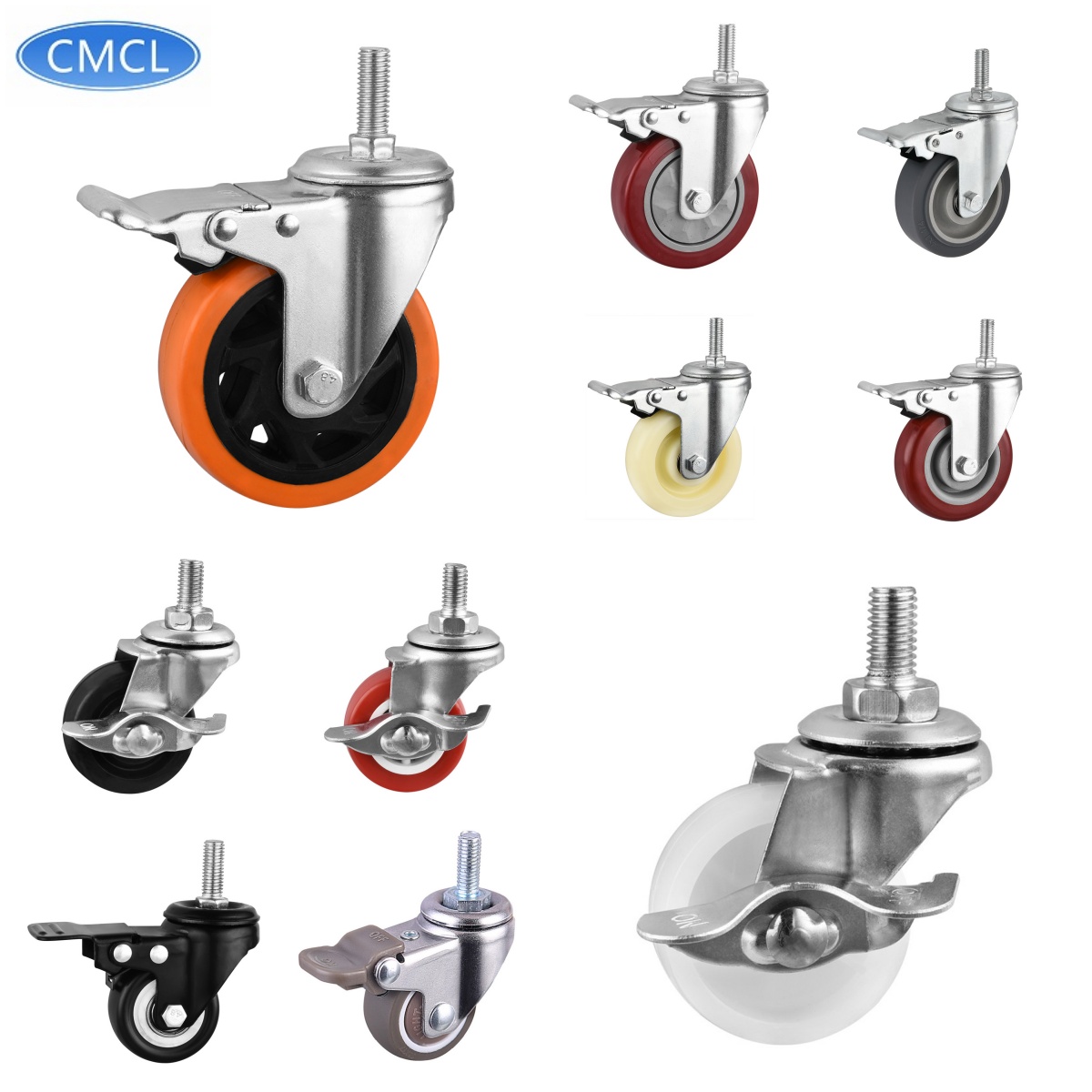
When it comes to keeping operations smooth across manufacturing floors, hospitals, or even design studios, the right stem caster makes all the difference. We've pulled together a list of ten casters that consistently earn their place in reorder carts—not because they're flashy, but because they handle daily abuse without complaint. From quiet-rolling models that protect sensitive flooring to heavy-duty options that shrug off impact loads, each pick balances durability, swivel precision, and long-term value.
What sets these stem casters apart isn't just their load ratings or wheel materials—it's how they adapt to real-world use. You'll find options with customized stem lengths for odd mounting depths, double-lock brakes that engage intuitively, and tread compounds that resist chemicals, heat, or static buildup. We prioritized designs that maintenance teams actually trust, the kind that keep equipment rolling years after installation without developing wobbles or flat spots.
Whether you're outfitting a fleet of medical carts or upgrading a single assembly station, the goal is the same: fewer interruptions and less guesswork when it's time to reorder. These ten stem casters earned their spots through field feedback and consistent performance across wildly different environments. No gimmicks, just solid engineering that doesn't flinch when the workload gets real.
FAQ
Stem caster wheels are a type of caster that mounts via a stem instead of a plate. The stem fits into a socket or hole in equipment, making them ideal for light to medium-duty applications like furniture, medical carts, store displays, and institutional equipment where a clean, compact attachment is preferred.
First, check your equipment’s mounting hole or socket. Common stem types include threaded stems, grip ring stems, and round stems with a cross-drilled hole for a bolt. Measure the hole diameter and depth, then pick a stem that matches. If you're unsure, pull out the old caster and bring it to a supplier—it’s the safest bet.
Soft treads, like rubber or polyurethane, roll quietly, protect floors, and absorb shock, but they might take more effort to push. Hard treads, such as nylon or steel, glide easily and handle heavy loads, yet they can scratch floors and are noisier. Your choice depends on floor type, noise tolerance, and load requirements.
It varies significantly. Light-duty stem casters might support 50–100 lbs each, while heavy-duty versions can handle over 1,000 lbs. Always calculate the total load, divide by the number of casters, and add a safety margin. Never exceed the manufacturer’s rated capacity per caster.
Check if they offer samples before bulk orders, provide detailed specifications and testing data, and have clear return policies. Long-standing suppliers with positive reviews and transparent communication are usually safer. Also, ask about lead times and whether they stock common sizes to avoid long waits.
Yes. For hospitals, look for non-marking, antistatic wheels with smooth, quiet rolling. For wet or chemical-prone areas, stainless steel stems and corrosion-resistant treads are critical. Some casters also come with brakes or swivel locks—helpful for equipment that needs to stay stationary during use.
Larger diameters roll over bumps and debris more easily and require less force to move. A general rule: go as big as your equipment design allows, provided the added height doesn’t cause instability. For uneven floors, a 4- or 5-inch wheel works better than a 2-inch one.
Swivel casters rotate 360 degrees, giving you excellent maneuverability—great for carts that need to turn in tight spaces. Rigid casters only move in a straight line, providing stability and making it easier to push heavy loads in long, straight aisles. Often, a combination of both is used on four-wheeled equipment.
Conclusion
Choosing the right stem casters in bulk can make or break your operational efficiency, yet it’s often reduced to a quick spec-sheet glance. True value starts with understanding that stem types, mounting dimensions, and wheel compositions are never one-size-fits-all. Polyurethane might offer quiet, floor-friendly movement, while nylon thrives under extreme loads in harsh environments, and rubber absorbs shock on uneven terrain. Testing load capacity isn’t just about static ratings—real-world use demands factoring in dynamic forces, floor conditions, and duty cycles. Aligning swivel and rigid caster layouts with your workflow prevents bottlenecks and unnecessary strain, and overlooking these details leads to frequent replacements, downtime, and inflated long-term costs that bulk buyers rarely anticipate.
Beyond the product specs, the wholesale journey is littered with hidden expenses—shipping weight, compliance certifications, and inconsistent quality across batches—that erode margins if left unchecked. Our curated list of ten reorder-worthy stem casters emerged from field-testing across industries, prioritizing durability, mounting compatibility, and supplier transparency. Whether retrofitting medical carts or upgrading warehouse fleets, these picks reflect real payload demands and ergonomic considerations. The goal isn’t just a low unit price, but a procurement strategy that slashes total cost of ownership while keeping operations rolling smoothly day after day.
Contact Us
Contact Person: Ruby
Email: [email protected]
Tel/WhatsApp: +86 13360379367
Website: https://www.cmcl-casters.com