

Top Steel Plate Shot Blasting Machine Manufacturer Checklist for Industrial Buyers
2026-11-25
Industrial buyers often discover too late that a steel plate shot blasting machine is only as good as the support behind it. A structured checklist flips the process: instead of asking who is cheapest, you start asking who can prove uptime, safety, and blast consistency. This guide walks through that checklist, with PuHua as the benchmark for how a manufacturer should respond.
What Separates Durable Steel Plate Blasting Machines from Showroom Promises
A fresh coat of paint and a polished demo run can hide a lot. The machines that hold up over time are built around abrasive contact zones that do not rely on rubber curtains or thin sheet metal where high-velocity grit eats through within months. Durable steel plate blasting machines use thicker wear liners, replaceable manganese or alloy plates in the blast cabinet, and bearing housings that are sealed well enough to keep fine dust out of the motor and rotor shafts.
The difference becomes obvious after the first major overhaul. Showroom models often need liner replacement, bucket elevator repairs, and separator tuning long before a well-built machine has finished its first full cycle of wear parts. Real durability shows up in small design decisions: direct-drive blast wheels instead of overworked belt drives, abrasive valves that maintain a steady feed without constant fiddling, and reclaim systems sized for the actual dust load rather than for a brochure photo.
Buyers who look past the gloss tend to ask about plate thickness, blast wheel horsepower, and access points for maintenance. A machine that lasts is one where the operator can reach the wear zones without tearing apart half the housing, and where the manufacturer can name the hardness of the liners and the service life under a stated abrasive flow. Those details rarely make it into a showroom pitch.
Performance Metrics Worth Demanding Before You Compare Manufacturer Quotes
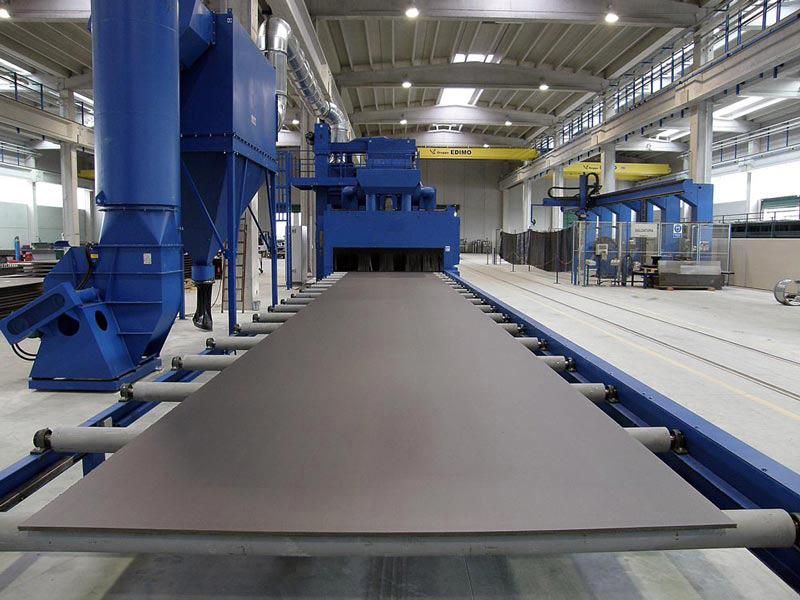
A glossy datasheet rarely tells you how a machine actually performs on your floor. Start by insisting on cycle time measured at the tool tip under realistic load, not in a demo cell with oversized blanks and no springback. Ask for the full motion profile: acceleration, jerk limits, and how quickly the press brake or laser settles into a stable cut after a corner. If a vendor hesitates to share raw timing data, that hesitation itself is a data point.
Next, demand repeatability numbers over a full shift, not a single warm-up run. Have them state the tolerance band you can expect at hour six, after tooling has heated up and hydraulic oil has thinned. The difference between a machine that holds ±0.05 mm for twenty minutes and one that holds it for eight hours is the difference between profit and rework. Also compare energy per part, not just connected load. A quote that lists only peak kilowatts hides the real cost of idle pumps and cooling fans running through lunch breaks.
Finally, pin down first-part yield for the geometry you actually bend or cut, not a vendor-selected sample. If you form high-tensile steel, ask how many test pieces they ran with your grade and thickness, and whether the quoted accuracy includes angular variation after air bending. Manufacturers who track scrap rate per setup and publish mean time between unscheduled stops are usually the ones worth shortlisting. Chasing the lowest sticker price without these metrics is just buying someone else's margin.
How Abrasive Recovery and Dust Collection Shape Daily Production Output
When a blast room or cabinet gets backed up with spent media, the line does not just slow down; it shifts into a different mode where operators spend more time sweeping, shoveling, and waiting on hoppers than actually blasting. Abrasive recovery that runs close to the pace of the work keeps the nozzle active. A reclaim system with properly sized augers, elevators, and an air wash that strips dust and broken particles before media returns to the pot directly determines how many cycles you can complete in a shift. If the recovery path adds even a few seconds of lag per load, or delivers contaminated media that forces a re-blast, the daily total starts to slide in ways that are easy to miss but hard to recover.
Dust collection is often treated as an environmental afterthought, but it has a direct influence on visibility, cycle time, and equipment wear. A collector that cannot hold the cabinet or room under negative pressure lets fine dust hang in the air, and that cloud slows every step: the operator cannot see the profile, the lights get dimmed by dust on lenses, and manual touch-ups become guesses. Clean, steady airflow from a well-maintained collector keeps the work area clear enough for continuous blasting, while also reducing the amount of fines that find their way into seals, bearings, and air lines. That means fewer unplanned stops and a more predictable hourly output.
The combined effect shows up most clearly at the end of a week. Shops that keep recovery rates and collector pressure stable tend to carry fewer re-clean jobs and spend less time on housekeeping in the middle of a shift. Small gains in nozzle time, maybe fifteen or twenty minutes per operator per day, compound quickly when other processes depend on the blasted parts moving forward. In contrast, when recovery and dust collection lag behind, the whole cell drifts into a stop-and-go rhythm that no amount of downstream speed can fix.
A Pre-Shipment Inspection Walkthrough for Buyers Who Cannot Visit the Plant
Not being able to walk the factory floor does not mean you have to accept whatever the supplier puts on the truck. A practical remote inspection starts with a scheduled video call that follows the product through final assembly, packing, and carton sealing. Rather than a short tour of finished boxes, the inspector should open a carton at random, pull items from the middle of the lot, and check them against your approved sample while the camera stays on the product.
The important checkpoints are straightforward: surface finish and visible defects, dimensions taken with a caliper or tape measure, printed labels and barcodes scanned with a phone, and simple function tests performed on the spot. If the item is fragile, request a drop test or vibration check with the box packed exactly as it will ship. It also helps to have the inspector check the inner packing, inserts, and any accessories that are easy to miss when you are not standing beside the line.
At the end of the walkthrough, ask for timestamped photos and video clips that show carton markings, the opened cartons, any measured dimensions, and any defects found. Compare those files with your signed specification and the pre-production sample before you approve the balance or release the shipment. A steady, evidence-based inspection gives you most of what an in-person visit would, and it keeps the factory accountable long before the goods reach the port.
Why Local Wear Part Availability Beats a Lower Sticker Price Over Time
A cheaper wear part looks good on a purchase order, but the real cost shows up when a liner fails on a Thursday afternoon and the replacement is four states away. Local availability means the part can be in hand within hours, often the same day, so the crusher or screen goes back to work instead of sitting idle. Those lost production hours add up fast, and they usually erase any upfront savings after the first unexpected delay.
There is also the quiet advantage of a nearby supplier who knows the equipment, the feed material, and the wear patterns common in your region. That kind of familiarity leads to better material recommendations and fewer trial-and-error orders. Freight charges, overnight shipping fees, and rushed handling costs from distant vendors further narrow the price gap, while a local stock lets you schedule changes during planned maintenance instead of turning every replacement into an emergency.
Over time, the choice becomes clearer when you look at cost per ton rather than the number on the invoice. Predictable uptime, lower overtime labor, and the ability to keep fewer backup parts on your own shelf all favor local availability. The low sticker price may still catch your eye, but it rarely survives contact with a real operating schedule.
Warranty and Penalty Terms That Reveal a Manufacturer's Real Confidence
A warranty is more than a legal promise—it's a mirror of how much a company actually trusts its own build quality. When a brand offers ten years on a gearbox but only twelve months on the touchscreen, the message isn't subtle. The long coverage on high-stress components says, "We engineered this to survive." The short leash on electronics often whispers the opposite. Reading the fine print becomes a quick way to separate genuine durability claims from marketing theater.
Penalty clauses reveal the same truth from a different angle. Consider liquidated damages, expedited replacement guarantees, or performance bonds tied to uptime. A manufacturer that agrees to pay steep per-hour penalties for downtime isn't just being generous—it's betting its own margin on the product's reliability. Conversely, vague language like "reasonable effort" or capped liability at the cost of a single part usually means the producer expects failures and has already priced them in.
Smart buyers treat these terms as a silent spec sheet. Compare two pumps with identical horsepower and price tags, but one carries a five-year seal warranty and a same-day replacement penalty, while the other offers twelve months and no performance guarantee. The difference isn't in the brochure—it's in the company's willingness to stand behind the machine when it's running at 3 a.m. in a remote facility. That willingness, or lack of it, tells you more about real confidence than any polished datasheet ever will.
FAQ
Ask whether the supplier will run a sample plate through their process and provide measured profile data. A manufacturer that hesitates to test your actual material or share before and after roughness values is likely guessing at their machine's capability.
Look at the liner thickness, blast wheel housing design, and how the abrasive is kept away from bearings. If the maker cannot name specific wear plate grades or expected hourly replacement costs, treat that as a warning sign.
Good separation removes fines and broken media so the working mix stays consistent. Poor separation forces you to buy abrasive more often and can leave uneven texture on the plate, which shows up after coating.
Interlocked access doors, emergency stops along the full length, and a dust collection system that maintains negative pressure inside the cabinet. A machine without these might pass a visual inspection but becomes a daily risk for operators.
Request a video of the machine running a plate of similar width, thickness, and rust condition. Ask for the exact speed setting and number of blast wheels used, because a short clip can easily hide slow throughput.
Foundation requirements, rigging, electrical integration, and initial abrasive fill are often left out. A complete proposal should list what is included, what is customer scope, and the expected time from delivery to first production.
If your plate sizes or production volumes fluctuate, a modular cabinet with room for additional blast wheels or a longer abrasive reclaim section can save a full replacement later. The extra cost is justified only if the supplier confirms a practical upgrade path with brackets, drives, and controls already prepared.
Conclusion
A steel plate shot blasting machine that holds up over time starts with details a glossy brochure cannot fake. Ask for the chamber shell thickness, liner material and replacement intervals, blast wheel housing construction, and whether the wheel is direct-drive or belt-driven. Compare those numbers before looking at price. Demand performance figures tied to your actual plate size and mill scale condition: amps per wheel, abrasive flow rate, surface profile after one pass, and realistic cleaning speed. Then check how the machine handles abrasive recovery and dust collection. In daily production this is often where output falls apart. A poorly designed screw or trough, a weak air wash separator, or an undersized cartridge filter will let fines build up, reduce blasting impact, and push dust back into the bay. Request the air-to-cloth ratio and expected dust emission level, not just a brochure photo of a clean cabinet.
If you cannot visit the plant, make the manufacturer earn the order with a pre-shipment inspection. Ask for live or recorded video showing the serial numbers on the gearbox, wheel, and motors, then a loaded test using your plate thickness and abrasive grade. Get readings for vibration, motor amp draw, and dust leakage at door seals. Do not accept a short no-load spin as proof. Over the machine’s life, local wear part support matters more than a lower sticker price. Blades, liners, and wheel housings are consumed continuously; if every replacement runs through an overseas clearance and two weeks of freight, your saved margin disappears in downtime. Then read the warranty and penalty language. A manufacturer that believes in its machine will put wear life ranges for blades, liners, and seals in writing, and accept liquidated damages for missed delivery or failed performance tests. If those terms stay vague, that hesitation tells you more than any spec sheet.
Contact Us
Contact Person: Bruce
Email: [email protected]
Tel/WhatsApp: +86 15166629468
Website: https://www.povalchina.com/