

Warehouse Chrome Wire Shelving Units: Top Recommendations for Durable Storage
2026-11-20
Weak shelving has a way of turning an organized warehouse into a hazard zone—bent wire decks, rust creeping in, and inventory stacked with more hope than support. This guide cuts through the noise to highlight warehouse chrome wire shelving units that actually hold up under daily loads, keep air moving, and make inventory visible at a glance. From open-wire designs that reduce dust buildup to reinforced frames that stay level under pressure, we looked for the details that matter when space and durability are non-negotiable. Brands like ZEOU show what heavy-duty chrome wire storage should feel like, and the following picks are built to earn their footprint.
Why Chrome Wire Shelving Earns Its Place in Harsh Warehouse Settings
Warehouse conditions rarely stay polite. Fluctuating humidity, dust from loading docks, and the occasional chemical spill can chew through ordinary shelving within a couple of seasons. Chrome wire units hold up because the plated finish adds a layer of defense against rust and pitting, while the steel core underneath still carries serious weight. That combination means the shelves don't just survive damp or abrasive conditions; they keep looking functional long after painted metal would start flaking.
The open wire design also works in a warehouse's favor. Air moves through the shelves instead of trapping moisture against stored boxes, which cuts down on musty odors and weak cardboard. Dust and debris fall through rather than forming a gritty film on solid panels, so housekeeping takes less effort. When a spill happens, liquid drains instead of pooling, reducing slip risks and corrosion spots around the edges.
There is also a practical toughness in the way chrome wire shelving handles daily abuse. It accepts heavy totes, tools, and replacement parts without bowing, and minor dents or scrapes don't turn into peeling surfaces that need immediate repainting. For warehouses where conditions shift fast and maintenance time is limited, that kind of low-fuss durability is exactly what keeps a storage system in service.
How Much Weight a Wire Shelf Can Really Carry Before It Flexes
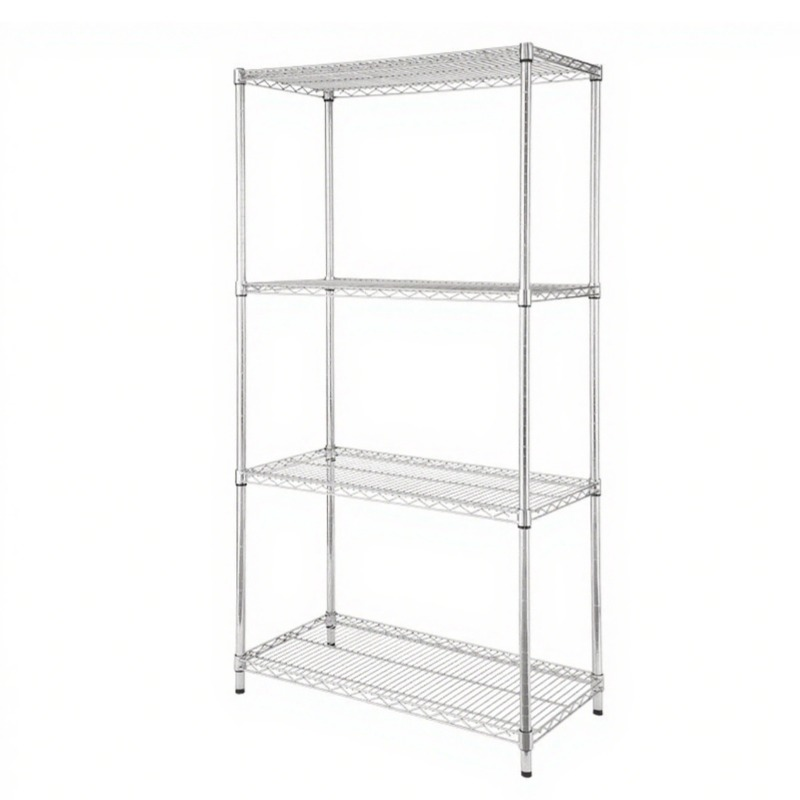
A wire shelf's real carrying capacity isn't a single printed number. It shifts with span, wire diameter, support spacing, and how evenly the load rests on the grid. A label might claim 200 pounds for a four-foot shelf, but that assumes perfect distribution and solid support at the rear and sides. Place a stack of plates or a heavy tool in the middle and you can see a visible dip at 40 to 60 pounds on many 36-inch chrome units. Flexing isn't immediate failure, but it is the start of metal fatigue.
Mounting changes the math more than most people expect. A shelf bolted to brackets at both ends holds differently than one resting on four plastic clips. If the front edge has no support, even 80 pounds spread evenly can tilt the whole surface downward. Wire gauge matters too: 6-gauge steel shrugs off loads that would bow a cheap 10-gauge shelf. Press the center with your palm; if it moves more than a quarter inch, you are already in flex territory and should lighten the load or add a center support.
A practical rule is to treat the advertised capacity as a best-case ceiling. For dense everyday items like canned goods or dumbbells, cut that number in half. In kitchens and pantries, keeping loads under 50 pounds per three-foot section prevents long-term sag. If you need serious load-bearing storage, choose reinforced wire shelving with vertical supports every 24 inches. Otherwise, keep heavy items near the edges and leave the middle clear to avoid that bowed-out look that never fully springs back.
Open Wire vs Solid Steel When Airflow and Visibility Matter
Open wire panels earn their place the moment a space needs to breathe. They let conditioned air move through aisles and mezzanines without fighting the layout, which matters in warm warehouses or around heat-producing equipment. Visibility works the same way: staff can spot a spill, a forklift, or an unlatched gate from across the floor instead of discovering it up close. The trade-off is containment. Fine dust, stray tools, and small parts will pass through the mesh, so the barrier defines zones rather than sealing them.
Solid steel changes the conversation. It blocks airflow almost completely, which can turn a corner into a dead zone unless passive vents or forced air are added. What you gain is a firm physical divide, full privacy, and better control over debris or noise. If the goal is simply to keep people out of a service area or hide a receiving dock from customer view, solid panels usually make more sense. If the space still needs light and line of sight, open wire tends to be the sharper choice.
Assembly Details That Stop Wobble Before It Starts
Most unwanted movement shows up first where two machined surfaces meet. A half-thousandth of clearance in a bored hole can let a shaft tilt under load, and once that tilt starts, it only gets worse as the contacting edges wear. Reaming the bore to a controlled slip fit, then pinning the joint with a tapered dowel, removes the tiny pivot point that most stabilizers miss.
Fastener order matters more than total torque here. Pulling bolts down in a diagonal sequence across a split housing lets the faces land evenly, but adding one machined boss or a stepped shoulder at the opposite corner does the real work: it forces the two halves to register before the bolts ever take full tension. That step leaves no room for the assembly to settle into a slight skew after the first few thermal cycles.
Where the load path changes direction, a simple flat washer is rarely enough. A tapered collar drawn against a matching cone pulls the outer member into true alignment first, then locks it with a pair of set screws offset at ninety degrees. The result is a stack that finds its own center during tightening, so the wobble never gets the chance to become audible or visible in the finished assembly.
Keeping the Chrome Finish Intact Through Humidity and Cold
Chrome does not mind a little moisture until the moisture decides to stay. In humid conditions, condensation clings to the surface and works its way into microscopic pores left by polishing, so wiping the finish with a dry microfiber cloth after temperature swings becomes more useful than any spray wax. Cold compounds the problem because metal contracts just enough to let trapped water sit against the plating, and once that water freezes, it can push at the edges of small nicks until they become visible flakes.
A thin coat of high-carnauba paste wax, applied in straight lines rather than circles, gives the surface a barrier that still lets the metal breathe. The trick is to warm the part to room temperature first and buff before the wax hazes, otherwise the cold air turns the paste gummy and leaves streaks that highlight every ripple in the reflection.
For parts that live through actual winter, avoid parking near road salt and rinse the underside and recessed edges with cold water after long drives. Warm water feels like the kinder choice, but it speeds up the expansion and contraction that opens the finish to more moisture later. If small cloudy spots appear, a dab of metal polish on a damp cloth usually pulls them back before they spread.
Aisle-Friendly Layouts That Put Heavy Stock Within Arm's Reach
Putting fifty-pound bags of feed on a top shelf sounds like a dare, not a storage plan. A smarter aisle layout keeps dense, bulky stock between hip and shoulder height so workers can slide items out without crouching, stretching, or pulling a ladder into a busy walkway. This means allocating the easiest vertical zone, roughly 20 to 55 inches from the floor, to the heaviest SKUs, while lighter boxes and oversized but low-density goods take the upper and lower positions.
Aisle width also matters more than most warehouse maps admit. When heavy stock sits slightly back from the edge at arm's reach, a 36-inch aisle can function like a wider one because nobody has to brace a foot against the opposite rack to wrestle a carton forward. Angled shelving, shallow bins, and gravity-fed lanes help bring the next item to the front without blocking the path. The result is fewer shoulder injuries and fewer trips to the back, because replenishment happens where the hands already are.
One practical trick is to treat the first four feet of every aisle as a no-ladder zone. If a product over 40 pounds cannot be retrieved without a step stool, it belongs somewhere else. This keeps the main walking routes open, shortens pick times, and makes the whole space feel less like an obstacle course after lunch rush.
FAQ
Look for welded wire construction with a reinforced grid, not spot-welded rods that flex under uneven loads. The shelf capacity should be at least 600 pounds when evenly spread. Posts with numbered markings at one-inch intervals also make it faster to level shelves across multiple units. If the unit ships with split sleeves instead of plastic clips, that is usually a sign it is built for heavier daily use.
No. Some cheaper units have a thin chrome flash over raw steel, which chips and then rusts quickly. Better options use a thicker chrome plate over steel or a chrome-look epoxy coating. In a warehouse with humidity or occasional washdowns, epoxy-coated or stainless wire can be a safer choice even though it costs more.
A 48-inch by 24-inch shelf is the most flexible starting point. It fits two standard 24-inch deep bins side by side or a row of banker boxes. If your aisles are wider and you are storing bulkier parts, 60-inch by 24-inch or 72-inch by 24-inch units save trips, but check that the posts and trusses are rated for that span.
Only if the casters are rated for the total loaded weight, and even then you should push from the base, not the top. Hard rubber or polyurethane wheels roll better on concrete and will not flatten like soft rubber. For fixed locations with very heavy stock, swap the casters for leveling feet. That removes the risk of a wheel or brake failing.
Assemble the posts flat on the floor and tap the split sleeves down with a rubber mallet until they bottom out. Use a level when setting the first shelf, then measure from the floor to the shelf underside for every other shelf. If you are placing units end to end, join them with a manufacturer connector kit so the rows do not drift apart.
Usually yes. Buying four or five shelves now and adding three more later often costs more than buying a larger set up front. Dividers, label holders, and side ledges also help keep small parts from falling through or sliding off. Just confirm the add-ons match the post shape and diameter of your unit.
Wire grid wins for most warehouse storage because it lets light reach lower shelves, blocks less air from overhead vents, and does not trap spilled fluid. Solid steel can hold very small parts without adding a liner, but it is heavier, keeps dust and moisture underneath, and makes it harder to spot stock at a glance. If you need both, use a clear shelf liner on wire rather than switching to solid.
One person can usually assemble a 48-inch wide, 72-inch tall unit in about 20 to 30 minutes with a rubber mallet. Tipping the posts upright is easier with two people, especially after the first two shelves are locked in. Pre-sorting the sleeves and counting all parts before you start saves more time than anything else.
Conclusion
Chrome wire shelving holds up in warehouses because it does not trap heat, dust, or moisture the way solid decking often does. The open grid lets air move through stored cartons and bins, which matters in humid or cold environments where condensation can quietly weaken packaging and metal over time. The chrome finish does more than look clean; it resists light corrosion and wipes down quickly after spills, though it still benefits from occasional drying in areas with heavy condensation. Load capacity is often misunderstood. A well-built wire shelf can carry substantial weight, but the rating usually assumes the weight is spread evenly across the shelf and that the unit sits level. Point loads near the center or back edge are what cause visible flexing long before the shelf actually fails. For most warehouse stock, choosing a shelf rated well above the intended load is cheaper than dealing with bent wires later.
Assembly is where many units earn or lose their stability. Tapered plastic sleeves and locking clips need to be seated fully against the post grooves, and adjustable feet or casters should be leveled before loading. If the frame is even slightly twisted, the shelves will transmit that wobble upward under load. In aisle layouts, chrome wire works best when the uprights are placed shallow enough that workers can reach heavy cartons without stretching or using a step stool for every pick. Open wire also keeps inventory visible from the end of an aisle, reducing search time and letting light reach lower levels. Solid steel panels have their place for small parts or spill containment, but wire remains the stronger default for bulky, fast-moving stock because it combines airflow, visibility, and dependable capacity without adding unnecessary weight to the floor space.
Contact Us
Contact Person: Alin
Email: [email protected]
Tel/WhatsApp: +86 15015291051
Website: https://zeoumetal.com/